
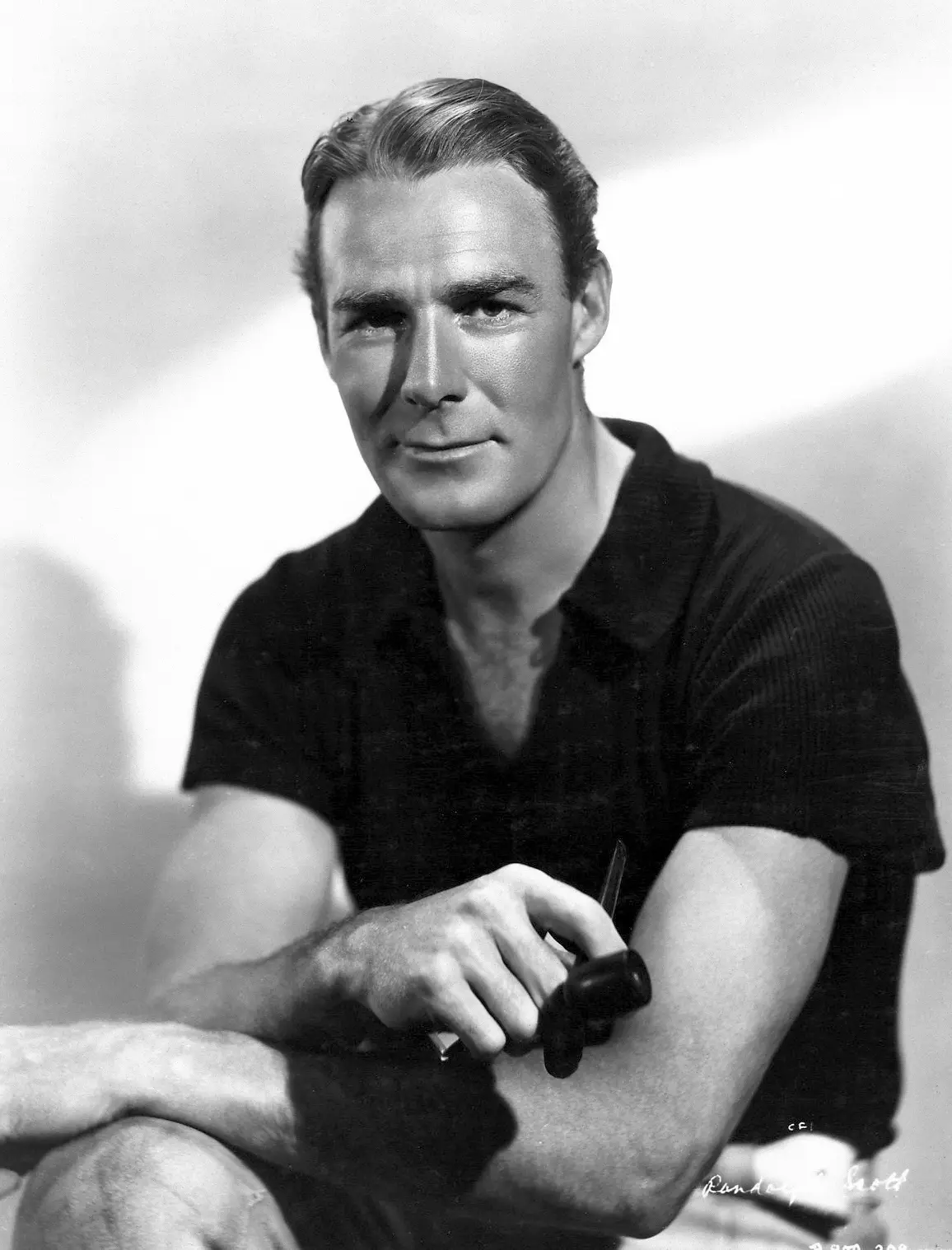

George Randolph Scott (1898–1987) was an American film actor whose Hollywood career ran from 1928 to 1962. He was a leading man for all but the first few years of it, and he appeared in more than 60 Westerns as well as some 40 dramas, comedies, musicals, war films and adventures. Tall, square-jawed and courteous, he became one of the archetypal screen cowboys, and in the early 1950s he was one of the most reliable box-office draws in Hollywood, appearing in the Motion Picture Herald's annual top-ten poll of exhibitors every year from 1950 to 1953. His reputation today rests above all on the lean, austere Westerns he made with the director Budd Boetticher in the late 1950s, and on his farewell to the screen in Ride the High Country (1962).
Early life
Scott was born on 23 January 1898 in Orange County, Virginia, and grew up in Charlotte, North Carolina, the second of six children in a family of Scottish descent. He served in the First World War and afterwards studied at Georgia Tech before turning to acting.
The Zane Grey Westerns
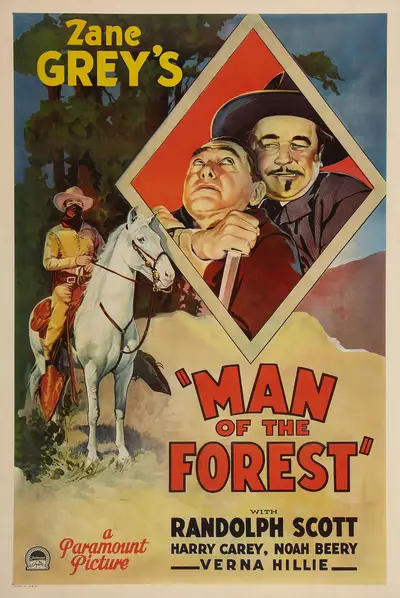
His first years in films were spent in small parts. Paramount then cast him as the lead in Heritage of the Desert (1932), which established him as a Western hero. The film was popular, and Scott went on to make ten modest "B" Westerns loosely based on the novels of Zane Grey, among them Sunset Pass, Man of the Forest and To the Last Man (all 1933), several directed by Henry Hathaway. Between them Paramount used him in non-Western parts, including romantic comedies, and he played romantic leads in musicals such as Roberta (1935) and High, Wide and Handsome (1937).
He continued to work across genres for the rest of the 1930s. He made the well-budgeted Western The Texans (1938), and in Henry King's Jesse James (1939) he played Will Wright, the marshal, opposite Tyrone Power and Henry Fonda.
A cowboy star
Fritz Lang's Technicolor Western Western Union (1941), in which he co-starred with Robert Young, is generally seen as the film that fixed Scott's position as a cowboy hero. From then on, all but two of his starring films were Westerns. After the Second World War he renewed his acquaintance with the producer Harry Joe Brown, with whom he formed a business partnership, and together they made many of his Westerns, several shot in the two-colour Cinecolor process. One of the best of this period is Coroner Creek (1948), in which Scott plays a cowhand driven by revenge, a role that anticipates the bleak heroes of his later work. The Walking Hills (1949), directed by John Sturges, was a modern-day tale of gold hunters.
The Boetticher cycle
In 1955 the screenwriter Burt Kennedy wrote Seven Men from Now, which was meant to be made by John Wayne's company Batjac with Wayne himself in the lead and Budd Boetticher directing. Scott took the part instead. The film made little impact on its release in 1956 but is now regarded as one of his best, and it began a collaboration between Scott and Boetticher that ran to seven films, including The Tall T (1957), Decision at Sundown (1957), Buchanan Rides Alone (1958), Ride Lonesome (1959) and Comanche Station (1960). Westbound (1959), though directed by Boetticher, is not usually counted as part of the cycle.
These films are short, spare and formally precise. Scott usually plays a lone, weathered man with a private grief, who meets villains more likeable than the usual Western heavy. The rocky landscape of the California Sierras gives them much of their character.
Ride the High Country
Scott's last film was Sam Peckinpah's Ride the High Country, in which he co-starred with Joel McCrea, another actor who from the mid-1940s had devoted his career almost entirely to Westerns. McCrea plays Steve Judd and Scott plays Gil Westrum, two ageing former lawmen who take a job guarding a gold shipment. The film's elegiac mood, its sense of the passing of the Old West and of two old men out of their time, made it a fitting farewell. Scott retired after it, and he did not act again.
Later life
Shrewd investments in property, oil, gas and securities had made Scott a wealthy man. He died of heart and lung ailments in Beverly Hills on 2 March 1987, aged 89.
Legacy
Scott is remembered as one of the defining faces of the Hollywood Western: quiet, upright and laconic. The Boetticher films, often called the Ranown cycle after the company Scott ran with Brown, are the core of his reputation.
Key facts
- Born: 23 January 1898, Orange County, Virginia, US
- Died: 2 March 1987, Beverly Hills, California, US
- Career: 1928–1962
- Westerns: more than 60
- Key collaborator: Budd Boetticher (seven films, 1956–1960)
- Last film: Ride the High Country (1962)
- Occupations (Wikidata): actor, screenwriter, film producer, military personnel
- Born 1898-01-23
- Died 1987-03-02
See also
Filmography
As actor 41
- 1933Man of the Forest
- 1933To the Last Man
- 1939Frontier Marshal
- 1939Jesse James
- 1940Virginia City
- 1941Belle Starr
- 1941Western Union
- 1942The Spoilers
- 1943The Desperadoes
- 1944Belle of the Yukon
- 1946Abilene Town
- 1947Gunfighters
- 1948Return of the Bad Men
- 1949Canadian Pacific
- 1949The Walking Hills
- 1950Colt .45
- 1950Fighting Man of the Plains
- 1950The Cariboo Trail
- 1950The Nevadan
- 1951Fort Worth
- 1951Man in the Saddle
- 1951Santa Fe
- 1952Carson City
- 1952Hangman's Knot
- 1953The Man Behind the Gun
- 1953The Stranger Wore a Gun
- 1953Thunder Over the Plains
- 1954Riding Shotgun
- 1954The Bounty Hunter
- 1955A Lawless Street
- 1955Rage at Dawn
- 19567th Cavalry
- 1956Seven Men from Now
- 1957Decision at Sundown
- 1957Shoot-Out at Medicine Bend
- 1957The Tall T
- 1958Buchanan Rides Alone
- 1959Ride Lonesome
- 1959Westbound
- 1960Comanche Station
- 1962Ride the High Country
Gallery 7







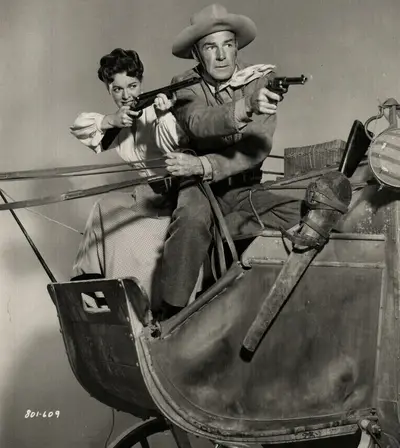
In the films 6






Sources
- Randolph Scott - Wikipedia en.wikipedia.org
- Wikidata: Q295984 wikidata.org
- Wikimedia Commons: Randolph Scott-publicity.JPG commons.wikimedia.org
- Randolph Scott | Britannica britannica.com
- Randolph Scott obituary - Los Angeles Times (1987) latimes.com