
Hopalong Cassidy (1949)
Hopalong Cassidy is an American Western television series starring William Boyd as the black-clad, white-haired cowboy hero Hopalong Cassidy, riding his white horse Topper. It began on the NBC network on 24 June 1949 and is generally counted as the first Western series on network television, beating The Lone Ranger to the screen by a few months. At first it consisted of Boyd's old cinema features cut to television length; Boyd then produced new half-hour episodes made for television, with Edgar Buchanan as the sidekick Red Connors. The show was a huge hit with children, made Boyd one of the first national television stars, and set off both a wave of children's television Westerns and a flood of Hopalong merchandise.
From the cinema to television
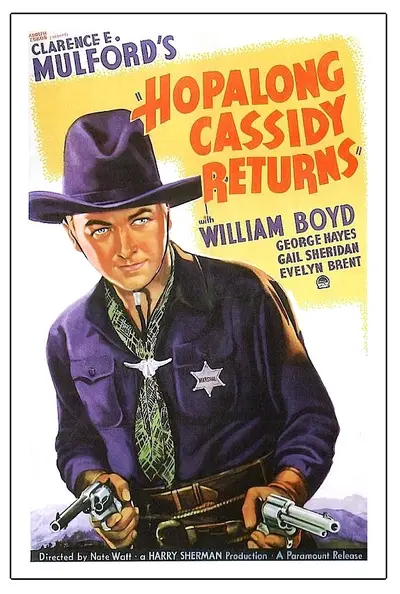
Hopalong Cassidy was created by the writer Clarence E. Mulford, first appearing in print in December 1905, as a rough, hard-drinking, red-haired cowhand with a limp. When Paramount filmed the stories from 1935, Boyd remade him into a clean-living hero who did not smoke, swear or drink anything stronger than sarsaparilla, who never shot first and who would let the villain start the fight. Between 1935 and 1948 Boyd made 66 Hopalong films, the later ones produced by himself. By 1948 the series had run down, and Boyd, then in his fifties, was thought to be a star of the past.
Boyd believed that Hoppy had a future on television. He sold or mortgaged almost everything he owned to raise $350,000 and buy the television rights from Mulford and the films from their producer, Harry Sherman. In November 1948 he persuaded NBC's Los Angeles station to show one of the films for a $200 fee. At a time when most television programmes were only a few minutes long, a feature-length Western was an event, and the response was so strong that NBC rented the whole library and showed the films across its network, edited down to broadcast length.
The television series
While the old films were still on the air, Boyd put together a cast and crew to make new half-hour films for television. Because the production was so rushed, his film sidekick Andy Clyde could not get free of other commitments, so Edgar Buchanan played Hoppy's partner Red Connors, a character from Mulford's stories. The theme music was by Nacio Herb Brown, with words by L. Wolfe Gilbert. The series ranked seventh in the American ratings in 1949 and ninth in 1950–51.
Hopalong was a hero for children. Boyd took that seriously: he dressed as Hoppy in public, refused to license his name for products he thought unsuitable or dangerous for children, and would not make personal appearances where children were charged admission. The show's stories were simple tales of right against wrong, in which Hoppy defended honest people against those who would cheat them, and fair play and good manners mattered as much as quick shooting.
Hoppy fever
At the height of the craze, in 1950, more than 100 companies made some $70 million worth of Hopalong Cassidy goods, from cowboy outfits, watches and roller skates to soap, dinnerware and jackknives, and Boyd earned about $800,000 that year, mostly from licensing. That year Hoppy also appeared on the first lunch box to carry a picture, and the maker's sales jumped from 50,000 a year to 600,000. He appeared on the covers of Look, Life and Time. A Hopalong radio series ran on the Mutual network and then on CBS until 1952, and a comic strip ran in the newspapers until 1955. The 1951 Christmas song "It's Beginning to Look a Lot Like Christmas" even lists "a pair of Hopalong boots" among the presents children want.
The success of the show led directly to other children's Westerns, including The Gene Autry Show, The Roy Rogers Show, The Range Rider and Annie Oakley.
Legend and history
- When did it run? Sources give different dates. Most accounts date the NBC series from June 1949 to 1952; others date the 52 half-hour episodes made for television to 1952–1954, in syndication. The old features and the new episodes were shown side by side, and in different places at different times, which explains much of the confusion.
- How many episodes? The complete DVD release of the television series contains 52 episodes. Other accounts credit Boyd with more than a hundred television shows, probably counting the cut-down feature films as well.
- A different Hoppy. Readers who come to Mulford's books from the films are often surprised. The original Hopalong was a tough, profane cowhand, and the plots of the films and television episodes were rarely taken from the books.
Key facts
- Network: NBC (from June 1949); later syndication
- Star: William Boyd as Hopalong Cassidy
- Sidekick: Edgar Buchanan as Red Connors
- Horse: Topper
- Episodes: 52 half-hour episodes made for television, plus cut-down feature films
- Character created by: Clarence E. Mulford
- First: the first Western series on network television
- IMDb rating: 7.6 (data)
- Official rights holder U.S. Television Office, Inc. states the film collection includes over 4,000 reels of 35mm and 16mm film and has been identified by a Library of Congress film archivist. (HopalongCassidy.com)
- NBC from 24 June 1949 with edited versions of the feature films, the first network Western TV series (Television Academy; Wikipedia); CTVA lists NBC airings of the edited films into 1952
- 52 made-for-TV episodes, 1952–54: syndicated per CTVA (season 1 fall 1952, season 2 1953–54); Wikipedia says made for NBC – accounts differ
Cast
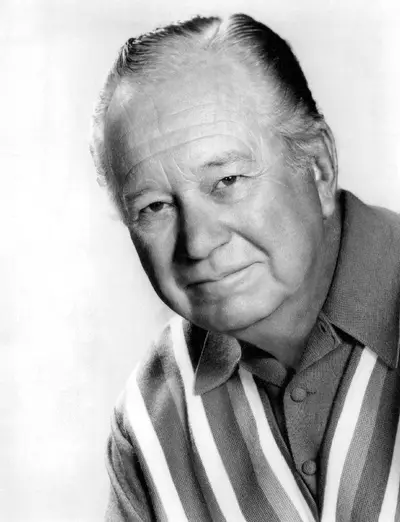
See also
Seasons & episodes 52
Season 1 26 episodes · 1952
- 1×01Borrowed Trouble (1948)1952
- 1×02False Paradise (1948)1952
- 1×03Strange Gamble (1948)1952
- 1×04Unexpected Guest (1947)1952
- 1×05Hoppy's Holiday (1947)1952
- 1×06The Dead Don't Dream (1948)1952
- 1×07The Devil's Playground (1946)1952
- 1×08Fool's Gold (1946)1952
- 1×09Dangerous Venture (1947)1952
- 1×10The Marauders (1947)1952
- 1×11Sinister Journey (1948)1952
- 1×12Silent Conflict (1947)1952
- 1×13Guns Across the Border1952
- 1×14The Knife of Carlos Valero1952
- 1×15The Trap1952
- 1×16Alien Range1952
- 1×17The Feud1952
- 1×18Ghost Trails1952
- 1×19Marked Cards1952
- 1×20Don Colorado1952
- 1×21Black Waters1952
- 1×22Blind Encounter1952
- 1×23The Promised Land1952
- 1×24The Vanishing Herd1952
- 1×25Black Sheep1952
- 1×26Lawless Legacy1952
Season 2 26 episodes · 1953–1954
- 2×01The Devil's Idol1953
- 2×02The Sole Survivor1953
- 2×03The Valley Raiders1953
- 2×04Twisted Trails1953
- 2×05The Last Laugh1953
- 2×06The Jinx Wagon1953
- 2×07Illegal Entry1953
- 2×08Gypsy Destiny1953
- 2×09Arizona Troubleshooters1953
- 2×10Death by Proxy1953
- 2×11Frontier Law1953
- 2×12Don't Believe in Ghosts1953
- 2×13The Renegade Press1954
- 2×14Double Trouble1954
- 2×15Copper Hills1954
- 2×16New Mexico Manhunt1954
- 2×17The Outlaw's Reward1954
- 2×18Grubstake1954
- 2×19Steel Trails West1954
- 2×20Silent Testimony1954
- 2×213-7-771954
- 2×22Masquerade for Matilda1954
- 2×23Frameup for Murder1954
- 2×24The Black Sombrero1954
- 2×25The Emerald Saint1954
- 2×26Tricky Fingers1954
True Grit RatingWhat's this?SVLIMDb ★7.6Provisional
True Grit score: 84/100, Silver Provisional
How the score is worked out:
- Start100
- Provisional, capped at Silver: 100 → 84 (4 checks not known, provisional)
- Presumed (Hays Code, 1934–1967): sex & nudity, violence, language, faith shown negatively presumed no, counted as checked0
- True Grit score84 · Silver
Classic Western checks
0 of 4 yes · Classic Western · 2 not known
- Called “revisionist”Not knownUnknown.
- Settlers or cavalry as villainsNot knownUnknown.
- Faith shown negativelyPresumed noPresumed no (Hays Code)
- History rewrittenNoSource passage states the work's basis (quoted). [1]
more
Source passage states the work's basis (quoted). No true-story claim found in the article (rev 1368799256, retrieved 2026-11-06T10:39:51Z). history_rewritten no = owner true-story gate (H2) applied to that: an inference under the owner rule, not a statement by the source. Citation audit 2026-11-06.
Content guide
- SSex & nudityPresumed no
- VViolencePresumed no
- LLanguagePresumed no
Presumed no (Hays Code)
NoneMildModerateStrongNot known
Audience
★ 7.6/10 from viewers on IMDb (452 votes)No deduction (5.0 and up).
Sources
- Wikipedia: Hopalong Cassidy (TV series) (lead; rev 1368799256) (checked 24 October 2026)
Information courtesy of IMDb (https://www.imdb.com).
Checked 24 October 2026 · Reviewed by Frontier Editor
Provisional: not enough sources yet, so this rating may change.
Sources
- “Hopalong Cassidy (TV series)” – Wikipedia en.wikipedia.org
- Wikidata: Q690886 wikidata.org
- Tt0041030 - imdb.com imdb.com
- hopalongcassidy.com hopalongcassidy.com
- “Hopalong Cassidy” (Original Theatricals Re-Edited for TV) (NBC) (1949–52) – The Classic TV Archive (CTVA) ctva.biz
- “Hopalong Cassidy” (Made-for-TV Episodes) (Syndicated) Season 1 (Fall 1952) – The Classic TV Archive (CTVA) ctva.biz
- “Hopalong Cassidy” – Television Academy Interviews interviews.televisionacademy.com
- IMDb Non-Commercial Datasets developer.imdb.com
- Wikimedia Commons: Hopalong-Takes-Command.jpg commons.wikimedia.org
- Wikimedia Commons: Hopalong Cassidy Returns FilmPoster.jpeg commons.wikimedia.org

