
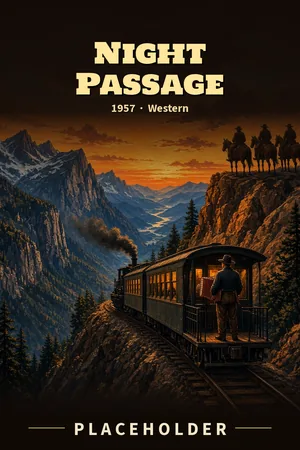

True Grit Rating: Night Passage
Loading the ticket…
Night Passage is a 1957 American Western directed by James Neilson for Universal-International, starring James Stewart as Grant McLaine, a former railway troubleshooter hired to carry a payroll through outlaw country, and Audie Murphy, in a rare villain's part, as the Utica Kid, the gunman who turns out to be his younger brother. Dan Duryea plays the gang leader, Whitey Harbin. Filmed in the autumn colours of the San Juan Mountains on the narrow-gauge railway between Durango and Silverton, Colorado, it was the first American production in the Technirama widescreen process. It is also remembered as the film that ended Stewart's famous partnership with the director Anthony Mann.
Plot
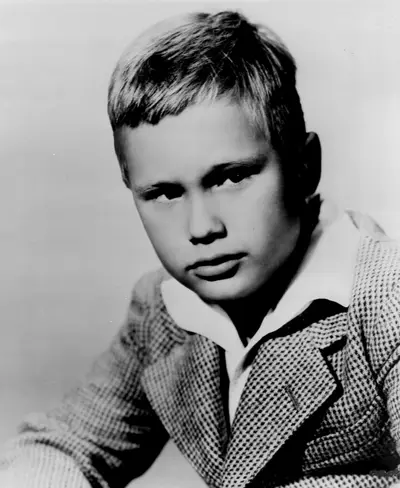
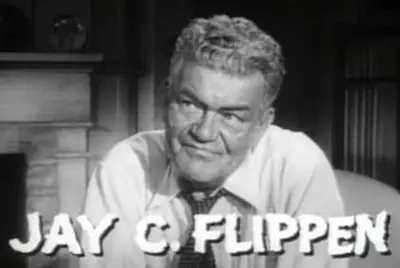
On his way to meet his old employer, the railway builder Ben Kimball (Jay C. Flippen), Grant McLaine rescues a boy, Joey Adams, from one of the outlaws. Kimball's payroll has been stolen three times by a gang led by Whitey Harbin and the Utica Kid, and if the men at the end-of-track camp are not paid soon they will leave. Grant agrees to carry $10,000 to the camp in secret. When the train is held up again he hides the money in Joey's shoebox, but the boy goes off with the Utica Kid, whom he admires, and the gang kidnaps Kimball's wife Verna.
Grant follows the gang to an abandoned mining camp and asks to join, revealing that he is the Kid's elder brother. He tries to win his brother back to an honest life, but the Kid will not change. When the gang's railway informer recognises Grant, a gunfight breaks out. Grant gets Verna away in an ore bucket, and with the Kid's girl, Charlie Drew, he makes his stand at the ore mill. When Whitey shoots at Joey, the Kid at last takes his brother's side, and he dies in Grant's arms after killing most of the gang. Grant takes the payroll back, returns to his old job and rides off after Joey with Charlie.
Production
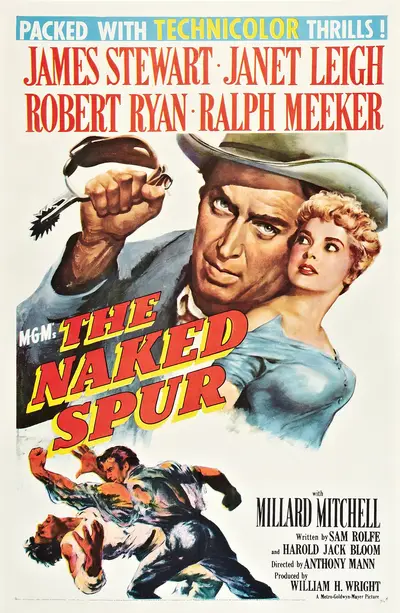
The project was planned as another Western for Stewart and Anthony Mann, who had made Winchester '73 (1950), Bend of the River (1952), The Naked Spur (1953), The Far Country (1954) and The Man from Laramie (1955) together. Mann disliked the script, and before filming began he left to make The Tin Star (1957) with Henry Fonda instead. Accounts differ on whether the casting of Audie Murphy and Stewart's wish to sing and play the accordion also played a part. The two men quarrelled and never worked together again. James Neilson, a newcomer to feature films, took over.
Aaron Rosenberg produced the film from a screenplay by Borden Chase, who had also written Winchester '73 and Bend of the River, based on a story by Norman A. Fox. William H. Daniels photographed it in Technirama, which made the blue skies and autumn colours of the mountains especially sharp. The railway scenes were filmed on the Durango and Silverton Narrow Gauge Railroad, using the Denver and Rio Grande Western K-28 locomotive No. 476, which still runs on the line today; some of the footage was used again in Murphy's Western Gunpoint (1966). Dimitri Tiomkin wrote the score and, with Ned Washington, the songs "Follow the River" and "You Can't Get Far Without a Railroad", which Stewart sings in the film. Stewart had played the accordion since childhood, but his playing was replaced by a professional's during post-production.
Reception
Night Passage did poorly at the box office, though Variety called it "a taut, well-made, sometimes fascinating Western". One critic remarked that the new villainous look suited Murphy better than the comedy he had just made. Stewart, needing a hit after two disappointing films, found one with his next picture, Alfred Hitchcock's Vertigo (1958).
Legend and history
- Two war heroes. Both leading men were highly decorated veterans of the Second World War: Murphy, an infantryman, held the Medal of Honor, and Stewart had flown bombers and commanded a squadron. Each also played the peace-loving hero Destry on screen, Stewart in Destry Rides Again (1939) and Murphy in Destry (1954).
- Did they ever make up? One account says that Stewart and Mann never spoke again; another says they did not speak until several years after the film was released.
Key facts
- Released: 1957
- Director: James Neilson
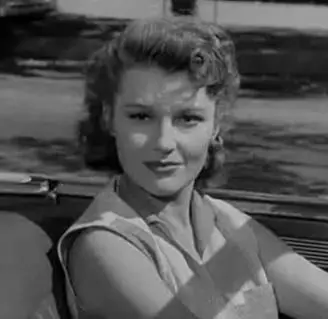
- Stars: James Stewart, Audie Murphy, Dan Duryea, Dianne Foster, Elaine Stewart, Brandon deWilde, Jay C. Flippen
- Producer: Aaron Rosenberg
- Screenplay: Borden Chase, from a story by Norman A. Fox
- Music: Dimitri Tiomkin
- Photography: William H. Daniels (Technirama)
- Studio: Universal-International
- Filmed at: Durango and Silverton Narrow Gauge Railroad, Colorado
- Running time: 89 minutes (data)
- IMDb rating: 6.6 (data)
- Directed by James Neilson
Cast
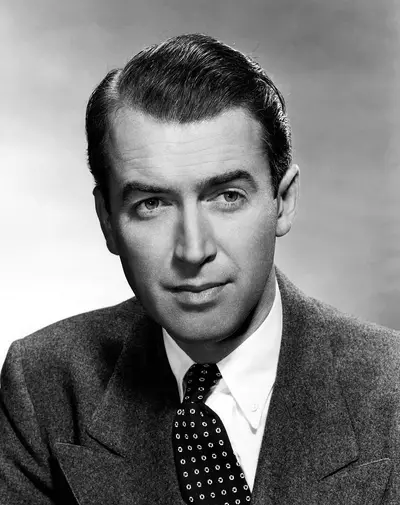
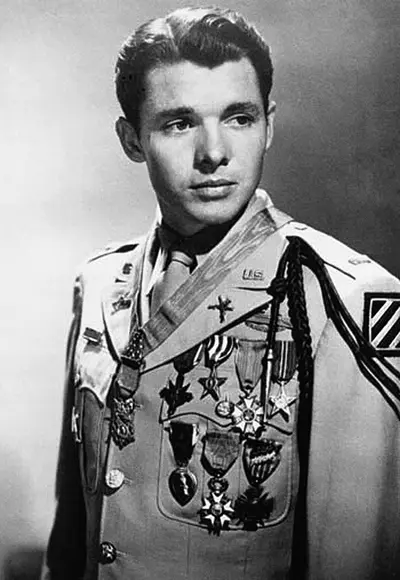
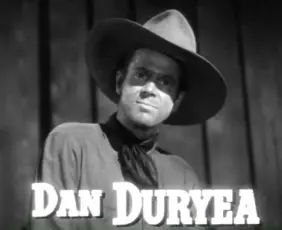
See also
If you liked this
Picked from this wiki's own links: same film series, same director, same lead actor.

True Grit RatingWhat's this?Woke: None foundSVLIMDb ★6.6Partly checked
True Grit score: 99/100, Gold Partly checked
How the score is worked out:
- Start100
- Diamond needs all five checks; not met (raw score under 109; IMDb under 7.0 or under 10,000 votes): 100 → 99
- Presumed (Hays Code, 1934–1967): violence, language presumed no, counted as checked0
- True Grit score99 · Gold
Classic Western checks
1 of 5 yes · Mostly classic
- Called “revisionist”YesYes (R6): AllMovie lists the film under its "Psychological Western" sub-genre, which this wiki counts as revisionist (owner ruling, 11 Nov 2026).[1]
- Settlers or cavalry as villainsNoThe villains are the outlaw gang led by Whitey Harbin and the Utica Kid, who rob a railroad payroll.[2]
- Faith shown negativelyNoThe plot shows no clergy or faith portrayed negatively.[2]
- History rewrittenNoFiction with invented characters; it portrays no real historical events or people, so nothing documented is rewritten.[2]
- A people shown as villainsNoNo: the plot source names the villains as individuals; no ethnic, national or religious people is the enemy as a group.[3]
Woke content (modern messaging)
None found0 of 8 items found so far
Show all 8 (2 not found · 6 not known)
Unless noted: Unknown.
- Characters recast for representationNot known
- Gender roles reversed or critiquedNot known
- Present-day political languageNot known
- Allegory for current politicsNot foundReleased in 1957, before the 21st-century debates this item covers, so it cannot be an allegory of them.[2]
- Western civilisation framed as inherently guiltyNot known
- Environmental activismNot foundNo: no source raises an environmental message (5 Nov 2026).[2]
- Source material changed for messagingNot known
- LGBT or gender-identity themesNot known
Content guide
Presumed no (Hays Code)
UK classification advice lists no sex or nudity issues.
Certificates: BBFC U FSK FSK 12
NoneMildModerateStrongNot known
Audience
★ 6.6/10 from viewers on IMDb (5k votes)No deduction (5.0 and up).
Sources
Information courtesy of IMDb (https://www.imdb.com). IMDb rating as of 13 October 2026.
Checked 18 October 2026 · Reviewed by Frontier Editor
Partly checked: 1 check not known. Not known items are left out of the score.
Member reviews
What members think. Member reviews never change the True Grit score. The True Grit score is worked out by the editors from sources.
Sources
- Night Passage (film) - Wikipedia en.wikipedia.org
- Wikidata: Q1216985 wikidata.org
- Wikimedia Commons: Night Passage - 1957 - Poster.png commons.wikimedia.org
- IMDb Non-Commercial Datasets developer.imdb.com
- Night passage q29sbgvjdglvbjpwwc0yndqxmte - bbfc.co.uk bbfc.co.uk
- Rotten Tomatoes (score via Wikidata) rottentomatoes.com
