
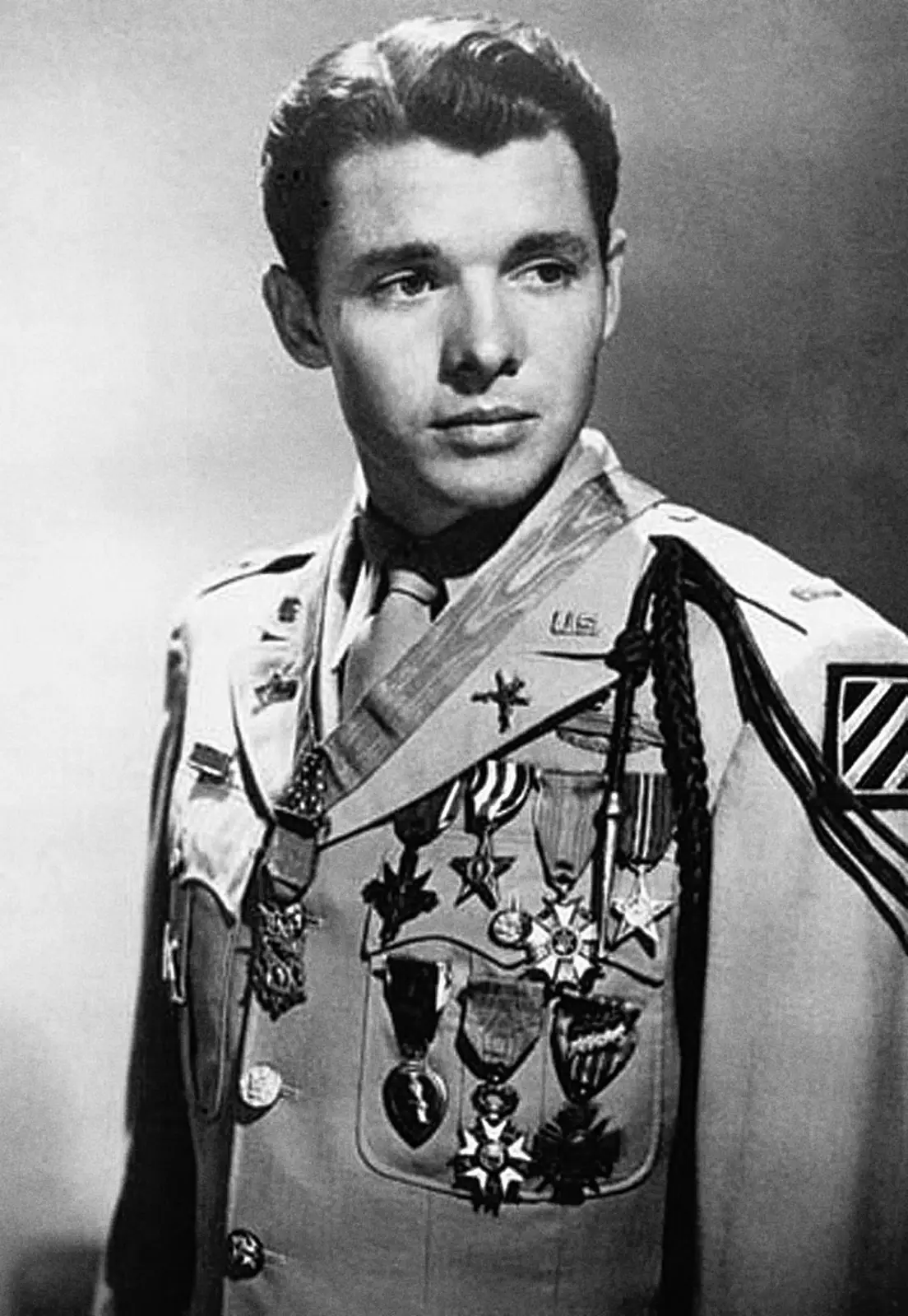

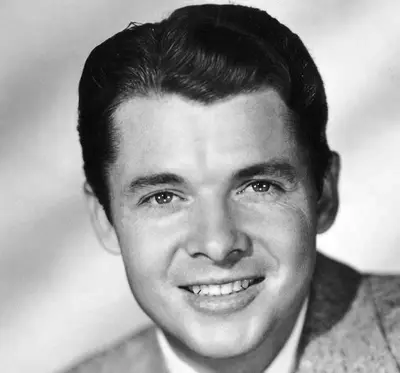
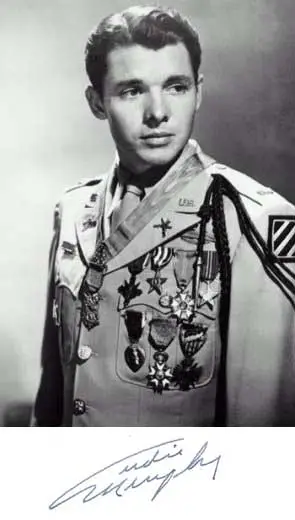
Audie Leon Murphy (1925–1971) was an American soldier, actor and songwriter, celebrated as the most decorated American combat soldier of the Second World War. He received the Medal of Honor at 19, and after the war he became a film star. Apart from his own war story, most of his screen work was in Westerns: he starred in dozens of them for Universal and other studios through the 1950s and 1960s, and in 1955 American theatre owners named him one of the year's most popular Western stars.
Early life and birth date
Murphy was born near Kingston, in Hunt County, Texas, one of twelve children of a poor sharecropping family. His year of birth is disputed. Accounts differ: some give 20 June 1924, others 20 June 1925. The later year is supported by statements from Murphy himself, by his memoir's co-author David McClure and by his California driving licence. In 1950 Murphy admitted that his birth date had been altered when he enlisted so that he would appear to be 18.
War hero
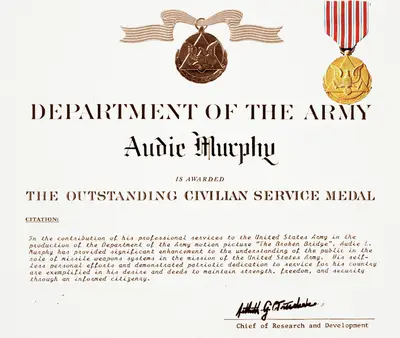
He joined the US Army in June 1942 and served in North Africa, Sicily, Italy, France and Germany with the 15th Infantry Regiment of the 3rd Infantry Division, rising from private to a battlefield commission as second lieutenant. He fought in eight campaigns, took part in two amphibious landings and was wounded three times. On 26 January 1945, at the Colmar Pocket near Holtzwihr in France, he held off a company of German infantry supported by tanks for about an hour, and then led a counter-attack while wounded. For this he received the Medal of Honor. He received every US Army award for valour, as well as French and Belgian decorations.
After the war he suffered from what would now be called post-traumatic stress disorder. He had nightmares and headaches, and he slept with a loaded pistol under his pillow.
Into films
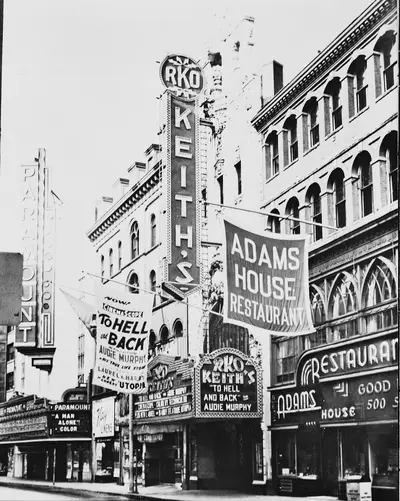
James Cagney and his brother William signed Murphy as a contract player and gave him training in acting, voice and dance. In 1949 he published his memoir To Hell and Back, written with David McClure, which became a best-seller. Universal then signed him to a seven-year contract, and his first film for the studio cast him as Billy the Kid in The Kid from Texas (1950). The same year he played the outlaw Jesse James in Kansas Raiders and starred in Sierra with Wanda Hendrix, who was then his wife.
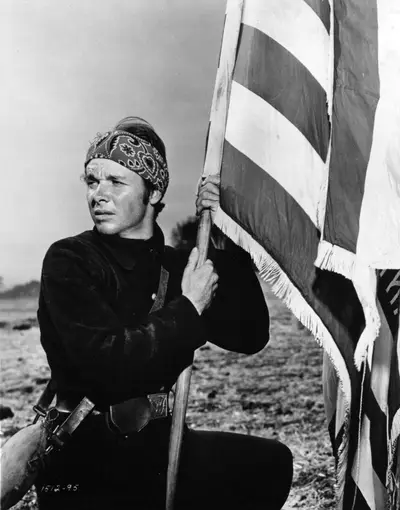
Universal lent him to MGM to play the Youth in John Huston's The Red Badge of Courage (1951), adapted from Stephen Crane's Civil War novel. He made The Duel at Silver Creek (1952) for Don Siegel and took the title role in George Marshall's Destry (1954), a remake of Destry Rides Again. In 1955 he played himself in the film of To Hell and Back, which became the biggest hit in Universal's history up to that time.
The Western star
From then on Murphy was chiefly a Western actor. He played John Clum in Walk the Proud Land (1956), and in 1957 he played the Utica Kid opposite James Stewart in Night Passage. In 1957 British audiences voted him the most popular Western actor. In 1959 he made three Westerns, including No Name on the Bullet, in which he played a hired killer; the film was well received by critics.
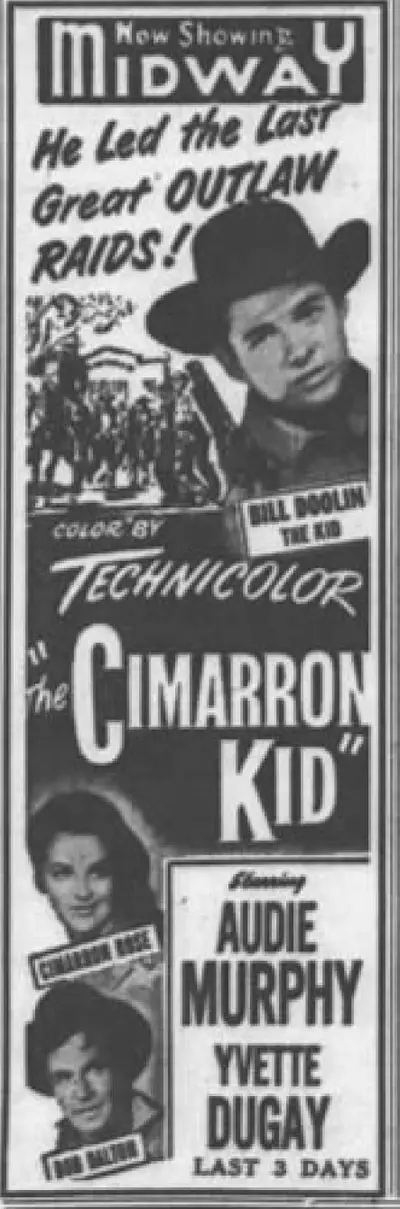
For John Huston he played Cash Zachary in The Unforgiven (1960), alongside Burt Lancaster and Audrey Hepburn. His last starring lead was in 40 Guns to Apache Pass (1967). He first met the director Budd Boetticher through boxing, and Boetticher cast him in the title role of The Cimarron Kid (1952), Boetticher's first Western, and wrote and directed his last film, A Time for Dying (1969).
In all, Murphy appeared in more than 40 films. He also wrote the lyrics of country and western songs, some of which were recorded by Dean Martin, Porter Wagoner and Eddy Arnold.
Death
On 28 May 1971 Murphy was killed when the private plane in which he was a passenger crashed into a mountain in fog and rain near Roanoke, Virginia. His body was not found for three days. He was buried with full military honours at Arlington National Cemetery on 7 June 1971.
Key facts
- Born: 20 June 1925 (some accounts give 1924), near Kingston, Hunt County, Texas, US
- Died: 28 May 1971, near Roanoke, Virginia, US
- Military service: US Army, 1942–1945; Medal of Honor
- First Universal film: The Kid from Texas (1950), as Billy the Kid
- Notable Western: The Unforgiven (1960)
- Buried: Arlington National Cemetery
- Occupations (Wikidata): military officer, military personnel, actor, film actor
- Born 1925-06-20
- Died 1971-05-28
See also
Filmography
As actor 25
- 1950Kansas Raiders
- 1950Sierra
- 1950The Kid from Texas
- 1952The Cimarron Kid
- 1952The Duel at Silver Creek
- 1953Column South
- 1953Tumbleweed
- 1954Destry
- 1954Drums Across the River
- 1954Ride Clear of Diablo
- 1957Night Passage
- 1957The Guns of Fort Petticoat
- 1958Ride a Crooked Trail
- 1959No Name on the Bullet
- 1959The Wild and the Innocent
- 1960Hell Bent for Leather
- 1960Seven Ways from Sundown
- 1960The Unforgiven
- 1961Posse from Hell
- 1964Apache Rifles
- 1964Bullet for a Badman
- 1964The Quick Gun
- 1966The Texican
- 196740 Guns to Apache Pass
- 1969A Time for Dying
Books 1
- 1949To Hell and Back
Television 1
- 1961Whispering Smith main cast
Gallery 8








Sources
- Audie Murphy - Wikipedia en.wikipedia.org
- Wikidata: Q337185 wikidata.org
- Wikimedia Commons: Audie Murphy.jpg commons.wikimedia.org
- Murphy, Audie Leon - Handbook of Texas Online tshaonline.org