
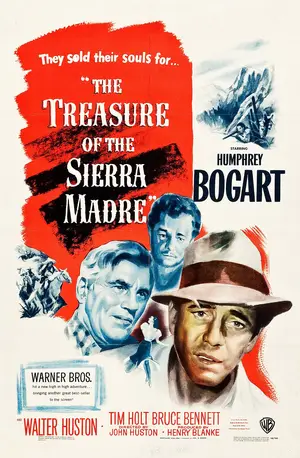
True Grit Rating: The Treasure of the Sierra Madre
Loading the ticket…
The Treasure of the Sierra Madre is a 1948 American adventure Western directed by John Huston from B. Traven's novel The Treasure of the Sierra Madre. Humphrey Bogart stars as Fred C. Dobbs, with Walter Huston as the old prospector Howard and Tim Holt as Bob Curtin. Shot largely on location in Mexico, it is a classic story of gold, greed and what the wilderness does to men. It won three Academy Awards, including Best Director and Best Screenplay for John Huston and Best Supporting Actor for his father Walter.
Plot
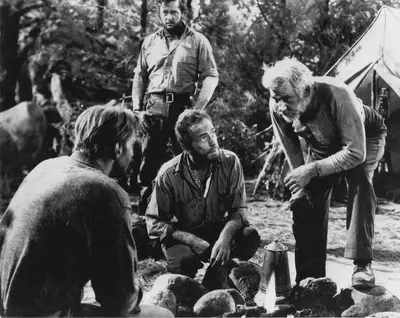
In the oil port of Tampico, down-and-out Americans Dobbs and Curtin pool what little money they have with Howard, a veteran prospector who knows the Sierra Madre. They hike into the mountains, endure hardship and at last strike gold. As the dust piles up, suspicion grows. Dobbs in particular begins to see enemies everywhere — bandits, partners, even the wind in the trees.
A claim jumper, federal troops and a bandit gang led by Gold Hat all threaten the camp. When the partners finally try to bring the gold down to civilisation, trust collapses completely. The ending is both savage and strangely comic: the mountain takes back what the men dug out of it.
Production
Warner Bros. backed Huston's long-planned adaptation. Much of the filming was done in Mexico, unusual for a major studio picture of the time, with additional work in the United States. Walter Huston, who had appeared in his son's earlier films, threw himself into the role of Howard, toothless grin and all. Bogart, then one of Hollywood's biggest stars, played against his heroic image as a man eaten away by fear and avarice. The bandit's line "We don't need no stinking badges!" (often misquoted) entered popular speech.
Reception and legacy
The film was a critical triumph and has only grown in stature. It is frequently listed among the greatest American films and among the essential Western-adjacent classics of the studio era — a story set in Mexico's mountains rather than on the cattle plains, but driven by the same questions of honour, wilderness and human weakness. The American Film Institute and countless directors have cited it as an influence. It sits naturally beside other Golden Age titles and beside later neo-Westerns that treat greed as the real frontier enemy.
Key facts
- Released: 1948
- Director / screenplay: John Huston
- Based on: the novel by B. Traven
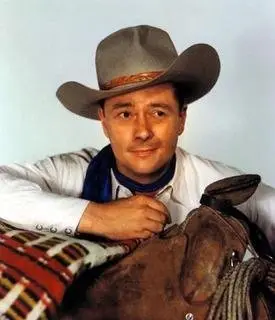
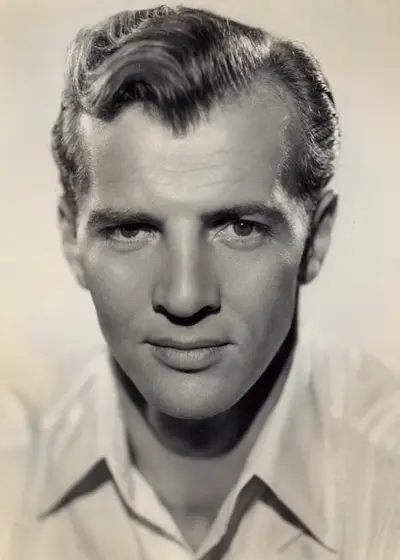
- Stars: Humphrey Bogart, Walter Huston, Tim Holt
- Running time: 126 minutes
- IMDb rating: 8.2 (data)
- Oscars: Best Director, Best Screenplay, Best Supporting Actor (Walter Huston)
- Directed by John Huston
Cast

See also
Frontier folk
This film is listed on: Comancheros and bandit gangs · Mexican soldiers, revolutionaries and rurales · Blacksmiths, railroad workers and prospectors (all Frontier folk)
Gallery 3



True Grit RatingWhat's this?Woke: None found★★★★★SVLIMDb ★8.2Partly checked
True Grit score: 100/100, Diamond Partly checked
How the score is worked out:
- Start100
- Traditional values: 3 stars+9
- Kept within 0–100 (was 109)
- True Grit score100 · Diamond
Classic Western checks
0 of 5 yes · Classic Western · 1 not known
- Called “revisionist”Not knownUnknown.
- Settlers or cavalry as villainsNoThe dangers are the prospectors' own greed and a band of bandits, not settlers as a group.[1]
- Faith shown negativelyNoThe plot shows no clergy or faith portrayed negatively.[2]
- History rewrittenNoFiction with invented characters; it portrays no real historical events or people, so nothing documented is rewritten. [1]
more
Fiction with invented characters; it portrays no real historical events or people, so nothing documented is rewritten. B. Traven’s novel, 1920s Mexico. - A people shown as villainsNoNo: the plot source pins the villainy on named individuals or a specific band, not on a people as a whole.[3]
Woke content (modern messaging)
None found0 of 8 items found so far
Show all 8 (2 not found · 6 not known)
Unless noted: Unknown.
- Characters recast for representationNot known
- Gender roles reversed or critiquedNot known
- Present-day political languageNot known
- Allegory for current politicsNot foundReleased in 1948, before the 21st-century debates this item covers, so it cannot be an allegory of them.[2]
- Western civilisation framed as inherently guiltyNot known
- Environmental activismNot foundNo: no source raises an environmental message (5 Nov 2026).[2]
- Source material changed for messagingNot known
- LGBT or gender-identity themesNot known
Traditional values
★★★★★3/5[1]
From one parents' guide's positive messages and role models ratings: positive messages some (3) and positive role models a little (2); average 2.5, rounded to …
Content guide
- SSex & nudityMildMild sex, romance and nudity (1/5 in one parents' guide).[1]
- VViolenceModerateModerate violence and scariness (3/5 in one parents' guide).[1]
- LLanguageMildMild language (1/5 in one parents' guide).[1]
NoneMildModerateStrongNot known
Audience
★ 8.2/10 from viewers on IMDb (143k votes)No deduction (5.0 and up).
Sources
Information courtesy of IMDb (https://www.imdb.com). IMDb rating as of 13 October 2026.
Checked 17 October 2026 · Reviewed by Frontier Editor
Partly checked: 1 check not known. Not known items are left out of the score.
Member reviews
What members think. Member reviews never change the True Grit score. The True Grit score is worked out by the editors from sources.
Sources
- The Treasure of the Sierra Madre (film) - Wikipedia en.wikipedia.org
- Wikidata: Q251559 wikidata.org
- Wikimedia Commons: The Treasure of the Sierra Madre (1947 poster).jpg commons.wikimedia.org
- The Treasure of the Sierra Madre - Britannica britannica.com
- IMDb Non-Commercial Datasets developer.imdb.com
- The treasure of the sierra madre q29sbgvjdglvbjpwwc0zmji0njg - bbfc.co.uk bbfc.co.uk
- The treasure of the sierra madre - commonsensemedia.org commonsensemedia.org
- Rotten Tomatoes (score via Wikidata) rottentomatoes.com
- Metacritic (score via Wikidata) metacritic.com
- Wikimedia Commons: Humphrey Bogart Walter Huston The Treasure of the Sierra Madre Still.jpg commons.wikimedia.org
- Wikimedia Commons: Jungapeo.jpg commons.wikimedia.org
- Wikimedia Commons: Sierra Madre Occidental.jpg commons.wikimedia.org