
True Grit Rating: They Died with Their Boots On
Loading the ticket…
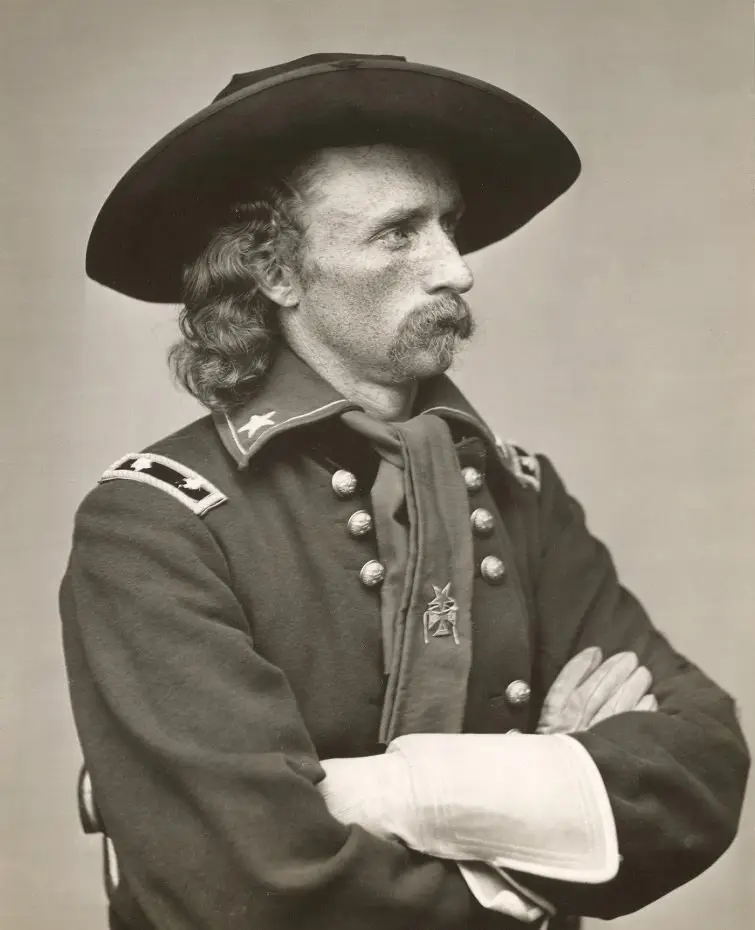
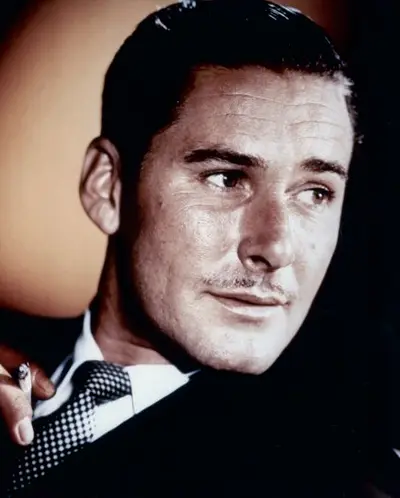
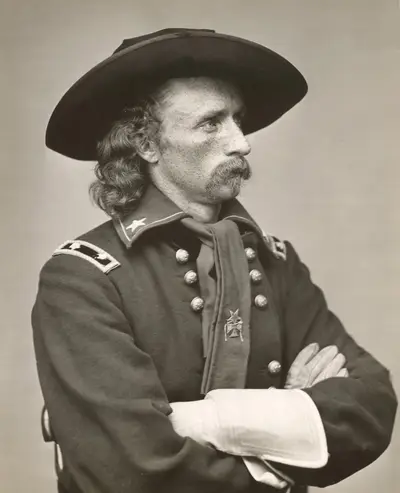
They Died with Their Boots On is a 1941 American Western directed by Raoul Walsh for Warner Bros., starring Errol Flynn as George Armstrong Custer, from his first day at West Point through the Civil War to his death at the Battle of the Little Bighorn. Olivia de Havilland plays his wife, Libbie, in the last of her eight films with Flynn, and Arthur Kennedy is his old enemy Ned Sharp. A stirring, romantic epic with a fine Max Steiner score, it was one of the studio's biggest hits of the season, but its picture of Custer is largely fiction.
Plot
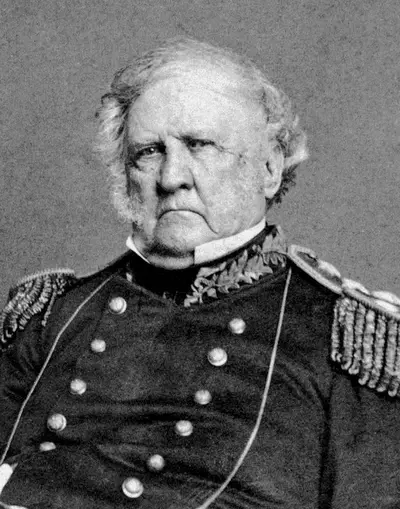
Custer arrives at West Point in a flamboyant uniform of his own design, piles up demerits for pranks and graduates at the bottom of his class when the Civil War breaks out. He meets Libbie Bacon while under a punishment of silence. With the help of General Winfield Scott (Sydney Greenstreet) he joins the cavalry, becomes a hero by disobeying orders to hold a bridge, and through a clerical mistake is promoted to brigadier general, leading the Michigan Brigade at Gettysburg. He marries Libbie, but civilian life bores him.
Sent west as lieutenant colonel of the 7th Cavalry, he takes charge of a rowdy, undisciplined garrison at Fort Abraham Lincoln, closes the saloon of Ned Sharp, who has been selling repeating rifles to the Lakota, and adopts "Garryowen" as the regiment's song. After fighting the Lakota under Crazy Horse (Anthony Quinn) he helps make a treaty that protects their sacred Black Hills. Sharp and a corrupt politician then spread a false rumour of gold in the Hills, and miners and settlers pour in. Custer is relieved of command, protests to Congress in vain and wins his post back from President Grant. Knowing that the war has been started for the profit of a few men, he leads his regiment to its death at the Little Bighorn to save an infantry column, leaving behind a letter that names the guilty men and clears the Lakota of blame.
History behind the film
The real Custer was a dashing, fearless and much-debated soldier, and the film keeps his West Point record, his rapid wartime rise and his devotion to Libbie. Much of the rest is invented. Custer did not drink, and he was never out of the army for any length of time. The story of a gold rumour made up by speculators is fiction: Custer's own 1874 expedition into the Black Hills confirmed that there was gold there, and the rush that followed brought thousands of miners onto land guaranteed to the Lakota by the Treaty of Fort Laramie of 1868, one of the causes of the war with the Lakota and Cheyenne. At the real battle the troopers had boxed their sabres and left them behind, Custer had cut his famous long hair short before the campaign, and the brothers, brother-in-law and nephew who died with him are left out of the film. The film does reflect Custer's recorded sympathy for the tribes' plight in losing their lands.
Production
The film was an original Warner Bros. screenplay by Wally Kline and Aeneas MacKenzie, produced by Hal B. Wallis and Robert Fellows, with photography by Bert Glennon. Joan Fontaine was offered the part of Libbie first and turned it down. The battle scenes were filmed in a wide valley about forty miles north of Los Angeles that resembled the northern plains. Only sixteen Lakota came to the casting call, and hundreds of Filipino and white extras were dressed as Lakota warriors; the cost of more than a thousand extras helped push the budget over $2 million. Three men were killed during filming: one rider fell from his horse and broke his neck, a stuntman had a heart attack, and the actor Jack Budlong was impaled on the real sabre he had insisted on carrying in a cavalry charge.
Max Steiner's score is built round "Garryowen", the Irish tune that the 7th Cavalry really did take as its own.
Reception
The film earned more than $4 million worldwide and a profit of about $1.5 million, the studio's third biggest earner of the season. Jack Warner told the cast that it was one of Flynn's best: "If Custer really died like that history should applaud him." Variety's reviewer in 1941 found it full of action and of anachronisms. Later critics have been harder on its history but have often praised Flynn's performance, which takes Custer from a silly boy to a grown man.
Legend and history
- Mixed up with Santa Fe Trail. The film is often confused with Santa Fe Trail (1940), in which Flynn and de Havilland also starred and Ronald Reagan played Custer.
- Crazy Horse on screen. Anthony Quinn's Crazy Horse is the only Lakota character with a real part in the film.
Key facts
- Released: 1941
- Director: Raoul Walsh
- Stars: Errol Flynn, Olivia de Havilland, Arthur Kennedy, Sydney Greenstreet, Anthony Quinn
- Screenplay: Wally Kline and Aeneas MacKenzie
- Music: Max Steiner
- Studio: Warner Bros.
- Running time: 140 minutes (data)
- IMDb rating: 7.2 (data)
- Directed by Raoul Walsh
Cast

See also
If you liked this
Picked from this wiki's own links: same film series, same director, same lead actor.
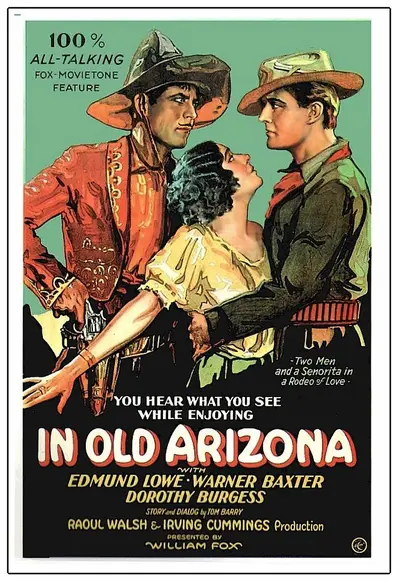
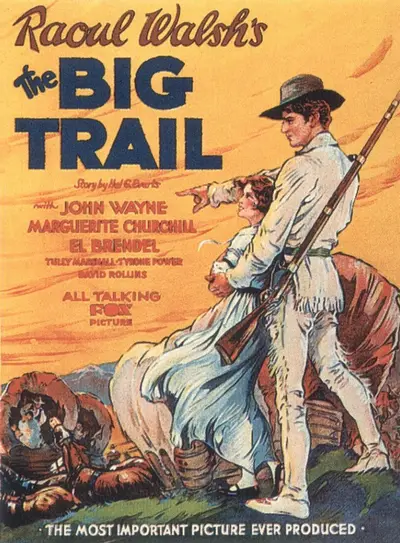


Frontier folk
This film is listed on: Cavalry troopers and frontier scouts · Corrupt lawmen and officials · Gunrunners and whisky traders · Lakota and other Sioux (all Frontier folk)
Gallery 3


True Grit RatingWhat's this?Close call: under reviewWoke: None foundSVLIMDb ★7.2Partly checked
True Grit score: 84/100, Silver Partly checked
How the score is worked out:
- Start100
- History rewritten: yes−15
- Close call: under review: 85 → 84
- Presumed (Hays Code, 1934–1967): sex & nudity, violence, language presumed no, counted as checked0
- True Grit score84 · Silver
Classic Western checks
1 of 5 yes · Mostly classic
- Called “revisionist”NoNo: described as a conventional Western, not a revisionist one.[1]
- Settlers or cavalry as villainsNoNo: the villains are individuals, a gang, a boss, a posse or a cattle baron, not settlers as a group. [2][1]
more
No: the villains are individuals, a gang, a boss, a posse or a cattle baron, not settlers as a group. The villains are the trader Ned Sharp and the politicians in league with him, who spread a false rumour of gold; settlers then stream into the Black Hills in breach of the treaty, and the film ends saying the war threatened all the white settlers. - Faith shown negativelyNoNo: reviews show no clergy or faith portrayed negatively.[3]
- History rewrittenYesThe film departs widely from the record. [4][5][6][7]
more
The film departs widely from the record. Custer had sworn off drink in 1862 and did not leave the army after the Civil War. His first western posting was Kansas, not Dakota. Ned Sharp, the businessman who sets off the Black Hills gold rush in the film, is invented: the gold was found and reported by Custer's own 1874 expedition. - A people shown as villainsNoNo: the plot source pins the villainy on named individuals, a gang or a specific band, not on a people as a whole.[8][1]
Woke content (modern messaging)
None found0 of 8 items found so far
Show all 8 (2 not found · 6 not known)
Unless noted: Unknown.
- Characters recast for representationNot knownAn original screenplay that portrays real people (Custer, Crazy Horse, Grant).[2]
- Gender roles reversed or critiquedNot known
- Present-day political languageNot known
- Allegory for current politicsNot foundReleased in 1941, before the 21st-century debates this item covers, so it cannot be an allegory of them.[2]
- Western civilisation framed as inherently guiltyNot known
- Environmental activismNot foundNo: no source raises an environmental message (5 Nov 2026).[2]
- Source material changed for messagingNot known
- LGBT or gender-identity themesNot known
Content guide
- SSex & nudityPresumed no
- VViolencePresumed no
- LLanguagePresumed no
Presumed no (Hays Code)
NoneMildModerateStrongNot known
Audience
★ 7.2/10 from viewers on IMDb (7.6k votes)No deduction (5.0 and up).
Sources
- Grokipedia: They Died with Their Boots On
- Wikipedia: They Died with Their Boots On (plot)
- Dennis Schwartz Reviews: They Died with Their Boots On
- TCM, Jeff Stafford, article (23 Apr 2003) (checked 18 October 2026)
- The Guardian, Alex von Tunzelmann, “Reel history” (12 Feb 2009) (checked 18 October 2026)
- HistoryNet, Louis Kraft, “Custer: The Truth Behind the Silver Screen Myth” (checked 18 October 2026)
- South Dakota History 4:3 (1974), “Exploring the Black Hills, 1855–1875”, reprinting Custer’s dispatch of 2 Aug 1874 (checked 18 October 2026)
- Once Upon a Time in a Western: They Died with Their Boots On
Information courtesy of IMDb (https://www.imdb.com). IMDb rating as of 13 October 2026.
Checked 18 October 2026 · Reviewed by Frontier Editor
Partly checked: 1 check not known. Not known items are left out of the score.
Member reviews
What members think. Member reviews never change the True Grit score. The True Grit score is worked out by the editors from sources.
Sources
- They Died with Their Boots On - Wikipedia en.wikipedia.org
- Wikidata: Q1534778 wikidata.org
- IMDb Non-Commercial Datasets developer.imdb.com
- They died with their boots on q29sbgvjdglvbjpwwc0ynzm2njy - bbfc.co.uk bbfc.co.uk
- Rotten Tomatoes (score via Wikidata) rottentomatoes.com
- Wikimedia Commons: G a custer.jpg commons.wikimedia.org
- Wikimedia Commons: Winfield Scott by Fredricks, 1862 crop.jpg commons.wikimedia.org