
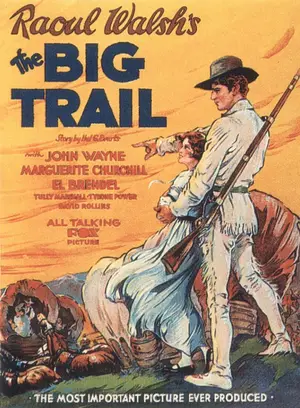

True Grit Rating: The Big Trail
Loading the ticket…
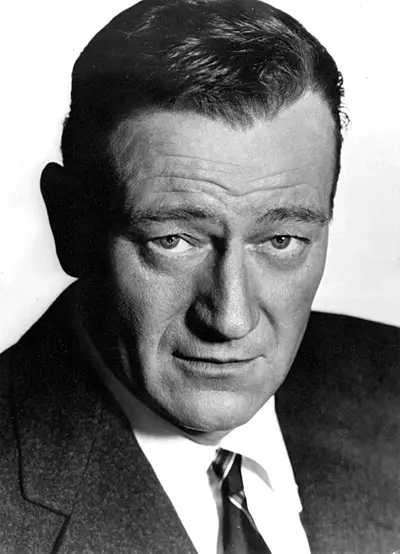
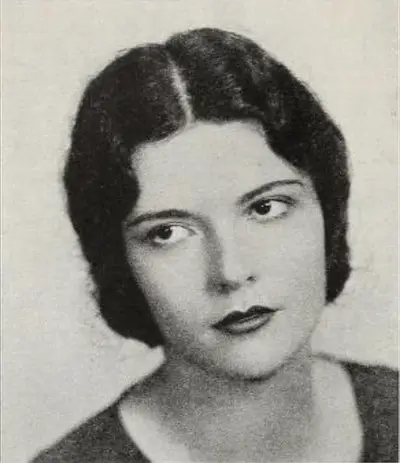
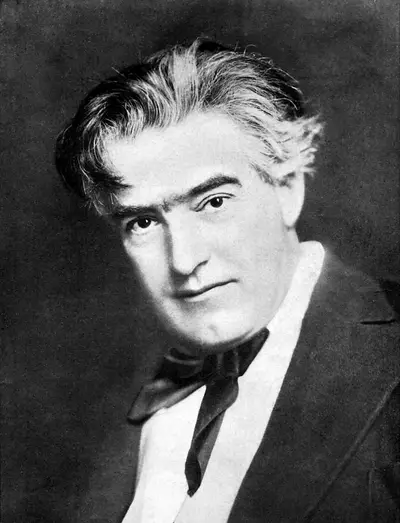
The Big Trail is a 1930 American epic Western directed by Raoul Walsh and starring a 23-year-old John Wayne in his first leading role, with Marguerite Churchill, El Brendel, Tully Marshall and Tyrone Power Sr. It follows a great wagon train of settlers along the Oregon Trail, and was shot on location across the American West in the experimental 70 mm Grandeur widescreen process. The film failed at the box office, but its sweeping pictures of pioneers, oxen and wagons crossing rivers, deserts and mountains have earned it a lasting reputation. In 2006 it was selected for preservation in the US National Film Registry.
Plot
The young trapper Breck Coleman (Wayne) returns to Missouri looking for the men who murdered an old trapper friend on the Santa Fe Trail the winter before. At a trading post he comes to suspect the bullwhacker Red Flack (Power) and his partner Lopez. When he learns that Flack has been hired to boss a freight train west along the Oregon Trail, Coleman agrees to scout for the settlers' wagon train that is travelling alongside it, so that he can keep the killers in sight.
On the journey the emigrants face river crossings, storms, a buffalo hunt, a Cheyenne attack and the lowering of wagons down sheer cliffs. Coleman falls in love with Ruth Cameron (Churchill), whom he had first kissed by mistake, though she keeps him at arm's length and spends time with a gambler who is one of Flack's associates. Flack plots repeatedly to have Coleman killed, but in the end all three villains meet frontier justice. The pioneers reach a valley among the giant redwoods, where Coleman and Ruth make their home.
Production
Walsh used 93 actors, as many as 725 American Indians from five tribes, 185 wagons, 1,800 cattle, 1,400 horses and 500 buffalo. Filming ran from 20 April to 20 August 1930 at locations in several states, including the Grand Canyon, Yosemite and the redwoods, ending with a buffalo stampede near Moiese, Montana. For authenticity the wagons were drawn by oxen rather than horses, and they were lowered on ropes into canyons where the trail demanded it. Ward Bond appears in a supporting part, and Power, father of the later star Tyrone Power, made his only sound film; he died the following year.
The picture was shot twice over, in 70 mm Grandeur and in standard 35 mm, by separate camera crews and edited separately. The 70 mm version relies on wide panoramas with few close-ups, while the 35 mm version cuts in closer. Foreign-language versions were also made in French, German, Italian and Spanish with different casts.
Release and reception
The film opened in October 1930. The New York Times marvelled at the "naturalness and beauty" of its scenes. But few cinemas, hard hit by the Depression, would pay for widescreen equipment, and the picture lost money. As a result, Wayne spent most of the 1930s in low-budget serials and B Westerns until Stagecoach (1939) made him a major star.
For decades the film was seen only in its 35 mm version. In the 1980s the Museum of Modern Art preserved the shrunken 70 mm nitrate negative using a specially built printer, and both versions were released together on DVD in 2008.
Disputed or inconsistent points
- John Ford: it is said that the script was first offered to John Ford, who passed it to his friend Walsh. This is unconfirmed.
Key facts
- Released: October 1930
- Director: Raoul Walsh
- Studio: Fox Film Corporation
- Format: 70 mm Grandeur and 35 mm versions
- Filming: 20 April – 20 August 1930, on location in several states
- Running time: about 125 minutes (70 mm version); the 35 mm version is shorter
- Status: public domain in the US since 2026
- National Film Registry: selected 2006
- Note: John Wayne's first leading role
- Directed by Raoul Walsh
- Released 1930
Cast


See also
If you liked this
Picked from this wiki's own links: same film series, same director, same lead actor.
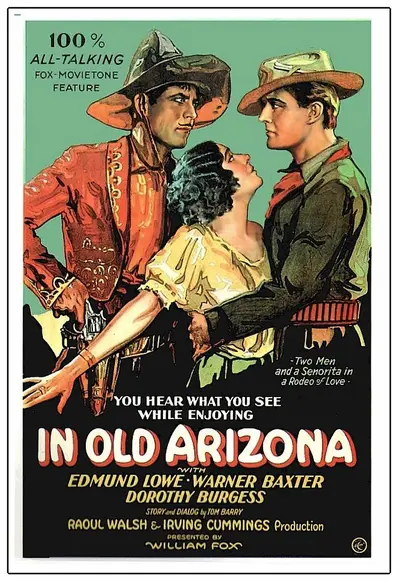 In Old Arizona1928Also directed by Raoul Walsh


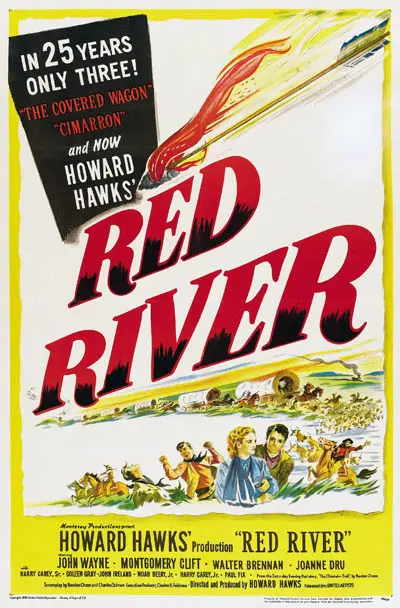 Red River1948Also starring John Wayne
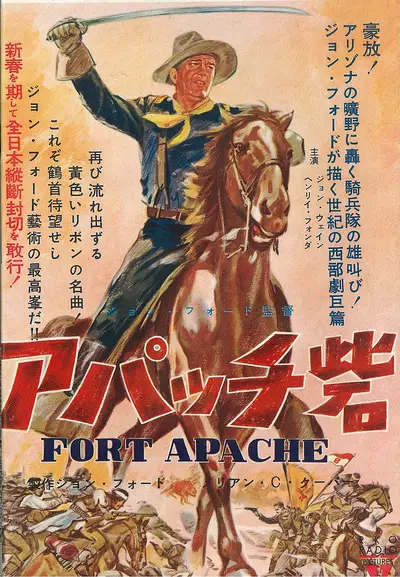 Fort Apache1948Also starring John Wayne
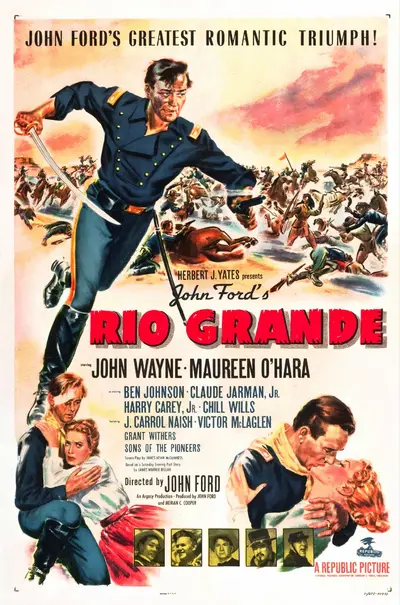 Rio Grande1950Also starring John Wayne

Frontier folk
This film is listed on: Homesteaders, settlers and wagon-train families · Mountain men and trappers · Cheyenne (all Frontier folk)
True Grit RatingWhat's this?Woke: None foundIMDb ★7.2Partly checked
True Grit score: 99/100, Gold Partly checked
How the score is worked out:
- Start100
- Diamond needs all five checks; not met (raw score under 109; IMDb under 7.0 or under 10,000 votes; content guide not complete): 100 → 99
- True Grit score99 · Gold
Classic Western checks
0 of 5 yes · Classic Western
- Called “revisionist”NoNo: a review describes it as a routine, standard, conventional, old-fashioned, traditional or classic Western.[1]
- Settlers or cavalry as villainsNoThe villains are Red Flack and his henchman Lopez, who murdered the hero's friend; the settlers' wagon train is the heroes' side. [2]
more
The villains are Red Flack and his henchman Lopez, who murdered the hero's friend; the settlers' wagon train is the heroes' side. A Cheyenne band attacks the train on the way. - Faith shown negativelyNoThe plot shows no clergy or faith portrayed negatively.[2]
- History rewrittenNoFiction with invented characters set on the real Oregon Trail; the credits cite Francis Parkman's 1849 travel account as a source.[2][3][4]
- A people shown as villainsNoNo: no ethnic, national or religious people is cast as the enemy as a group; the villains are individuals.[5]
Woke content (modern messaging)
None found0 of 8 items found so far
Show all 8 (2 not found · 6 not known)
Unless noted: Unknown.
- Characters recast for representationNot knownA story by Hal G.[2]
- Gender roles reversed or critiquedNot known
- Present-day political languageNot known
- Allegory for current politicsNot foundReleased in 1930, before the 21st-century debates this item covers, so it cannot be an allegory of them.[2]
- Western civilisation framed as inherently guiltyNot known
- Environmental activismNot foundNo: no source raises an environmental message (5 Nov 2026).[2]
- Source material changed for messagingNot known
- LGBT or gender-identity themesNot known
Audience
★ 7.2/10 from viewers on IMDb (5.3k votes)No deduction (5.0 and up).
Sources
- Grokipedia: The Big Trail (1930)
- Wikipedia: The Big Trail (plot) (checked 18 October 2026)
- AFI Catalog: The Big Trail (1930) (checked 18 October 2026)
- Library of Congress, National Film Registry essay, Marilyn Ann Moss, “The Big Trail” (checked 18 October 2026)
- Once Upon a Time in a Western (July)
Information courtesy of IMDb (https://www.imdb.com). IMDb rating as of 13 October 2026.
Checked 18 October 2026 · Reviewed by Frontier Editor
Partly checked: 4 checks not known. Not known items are left out of the score.
Member reviews
What members think. Member reviews never change the True Grit score. The True Grit score is worked out by the editors from sources.
Sources
- The Big Trail - Wikipedia en.wikipedia.org
- Wikidata: Q1198850 wikidata.org
- Wikimedia Commons: The Big Trail (1930 film poster).jpg commons.wikimedia.org
- The Big Trail - Britannica britannica.com
- IMDb Non-Commercial Datasets developer.imdb.com
- The big trail q29sbgvjdglvbjpwwc0yndkymtu - bbfc.co.uk bbfc.co.uk
- Rotten Tomatoes (score via Wikidata) rottentomatoes.com