
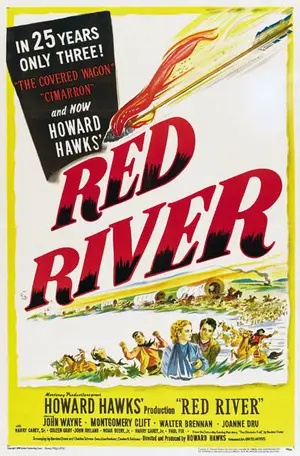

True Grit Rating: Red River
Loading the ticket…
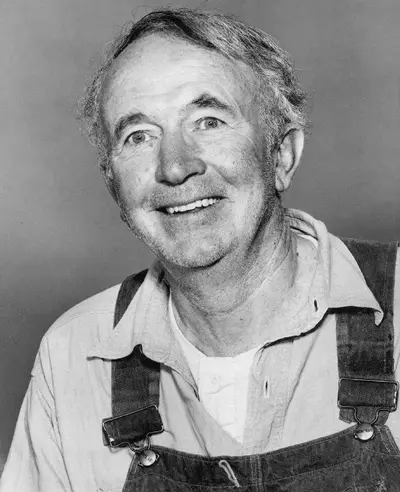
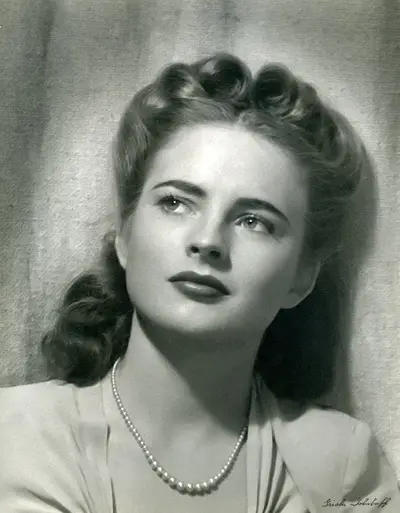
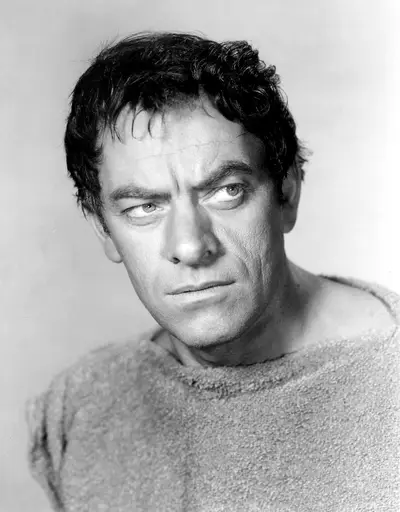
Red River is a 1948 American Western directed and produced by Howard Hawks and starring John Wayne and Montgomery Clift. It gives a fictional account of the first cattle drive from Texas to Kansas along the Chisholm Trail. The drama comes from a growing feud over how the drive should be run between the hard Texas rancher who starts it (Wayne) and his adopted son (Clift). Walter Brennan, Joanne Dru and Harry Carey Jr. are among the supporting cast. It is widely considered Hawks' most enduring film.
Plot
In 1851 Thomas Dunson (Wayne) leaves a wagon train with his old friend Groot (Brennan) to start a cattle ranch in Texas, telling the woman he loves to wait until he sends for her. Comanches attack the wagon train, and Dunson takes in its only survivor, a teenage boy named Matt Garth. They cross the Red River into Texas, where Dunson founds his ranch under the "Red River D" brand. He promises to add an "M" to the brand when Matt has earned it.
Fourteen years later, after the Civil War, the ranch is nearly bankrupt because there is no market for beef in the South. Dunson decides to drive his 10,000 head about 1,000 miles to the railhead at Sedalia, Missouri. A gunman, Cherry Valance, joins the drive and says there may be a railroad much closer, at Abilene, Kansas, but Dunson refuses to change course. As stampedes, hunger and exhaustion wear the men down, Dunson's rule becomes harsher. The drive turns into a contest of wills between father and son, and Dunson swears a vengeance that hangs over the rest of the journey.
Production
The screenplay by Borden Chase and Charles Schnee was based on Chase's story serialised in The Saturday Evening Post in 1946. Chase's ending was darker than the film's. The roles of Dunson and Matt were originally intended for Gary Cooper and Cary Grant.
The film was shot in 1946 and copyrighted in 1947, but it was not widely released until 17 September 1948. Unhappy with the editing, Hawks brought in Christian Nyby during the shoot, and Nyby spent about a year cutting the film. Before release, Howard Hughes sued Hawks, claiming that the climactic scene was too similar to that of The Outlaw (1943), on which both men had worked. Hawks marked the end of shooting by giving silver "Red River D" belt buckles to members of the cast and crew. Dimitri Tiomkin wrote the score.
Reception
The film was a critical and commercial success. Variety called it "a spectacle of sweeping grandeur" with "a first rate script", adding that Wayne "has his best assignment to date". Bosley Crowther of The New York Times praised several fine performances but disliked the glamorised role of Dru's character. John Ford reportedly said of Wayne's performance, "I didn't know the big son of a bitch could act!" Wayne won particular praise for playing a man much older than himself. The film was nominated for Academy Awards for Best Motion Picture Story (Chase) and Best Film Editing (Nyby).
Legacy
The film has been described as a Western version of Mutiny on the Bounty. Footage from Red River was later used in the opening montage of Wayne's last film, The Shootist (1976), to show his character's past. It was added to the US National Film Registry in 1990, and in 2008 the American Film Institute named it the fifth-greatest American Western. A pre-release version, once thought lost, was found as a Cinémathèque Française print and released by the Criterion Collection.
Disputed or inconsistent points
- Title of Chase's story: accounts differ: some give it as "Blazing Guns on the Chisholm Trail", others as The Chisholm Trail.
- Where the herd ends up: accounts differ: some summaries say the herd reaches Missouri, others that the drive ends at Abilene, Kansas, on the Chisholm Trail. This page follows the second.
- Running time: accounts differ: some give 133 minutes, others say 133 minutes was the length of the pre-release version.
Key facts
- Released: 17 September 1948 (wide release; filmed 1946)
- Director and producer: Howard Hawks
- Screenplay: Borden Chase and Charles Schnee, from Chase's Saturday Evening Post story (1946)
- Music: Dimitri Tiomkin
- Editing: Christian Nyby
- Distributor: United Artists
- Oscar nominations: Motion Picture Story, Film Editing
- National Film Registry: 1990
- AFI: fifth-greatest American Western (2008)
- Directed by Howard Hawks
- Released 1948
- Directed and produced by Howard Hawks
- Stars John Wayne and Montgomery Clift
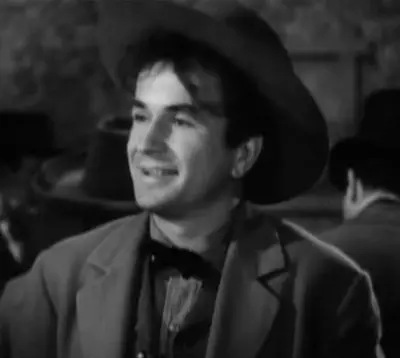
Cast


See also
If you liked this
Picked from this wiki's own links: same film series, same director, same lead actor.
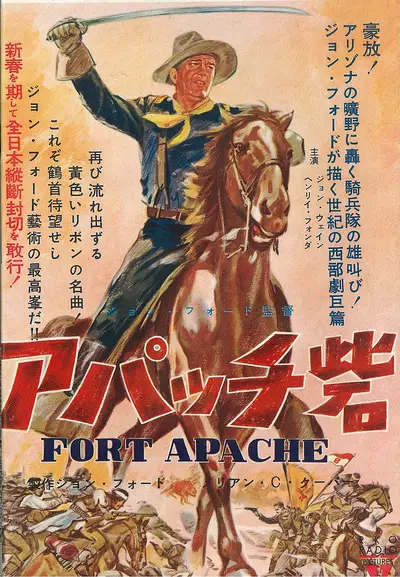 Fort Apache1948Also starring John Wayne
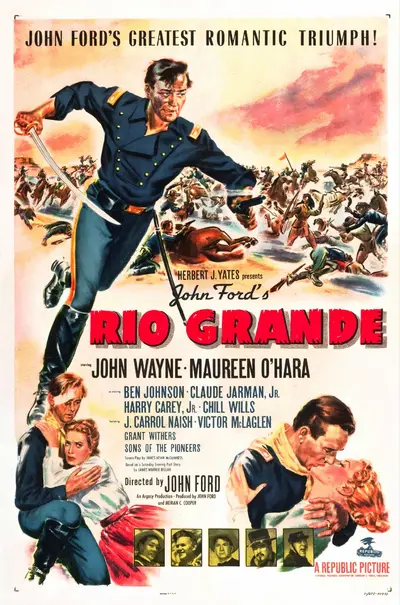 Rio Grande1950Also starring John Wayne


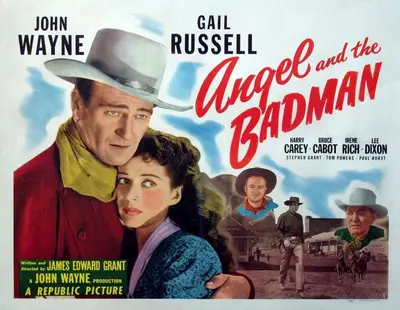 Angel and the Badman1947Also starring John Wayne
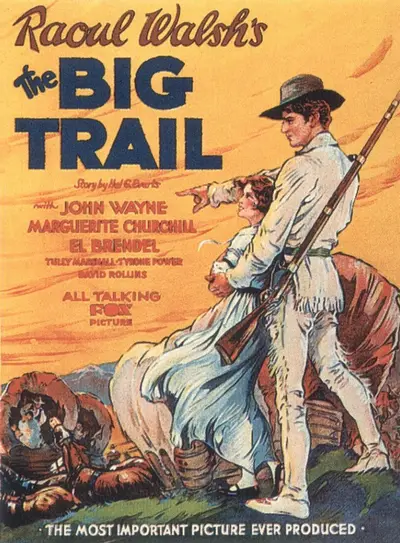 The Big Trail1930Also starring John Wayne
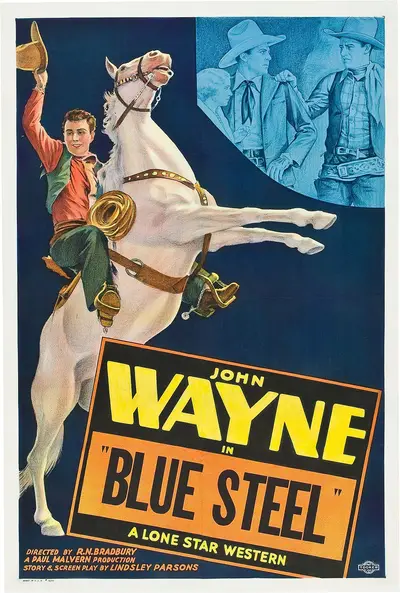 Blue Steel1934Also starring John Wayne
Frontier folk
This film is listed on: Ranchers, cattlemen and cowboys · Comanche (all Frontier folk)
Gallery 2

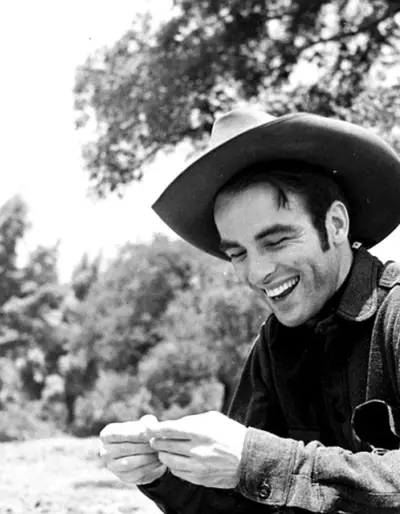

True Grit RatingWhat's this?Woke: None foundSVLIMDb ★7.7Partly checked
True Grit score: 99/100, Gold Partly checked
How the score is worked out:
- Start100
- Diamond needs all five checks; not met (raw score under 109): 100 → 99
- Presumed (Hays Code, 1934–1967): sex & nudity, violence, language presumed no, counted as checked0
- True Grit score99 · Gold
Classic Western checks
0 of 5 yes · Classic Western
- Called “revisionist”NoNo: a review describes it as a routine, standard, conventional, old-fashioned, traditional or classic Western.[1][2]
- Settlers or cavalry as villainsNoNo: the villains are individuals, a gang, a boss, a posse or a cattle baron, not settlers or soldiers as a group.[3][1]
- Faith shown negativelyNoThe plot shows no clergy or faith portrayed negatively.[4]
- History rewrittenNoAn openly fictional account, with invented leads, of the first cattle drive up the Chisholm Trail; no source alleges a misstatement.[5]
- A people shown as villainsNoNo: no ethnic, national or religious people is cast as the enemy as a group; the villains are individuals.[1][6]
Woke content (modern messaging)
None found0 of 8 items found so far
Show all 8 (3 not found · 5 not known)
Unless noted: Unknown.
- Characters recast for representationNot foundBased on Borden Chase's serial novel The Chisholm Trail, whose Thomas Dunson is played by John Wayne, with no change of sex or ethnicity …[7][4]
- Gender roles reversed or critiquedNot known
- Present-day political languageNot known
- Allegory for current politicsNot foundReleased in 1948, before the 21st-century debates this item covers, so it cannot be an allegory of them.[4]
- Western civilisation framed as inherently guiltyNot known
- Environmental activismNot foundNo: no source raises an environmental message (5 Nov 2026).[4]
- Source material changed for messagingNot known
- LGBT or gender-identity themesNot known
Content guide
- SSex & nudityPresumed no
- VViolencePresumed no
- LLanguagePresumed no
Presumed no (Hays Code)
NoneMildModerateStrongNot known
Audience
★ 7.7/10 from viewers on IMDb (39k votes)No deduction (5.0 and up).
Sources
Information courtesy of IMDb (https://www.imdb.com). IMDb rating as of 13 October 2026.
Checked 17 October 2026 · Reviewed by Frontier Editor
Partly checked: 1 check not known. Not known items are left out of the score.
Member reviews
What members think. Member reviews never change the True Grit score. The True Grit score is worked out by the editors from sources.
Sources
- Red River (1948 film) - Wikipedia en.wikipedia.org
- Wikidata: Q1133647 wikidata.org
- Wikimedia Commons: Red River (1948) poster.jpg commons.wikimedia.org
- Wikimedia Commons: Red River-02.png commons.wikimedia.org
- Red River film 1948 - Britannica britannica.com
- IMDb Non-Commercial Datasets developer.imdb.com
- Red river q29sbgvjdglvbjpwwc0zmjqyotu - bbfc.co.uk bbfc.co.uk
- Rotten Tomatoes (score via Wikidata) rottentomatoes.com
- Metacritic (score via Wikidata) metacritic.com
- Wikimedia Commons: Backstage photo on the set of Red River.jpg commons.wikimedia.org
- Wikimedia Commons: Montgomery Clift during filming Red River.jpg commons.wikimedia.org
