
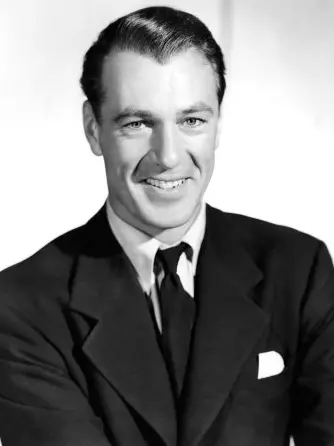

Gary Cooper (1901–1961), born Frank James Cooper, was an American actor known for a strong, silent screen persona and an understated style of acting. His career ran from 1925 to 1961 and included 84 leading roles. He won the Academy Award for Best Actor twice, for Sergeant York (1941) and for the Western High Noon (1952), and the American Film Institute ranks him 11th among its greatest screen legends. Cooper began as a cowboy extra, became a star in a Western, and returned to the genre throughout his career; his Marshal Will Kane in High Noon is one of the best-known roles in the history of the Western.
A Montana childhood
Cooper was born on 7 May 1901 in Helena, Montana, the younger of two sons of English immigrants. His father was a lawyer, rancher and justice of the Montana Supreme Court. Cooper and his brother spent summers on the family ranch, where they learned to ride, hunt and fish. After he injured his hip in a car accident at 15, his doctor recommended that he recuperate on horseback at the ranch. The treatment was misguided and left him with his characteristic stiff walk and slightly angled riding style. As a young man he was drawn to art, inspired in part by the Western paintings of Charles M. Russell and Frederic Remington.
Cowboy extra
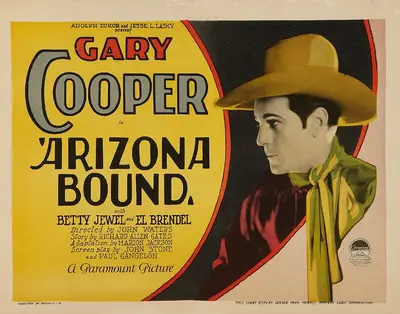
He left Grinnell College in Iowa in 1924 and moved to Los Angeles. There he met two friends from Montana who were working as extras and stunt riders in cheap Westerns, and through the rodeo champion Jay "Slim" Talbot he was taken to see a casting director. His horsemanship brought him steady work in Westerns, although he found the stunt riding, which sometimes injured horses and riders, "tough and cruel". His agent changed his name, and he moved up to leading parts in modestly budgeted Westerns. A break came with The Winning of Barbara Worth (1926).
The Virginian and the 1930s
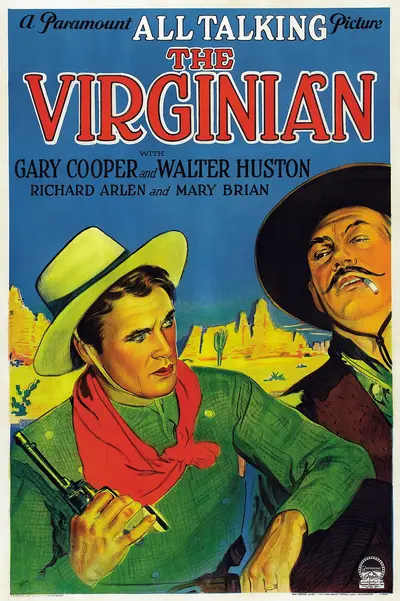
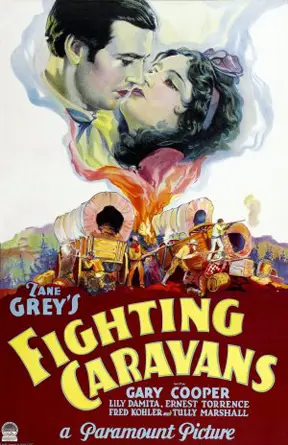
Cooper became a major star in 1929 in the title role of The Virginian, his first talking picture, directed by Victor Fleming from Owen Wister's novel. It was one of the first sound films to define the Western code of honour and helped to establish conventions the genre still uses. His life among Montana cowboys gave the part an instinctive authenticity. Paramount followed it with more Westerns, among them The Texan (1930) and Fighting Caravans (1931).
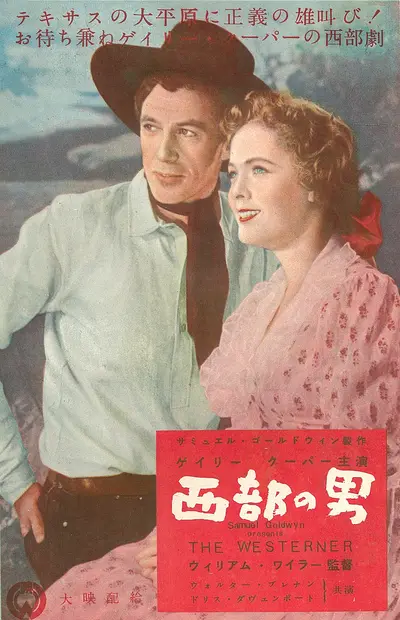
In Cecil B. DeMille's frontier epic The Plainsman (1936), the first of his four films with DeMille, he played Wild Bill Hickok in a highly fictional story, with Jean Arthur as Calamity Jane. In William Wyler's The Westerner (1940) he played Cole Harden, a drifting cowboy who defends homesteaders against Judge Roy Bean, played by Walter Brennan. The screenwriter Niven Busch drew on Cooper's wide knowledge of Western history while working on the script.
High Noon
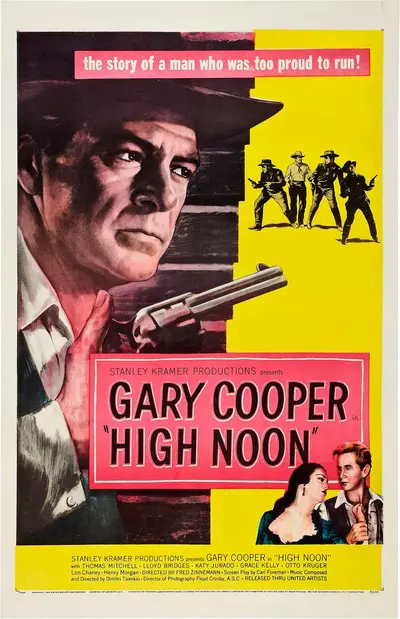
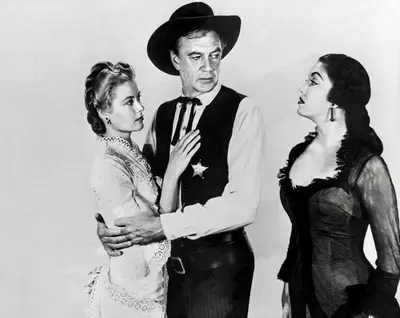
Cooper's most important post-war film was Fred Zinnemann's High Noon. He plays Will Kane, a town marshal preparing to leave on his honeymoon with his new wife, played by Grace Kelly, when he learns that an outlaw he sent to prison is coming back with three henchmen for revenge. Unable to win support from the frightened townspeople, Kane faces the gunmen alone. The film was hailed as one of the first "adult" Westerns for its theme of moral courage, and the role won Cooper his second Oscar. Kane later appeared on the AFI's list of the greatest screen heroes.
The last Westerns
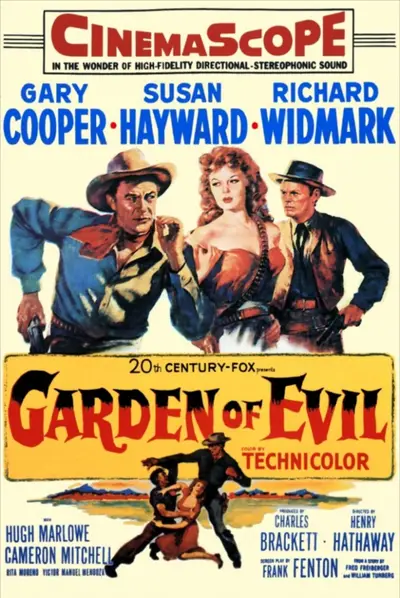
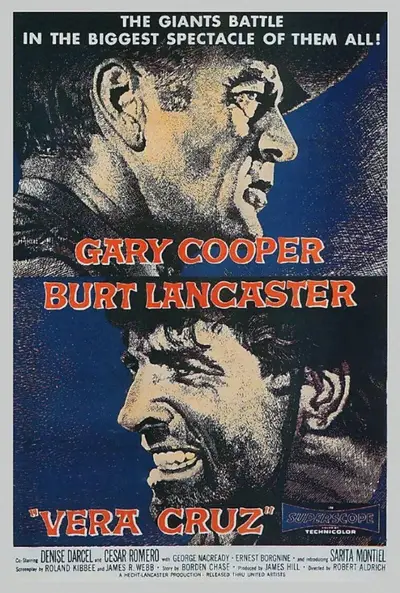
In 1954 he made Henry Hathaway's Garden of Evil and Robert Aldrich's Vera Cruz, in which he plays Ben Trane, an American adventurer in Mexico during the rebellion against Emperor Maximilian, opposite Burt Lancaster. During filming he reinjured his hip falling from a horse. In his last films his heroes turned away from violence and sought redemption: he starred in Anthony Mann's Man of the West (1958), and in Delmer Daves's The Hanging Tree (1959) he played a frontier doctor who saves a criminal from a lynch mob.
Death
Cooper was diagnosed with prostate cancer in 1960, and by the end of that year it had spread to his lungs and bones. He received an honorary Academy Award in 1961, and he died in Los Angeles on 13 May 1961, six days after his 60th birthday.
Key facts
- Born: 7 May 1901, Helena, Montana, US
- Died: 13 May 1961, Los Angeles, California, US
- Birth name: Frank James Cooper
- Breakthrough: The Virginian (1929)
- Western roles: the Virginian, Wild Bill Hickok, Will Kane
- Academy Awards: Best Actor, Sergeant York (1941) and High Noon (1952); honorary award, 1961
- Occupations (Wikidata): film actor, screenwriter, television actor, actor
- Born 1901-05-07
- Died 1961-05-13
See also
Filmography
As actor 18
- 1926The Winning of Barbara Worth
- 1927Arizona Bound
- 1929The Virginian
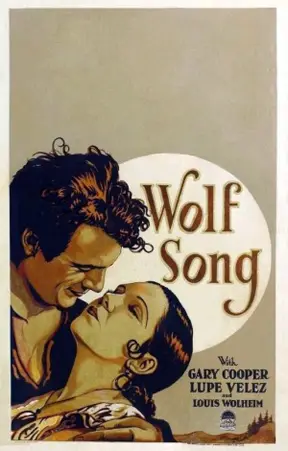
- 1929Wolf Song
- 1931Fighting Caravans
- 1938The Cowboy and the Lady
- 1940The Westerner
- 1945Along Came Jones
- 1947Unconquered
- 1950Dallas
- 1951Distant Drums
- 1952High Noon
- 1952Springfield Rifle
- 1954Garden of Evil
- 1954Vera Cruz
- 1958Man of the West
- 1959The Hanging Tree
- 1959They Came to Cordura
Gallery 8


In the films 11











Sources
- Gary Cooper - Wikipedia en.wikipedia.org
- Wikidata: Q93957 wikidata.org
- Wikimedia Commons: Gary cooper promo image.jpg commons.wikimedia.org
- Gary Cooper | Britannica britannica.com