
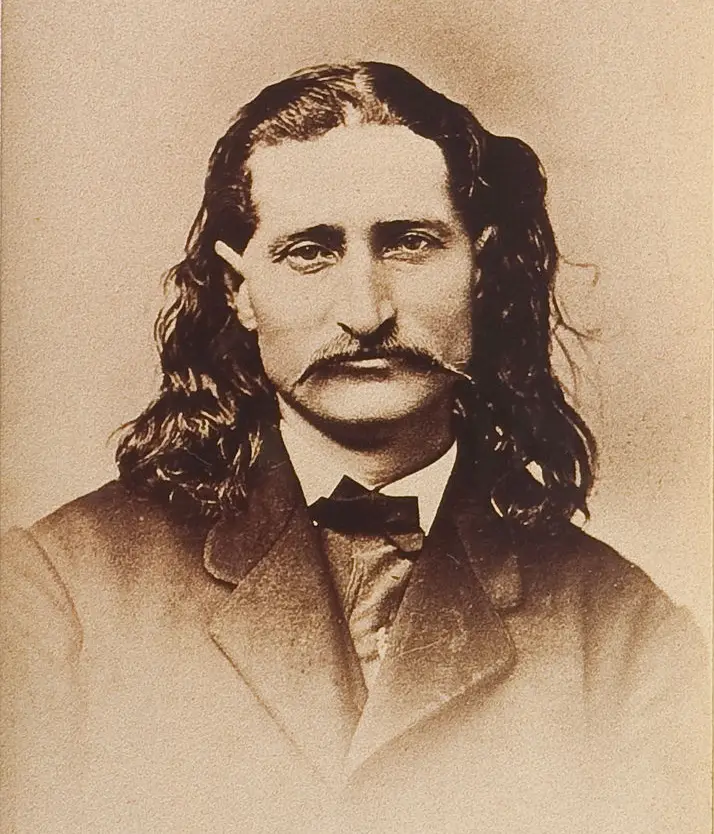

✦ Legend
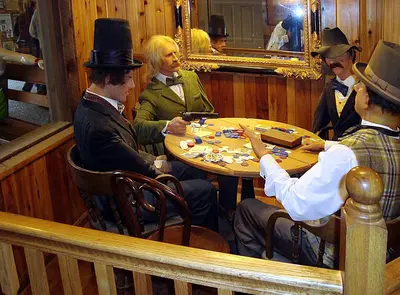
James Butler "Wild Bill" Hickok (1837–1876) was a frontiersman, Union scout, lawman, gambler and showman. In his own lifetime he was famous less for what he had actually done than for what newspapers and dime novels said he had done, and separating the man from the legend has occupied historians ever since. He was shot dead from behind during a poker game in Deadwood in August 1876, and the hand he is said to have held, black aces and eights, became known as the "Dead Man's Hand".
Early life
Hickok was born on 27 May 1837 in Homer, Illinois (now Troy Grove). As a young man he went west to Kansas, where he worked at various frontier jobs, including as a stage driver and constable, before the Civil War.
Civil War service
During the Civil War Hickok served the Union army as a scout, spy and sharpshooter, chiefly in Missouri and surrounding areas. This period produced many of the stories later told about him. Some are documented, but many cannot be verified.
The Tutt shootout
On 21 July 1865, in the town square of Springfield, Missouri, Hickok shot and killed the gambler Davis Tutt (sometimes given as David Tutt) after a quarrel reportedly over gambling debts and a gold watch Hickok had lost to Tutt at poker. He was tried and acquitted. The fight is often described as the first recorded one-on-one "quick-draw" duel of the kind later made familiar by Western films, though how closely it resembled the movie version is debated.
Fame and exaggeration
In 1867 Harper's New Monthly Magazine published an article that turned Hickok into a national celebrity. It credited him with killing "hundreds" of men, and later writers inflated the figures further. The number of men Hickok killed is disputed: the legendary tallies (sometimes running into the dozens or more) are not supported by evidence, and historians accept only a much smaller number of confirmed killings. Treat any precise figure you see with caution.
Lawman in Kansas
Hickok acted as a lawman in Hays City, Kansas, in 1869 (accounts differ on his title: acting sheriff of Ellis County or town marshal; he lost the county election that year), and served as marshal of Abilene, Kansas, in 1871, when the cattle town was full of cowboys at the end of the drives (see Chisholm Trail and frontier towns). His Abilene term ended after a shootout in October 1871 in which he killed the saloon owner Phil Coe and also, by accident, his own deputy, Mike Williams.
Showman
In 1873 Hickok toured the eastern states with Buffalo Bill Cody in the stage show The Scouts of the Prairie. By most accounts he disliked acting and left after a short time. Cody's later fame also connects to the Pony Express.
Deadwood and death
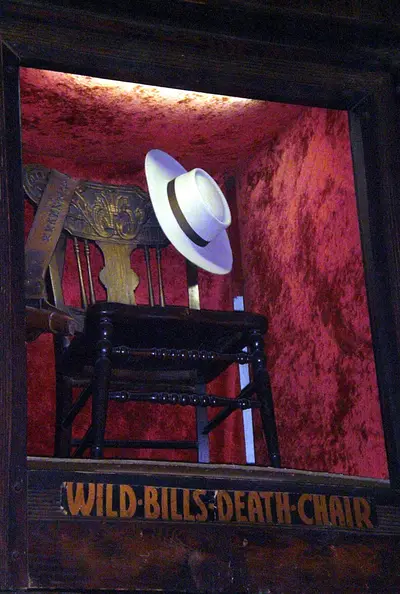
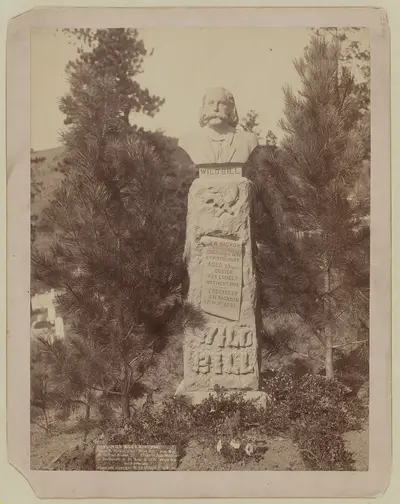
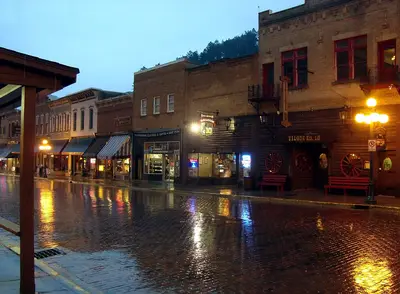
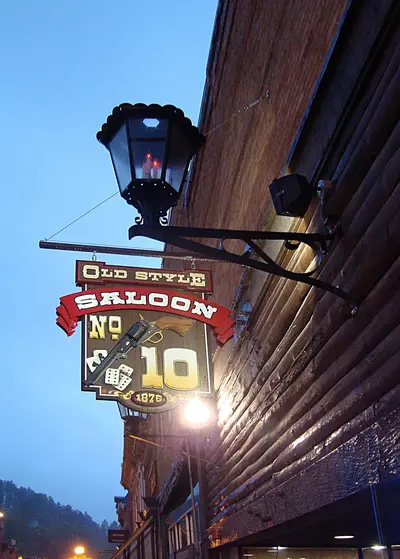
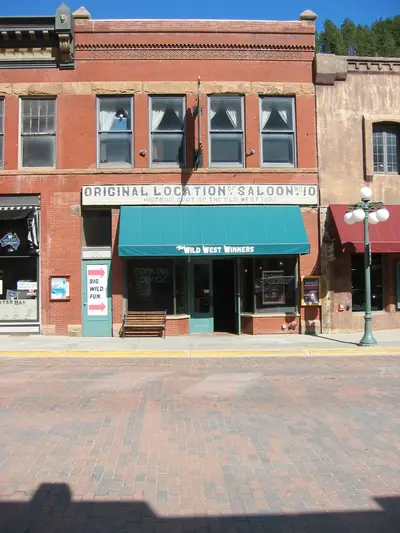
Hickok married the circus performer Agnes Lake Thatcher in 1876. That same year he went to Deadwood, in Dakota Territory, a gold-rush camp in the Black Hills, on land that the 1868 Treaty of Fort Laramie had guaranteed to the Sioux. On 2 August 1876, while playing poker in a saloon, he was shot in the back of the head by Jack McCall. McCall was first acquitted by an informal miners' court. Because of that court's irregular jury, and because Deadwood lay outside any organised territory, a second trial was not treated as double jeopardy; he was retried, convicted and hanged in 1877.
The cards in Hickok's hand are traditionally given as a pair of black aces and a pair of black eights, the "Dead Man's Hand". The fifth card, and whether the hand is described accurately at all, are disputed. No record from the time survives: the aces-and-eights story first appeared in print in 1926, half a century after his death.
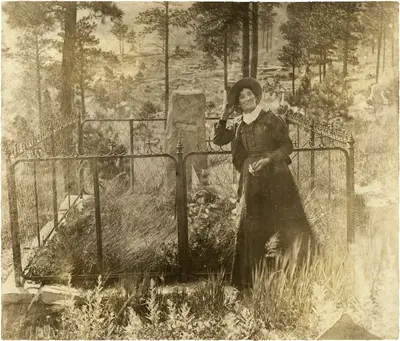
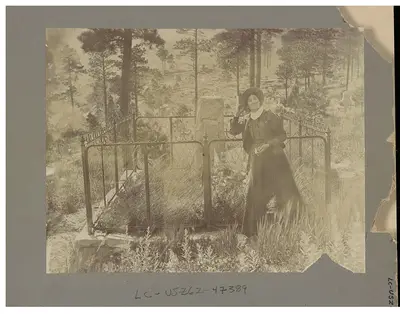
Calamity Jane is part of the legend too. In her autobiography she claimed to have been married to Hickok, but no records supporting her account have been found.
On screen
Hickok has appeared in many films and TV series, including Calamity Jane (1953) and Walter Hill's Wild Bill (1995).
Key facts
- Born: 27 May 1837, Homer (now Troy Grove), Illinois, US
- Died: 2 August 1876, Deadwood, Dakota Territory (now South Dakota), US
- Cause of death: shot by Jack McCall
- Occupations: scout, lawman, gunfighter, gambler, showman
- Posts: lawman in Hays City, Kansas (1869; title disputed); marshal of Abilene, Kansas (1871)
- Spouse: Agnes Lake Thatcher (m. 1876)
- Legend: the "Dead Man's Hand", aces and eights
- Born James Butler Hickok, 27 May 1837
- Served the Union army in the Civil War as a scout, spy and sharpshooter
- Killed Davis Tutt in a shootout in Springfield, Missouri, on 21 July 1865 and was acquitted (Britannica)
- Sheriff of Hays City, Kansas (1869) and marshal of Abilene, Kansas (1871)
- Toured with Buffalo Bill Cody's The Scouts of the Prairie in 1873
- Shot by Jack McCall in Deadwood on 2 August 1876; McCall was later retried and hanged in 1877
- His final hand, black aces and eights, became known as the "Dead Man's Hand"
See also
Filmography
Gallery 8








Sources
- Wild Bill Hickok - Wikipedia en.wikipedia.org
- Wild Bill Hickok - Britannica britannica.com
- Wikidata: Q44677 wikidata.org
- Davis Tutt - Wikipedia en.wikipedia.org
- Wikimedia Commons: Wild Bill Hickok sepia (cropped).png commons.wikimedia.org
- Wikimedia Commons: %22Wild Bill%27s Monument.%22 James B. Hickoc (i.e. Hickok), alias %22Wild Bill,%22 born May 27, 1837 at Homer, Ill. Killed by Jack McCall at Deadwood, S.D., Aug. 2, 1876, where his body now lies LCCN99613969.jpg commons.wikimedia.org
- Wikimedia Commons: Calamity Jane 1890s.jpg commons.wikimedia.org
- Wikimedia Commons: Calamity Jane on Wild Bill%27s grave LCCN2005688172.jpg commons.wikimedia.org
- Wikimedia Commons: Cyark Deadwood Hickock.jpg commons.wikimedia.org
- Wikimedia Commons: Dakota du Sud - Deadwood 01.jpg commons.wikimedia.org
- Wikimedia Commons: Dakota du Sud - Deadwood 01b.jpg commons.wikimedia.org
- Wikimedia Commons: Dakota du Sud - Deadwood 01c.jpg commons.wikimedia.org
- Wikimedia Commons: Dakota du Sud - Deadwood 01d.jpg commons.wikimedia.org
- Treaty of Fort Laramie (1868) – National Archives, Milestone Documents archives.gov