

✦ Legend
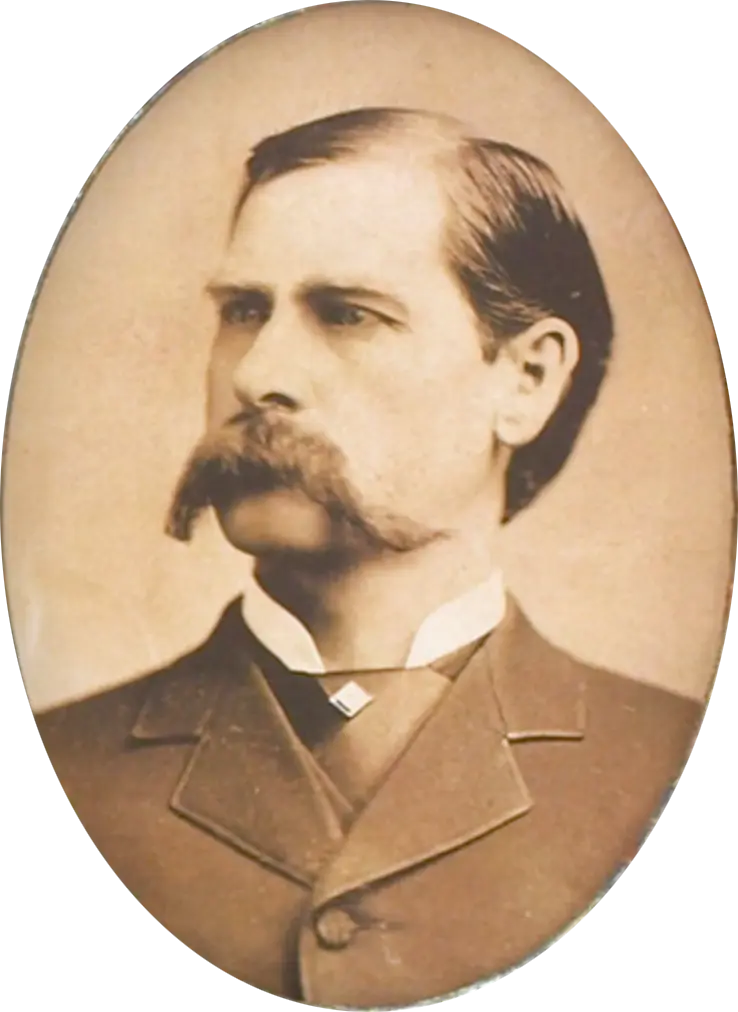
Wyatt Berry Stapp Earp (19 March 1848 – 13 January 1929) was an American lawman, gambler, saloon keeper and drifter between boomtowns, now remembered above all for his part in the Gunfight at the O.K. Corral in Tombstone, Arizona Territory, in 1881. In his lifetime he was better known, and often mocked, for a disputed boxing decision. His reputation as the fearless "frontier marshal" was largely built after his death by a flattering 1931 biography and, later, by Hollywood. The real man was more complicated than the legend, and more interesting.
Early life
Earp was born in Monmouth, Illinois, the fourth child of Nicholas Porter Earp and Virginia Ann Cooksey. He was named after his father's commanding officer in the Mexican–American War. The family farmed near Pella, Iowa, and in 1864 travelled by wagon train to San Bernardino, California. As a teenager Wyatt worked as a teamster, driving freight between Wilmington, California, and Salt Lake City. He later hauled supplies for the Union Pacific Railroad, which was being built as part of the Transcontinental Railroad, and there he picked up gambling and boxing.
In 1870 he married Urilla Sutherland in Lamar, Missouri, where he had become constable. She died within the year, reportedly of typhoid fever. A rough period followed: he was sued over missing licence fees, charged with horse theft (he escaped from jail before trial), and arrested more than once in Peoria, Illinois, in connection with brothels.
Kansas cow towns
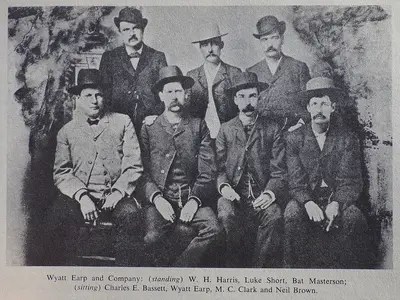
In 1874 Earp turned up in Wichita, Kansas, a railhead for Texas cattle drives along routes such as the Chisholm Trail. He joined the city police in 1875 and earned a good reputation, but he was not rehired after a fistfight with a political rival of his boss. He moved on to Dodge City, where he served as assistant city marshal. While chasing the outlaw Dave Rudabaugh into Texas he met the gambler and dentist John "Doc" Holliday. Earp later credited Holliday with saving his life in Dodge City, and the two became lifelong friends.
Arizona and the gunfight
In December 1879 Wyatt, Virgil and James Earp arrived in Tombstone, a silver-mining boomtown, and Morgan and Warren followed. Wyatt worked as a Wells Fargo shotgun messenger, a gambler and, for a few months, a Pima County deputy sheriff. He lost the new Cochise County sheriff's post to Johnny Behan. Behan had promised to make Wyatt his undersheriff and then broke that promise.
The Earps clashed repeatedly with men whom townspeople called the "Cowboys", a loose group in Cochise County linked with cattle rustling. On 26 October 1881, Virgil, who was town marshal, set out with Wyatt, Morgan and Holliday to disarm a group of Cowboys. In the shootout that followed, Billy Clanton and Tom and Frank McLaury were killed. Virgil and Morgan were wounded and Holliday was grazed. Wyatt was unhurt. A preliminary hearing before Justice Wells Spicer ruled that there was not enough evidence to send the lawmen to trial.
The vendetta ride
In December 1881 Virgil was ambushed and maimed. In March 1882 Morgan was shot dead while playing billiards. Wyatt, now a deputy US marshal, formed a posse and hunted the men he believed responsible. Coroners' reports credit the posse with killing Frank Stilwell, "Curly Bill" Brocius, Florentino "Indian Charlie" Cruz and Johnny Barnes. Wyatt was indicted for Stilwell's death and left Arizona in April 1882.
Later life
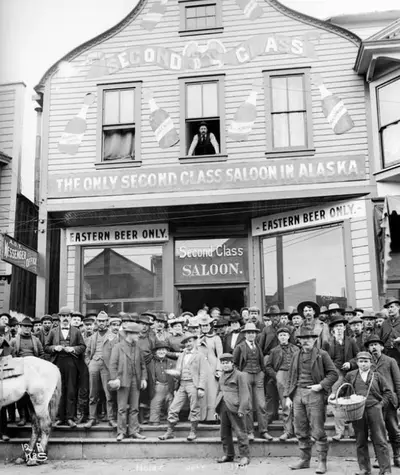
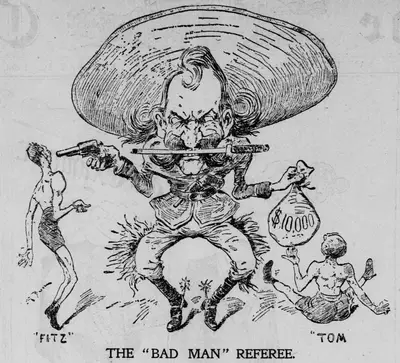
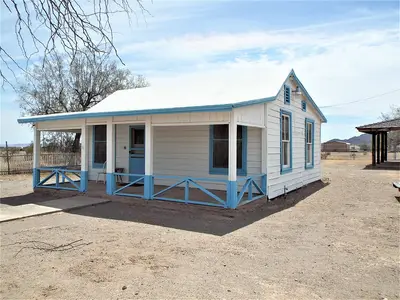
Earp spent the rest of his life following booms. He went to Idaho, ran saloons in San Diego, raced horses, and followed the Alaska gold rushes, where he and Charles Hoxie ran the Dexter Saloon in Nome. In 1896 he refereed the Fitzsimmons–Sharkey heavyweight fight in San Francisco and awarded it to Sharkey on a foul few people had seen. Many believed the fight was fixed, and the affair made him nationally notorious. His partner of 46 years was Josephine "Sadie" Marcus. In old age he lived in Los Angeles and worked mining claims near Vidal, California. He befriended cowboy stars William S. Hart and Tom Mix, and he visited the sets of John Ford. He died in Los Angeles aged 80. He was the last surviving participant of the gunfight.
Myth versus reality
- The heroic marshal. Stuart N. Lake's Wyatt Earp: Frontier Marshal (1931) was a bestseller and created the image of the incorruptible lawman. Historians now regard much of it as fiction.
- The leader at the O.K. Corral. Virgil, not Wyatt, was the town marshal and was in charge that day.
- The Buntline Special. Lake popularised the story of a 12-inch-barrelled Colt presented to Earp. There is no good evidence that it existed, and some accounts say he carried a Smith & Wesson revolver at the gunfight. See Colt Single Action Army.
- The buffalo hunter. Earp claimed to have hunted buffalo in 1871–72, but no evidence supports this. Some historians think the story covered his time in Peoria.
- Never wounded. This one is true. He came through every gunfight unhurt, which added greatly to his mystique.
Legacy
Earp has been played by Henry Fonda in My Darling Clementine (1946), Burt Lancaster in Gunfight at the O.K. Corral (1957), Kurt Russell in Tombstone (1993) and Kevin Costner in Wyatt Earp (1994), among many others. Hugh O'Brian played him for six seasons in the television series The Life and Legend of Wyatt Earp (1955–61). He still has passionate admirers and detractors. His grave in the Jewish cemetery at Colma, California, beside Josephine, has had its headstone stolen more than once.
Key facts
- Born: 19 March 1848, Monmouth, Illinois
- Died: 13 January 1929, Los Angeles, California (aged 80)
- Occupations: lawman, teamster, gambler, saloon keeper, miner, boxing referee
- Brothers: James, Virgil, Morgan, Warren (and half-brother Newton)
- Known for: Gunfight at the O.K. Corral (1881); Earp vendetta ride (1882); Fitzsimmons–Sharkey decision (1896)
- Partner: Josephine Sarah Marcus (common-law wife for 46 years)
- Buried: Hills of Eternity Memorial Park, Colma, California
- Born 19 March 1848 in Monmouth, Illinois; died 13 January 1929 in Los Angeles
- Served as a police officer in Wichita (1875–76) and Dodge City, Kansas
- His brother Virgil was Tombstone's city marshal at the time of the gunfight
- After his brother Morgan was killed in March 1882, he led a revenge ride and was accused of murder
- Stuart N. Lake's 1931 biography Wyatt Earp, Frontier Marshal was written with his collaboration
- Portrayed in My Darling Clementine (1946), Gunfight at the O.K. Corral (1957), Tombstone (1993) and Wyatt Earp (1994)
See also
Filmography
Gallery 8



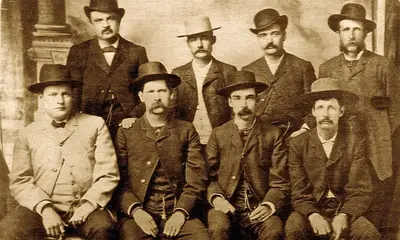


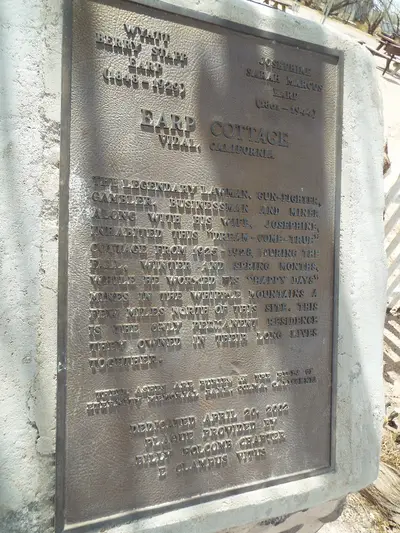

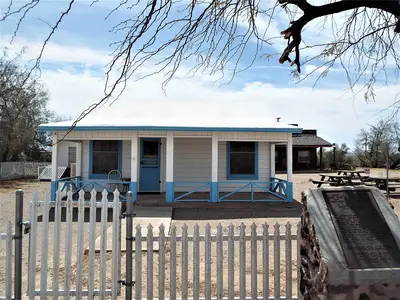


Sources
- Wyatt Earp - Britannica britannica.com
- Wyatt Earp - Wikipedia en.wikipedia.org
- Wikidata: Q44616 wikidata.org
- Wikimedia Commons: Wyatt Earp portrait.png commons.wikimedia.org
- Gunfight at the O.K. Corral - Wikipedia en.wikipedia.org
- Colt Single Action Army - Wikipedia en.wikipedia.org
- Wikimedia Commons: At American Museum of Natural History 2024 100.jpg commons.wikimedia.org
- Wikimedia Commons: Bad man wyatt earp in cartoon.png commons.wikimedia.org
- Wikimedia Commons: California-Vidal-Wyatt Earp and Josephine Sarah Marcus Cottage-2.jpg commons.wikimedia.org
- Wikimedia Commons: California-Vidal-Wyatt Earp and Josephine Sarah Marcus Cottage-3.jpg commons.wikimedia.org
- Wikimedia Commons: California-Vidal-Wyatt Earp and Josephine Sarah Marcus Cottage-5.jpg commons.wikimedia.org
- Wikimedia Commons: Dexter Saloon, Nome, Alaska.jpg commons.wikimedia.org
- Wikimedia Commons: Dodge City Peace Commission.jpg commons.wikimedia.org
- Wikimedia Commons: DodgeCityPeaceCommission.jpg commons.wikimedia.org