
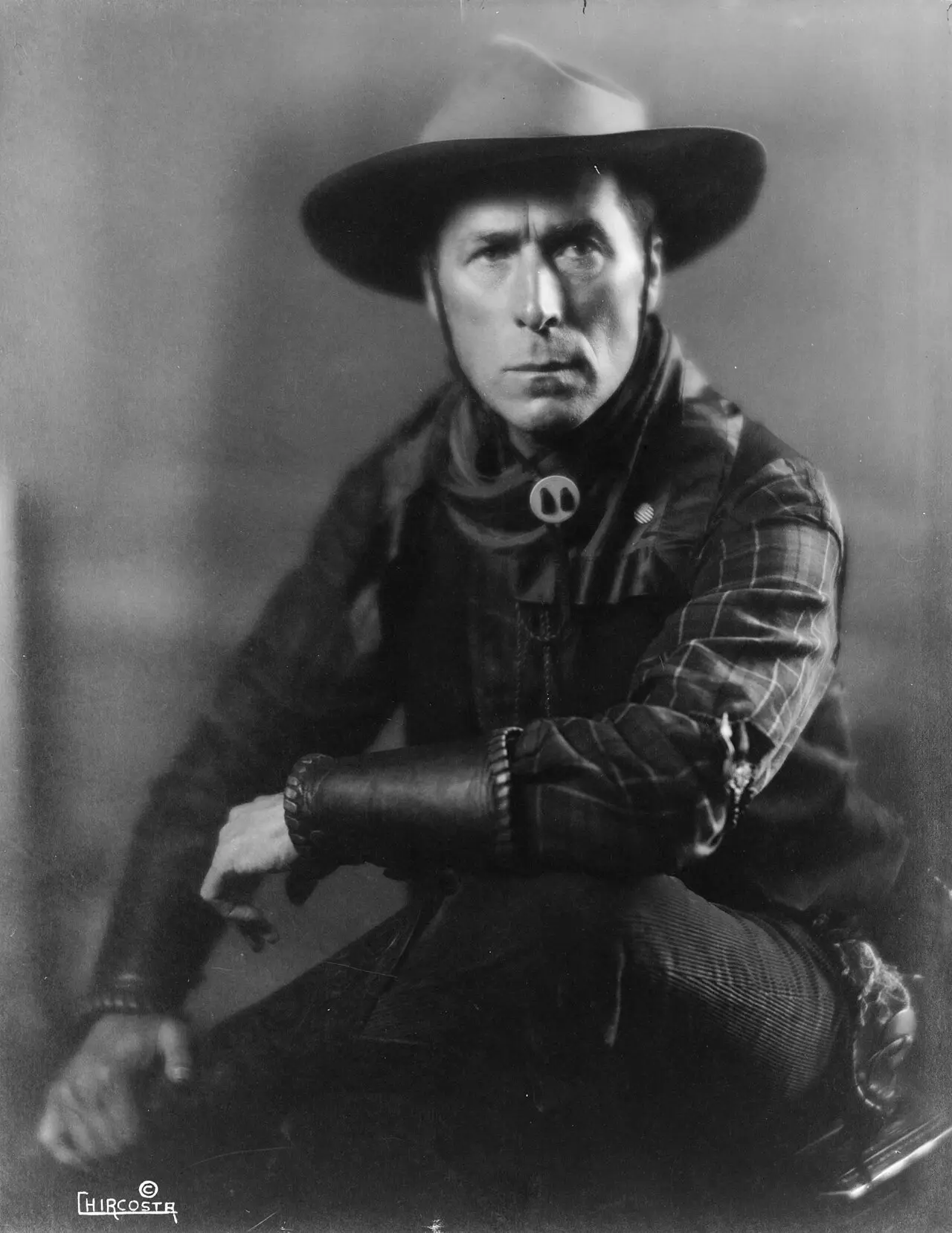

William Surrey Hart (6 December 1864 – 23 June 1946) was an American stage actor who became the first great serious star of the Western film. From 1914 to 1925 he wrote, directed and starred in dozens of silent Westerns, playing stern, lonely gunmen who are often redeemed by the love of a good woman or the power of faith. A lifelong admirer of the real Old West, he insisted on authentic costumes, props and settings, and his films are among the most realistic of the silent era. In 1915 and 1916 cinema owners voted him the biggest money-making star in America. He left his ranch at Newhall, California, to the people of Los Angeles County, and it is now William S. Hart Park.
From Shakespeare to the West
Hart was born in Newburgh, New York, the son of an English father and an Irish mother. His father, a machinist who hoped to set up a flour mill on the frontier, moved the family around Illinois, Wisconsin, Minnesota and the Dakotas while William was a boy. There he did odd jobs on farms, met cowboys and old soldiers, and played with Sioux children, from whom he learned to ride, track and use sign language. The experience gave him a lifelong love of the frontier and a lasting respect for Native American peoples. When he was a teenager the family returned to New York, where he worked as a hotel messenger and fell in love with the theatre. He made his stage debut in 1888, as Friar Laurence in Romeo and Juliet, and spent years touring with travelling companies before making his name on Broadway as a Shakespearean actor. He created the role of Messala in the original 1899 stage production of Ben-Hur, and later starred in Western plays, including The Squaw Man and The Virginian.
Film career
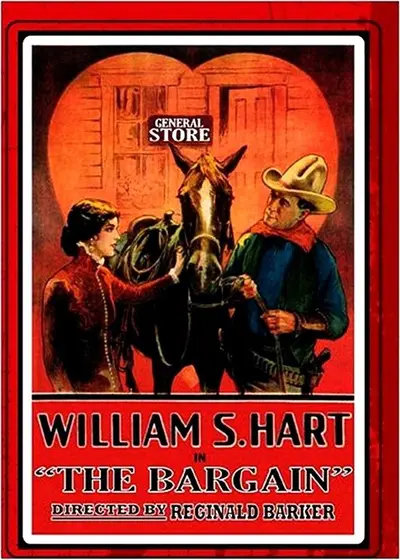
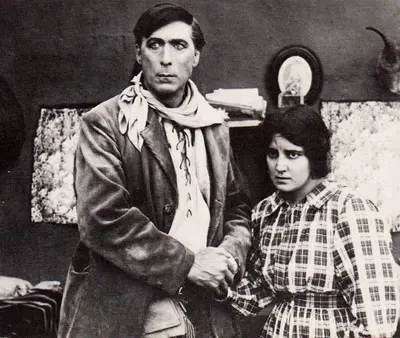
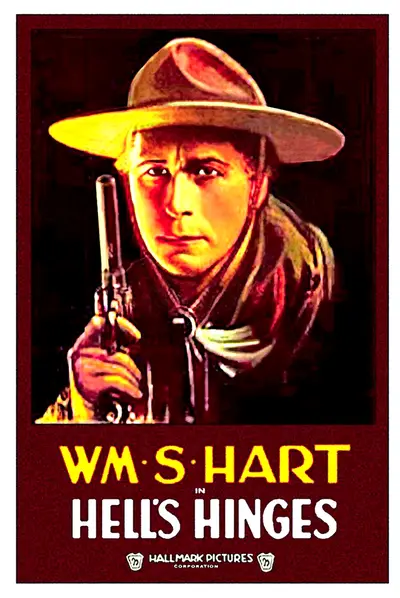
Hart came to films in 1914, aged nearly fifty. He is said to have been dismayed by the false picture of the West in the films he saw, and he turned to Thomas H. Ince, an actor he had once worked with on stage and now a film producer, who gave him his first starring role in the feature The Bargain (1914). Its success led to a series of Westerns for Ince, first two-reel shorts and then features, some of which Hart also directed. His screen hero was usually a "good bad man": an outlaw or hard-bitten gunman, grim, upright and quick with a gun, who finds his better self. In Hell's Hinges (1916), his best-known film, he plays Blaze Tracy, a gunman hired to drive a young minister and his sister out of a lawless town. Moved by the sister's goodness, Blaze takes up the Bible and turns against the saloon crowd. The weak minister is led astray and the church is burned, and Blaze takes his revenge by burning the town.
In 1917 Hart joined Adolph Zukor's Famous Players–Lasky (later Paramount) at a high salary. He became famous for his realism: worn, dusty clothes, real-looking frontier towns and plain storytelling, at a time when other Western stars were growing flashier. He rode a brown and white pinto named Fritz, one of the first film horses to be known by name. During the First World War he toured as one of the Four Minute Men, giving short patriotic speeches in support of the war effort.
By the early 1920s audiences were turning to the faster, showier Westerns of Tom Mix, and Paramount dropped Hart. He made one last film with his own money, Tumbleweeds (1925), about the Oklahoma land rush, released through United Artists. Its great land-rush sequence is still admired, but the film did only moderate business, and Hart, believing United Artists had not promoted it properly, sued the company. The case dragged on until 1940, when the courts found in his favour. In 1939 he filmed a spoken prologue for a reissue of Tumbleweeds, his only sound appearance, in which, aged 74, he spoke of the Old West and bade farewell to the screen.
The real West
Hart knew several of the surviving figures of the Old West. He was a friend of Wyatt Earp and Bat Masterson, acquired a pair of revolvers that had belonged to Billy the Kid, and was one of the pallbearers at Earp's funeral in 1929. He also wrote Western stories and an autobiography, My Life East and West (1929).
Family
Hart's sister Mary lived and worked with him for most of his life. In 1921 he married the actress Winifred Westover, his co-star in John Petticoats (1919). They separated within months, and their son, William S. Hart Jr., was born in 1922; the couple divorced in 1927.
Later life and legacy
After Tumbleweeds Hart retired to his hilltop home, La Loma de los Vientos, at Newhall in the Santa Clarita Valley, where he kept horses and animals and welcomed visitors. He died there on 23 June 1946, aged 81, and was buried in Green-Wood Cemetery, Brooklyn. In his will he left the house, its collections and the surrounding land to Los Angeles County to become a public park and museum, explaining that the public had given him their nickels, dimes and quarters when he was making pictures, and he wanted them to have his home when he was gone. William S. Hart Park and its museum are run by the county and the Natural History Museum of Los Angeles County. He gave generously to local causes and charities, among them the SPCA in Los Angeles and the Boys and Girls Club. He has a star on the Hollywood Walk of Fame and was inducted into the Western Performers Hall of Fame in 1975.
Legend and history
- A real cowboy? Hart was not a working cowboy. His picture of the West came from a frontier boyhood, as he later remembered it, and from a lifetime of interest and friendships with old-timers, rather than from years on the range.
- Fritz's name. In 1917, amid wartime feeling against Germany, it was announced that Hart would rename his horse with a "more American" name, but the horse is still remembered as Fritz.
Key facts
- Born: 6 December 1864, Newburgh, New York
- Died: 23 June 1946, Newhall, California
- Known for: realistic silent Westerns; the "good bad man" hero
- Notable films: The Bargain (1914), Hell's Hinges (1916), Tumbleweeds (1925)
- Horse: Fritz, a pinto
- Honours: Hollywood Walk of Fame; Western Performers Hall of Fame (1975)
- Occupations (Wikidata): screenwriter, film producer, film director, actor
- Born 1864-12-06
- Died 1946-06-23
See also
Filmography
As actor 13
- 1914The Bargain
- 1916Hell's Hinges
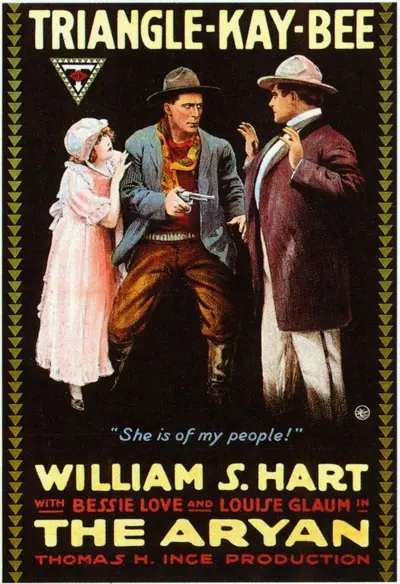
- 1916The Aryan
- 1916The Devil's Double
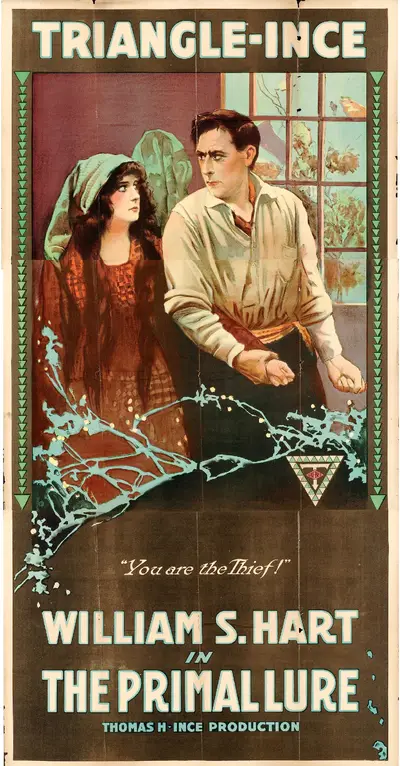
- 1916The Primal Lure
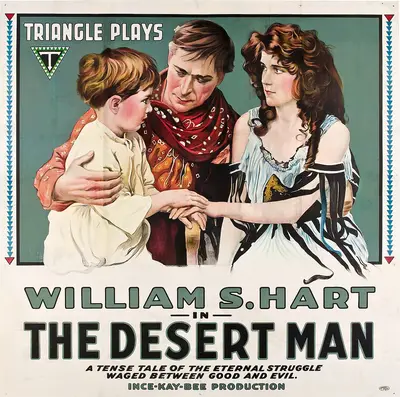
- 1917The Desert Man
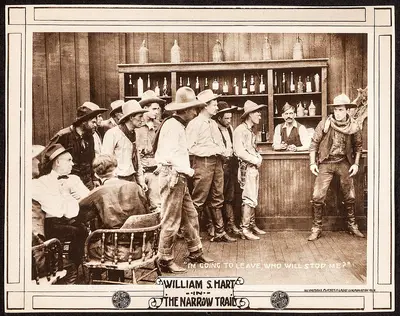
- 1917The Narrow Trail
- 1917The Silent Man
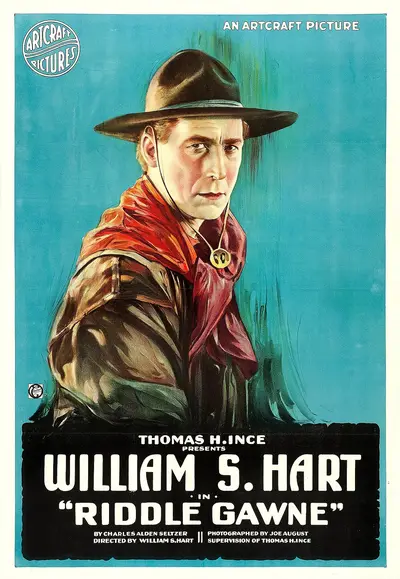
- 1918Riddle Gawne
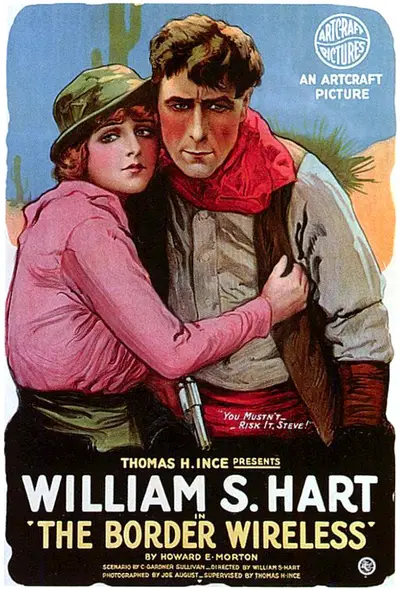
- 1918The Border Wireless
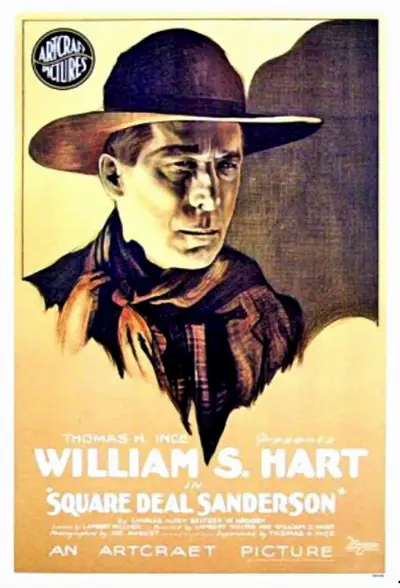
- 1919Square Deal Sanderson
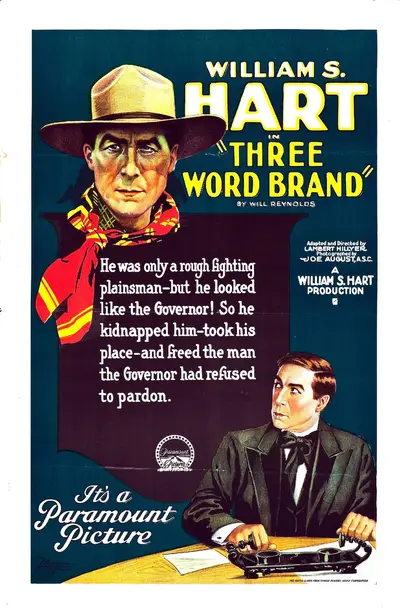
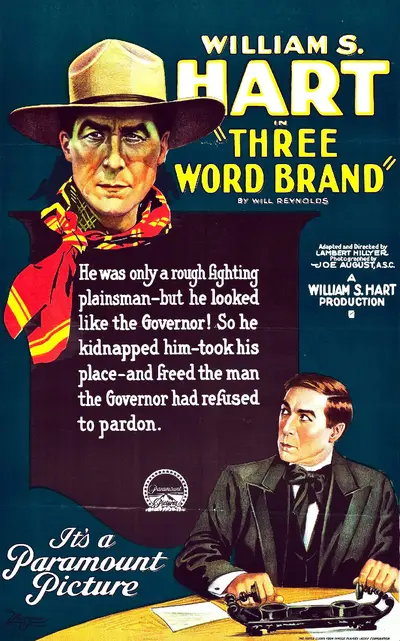
- 1921Three Word Brand
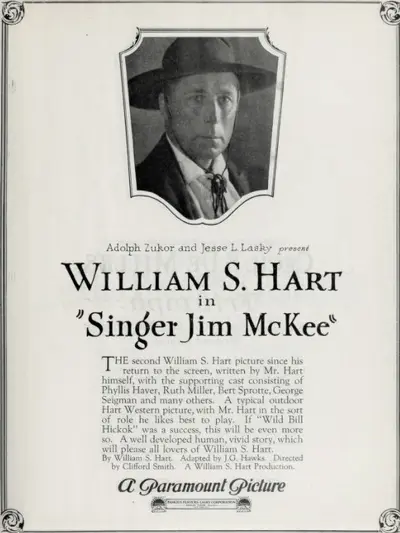
- 1924Singer Jim McKee
As director 10
- 1916Hell's Hinges
- 1916The Aryan
- 1916The Devil's Double
- 1916The Primal Lure
- 1917The Desert Man
- 1917The Narrow Trail
- 1917The Silent Man
- 1918Riddle Gawne
- 1918The Border Wireless
- 1919Square Deal Sanderson
Appears in 15















Sources
- William S. Hart - Wikipedia en.wikipedia.org
- Wikidata: Q636680 wikidata.org
- Wikimedia Commons: Williamshart.jpg commons.wikimedia.org