
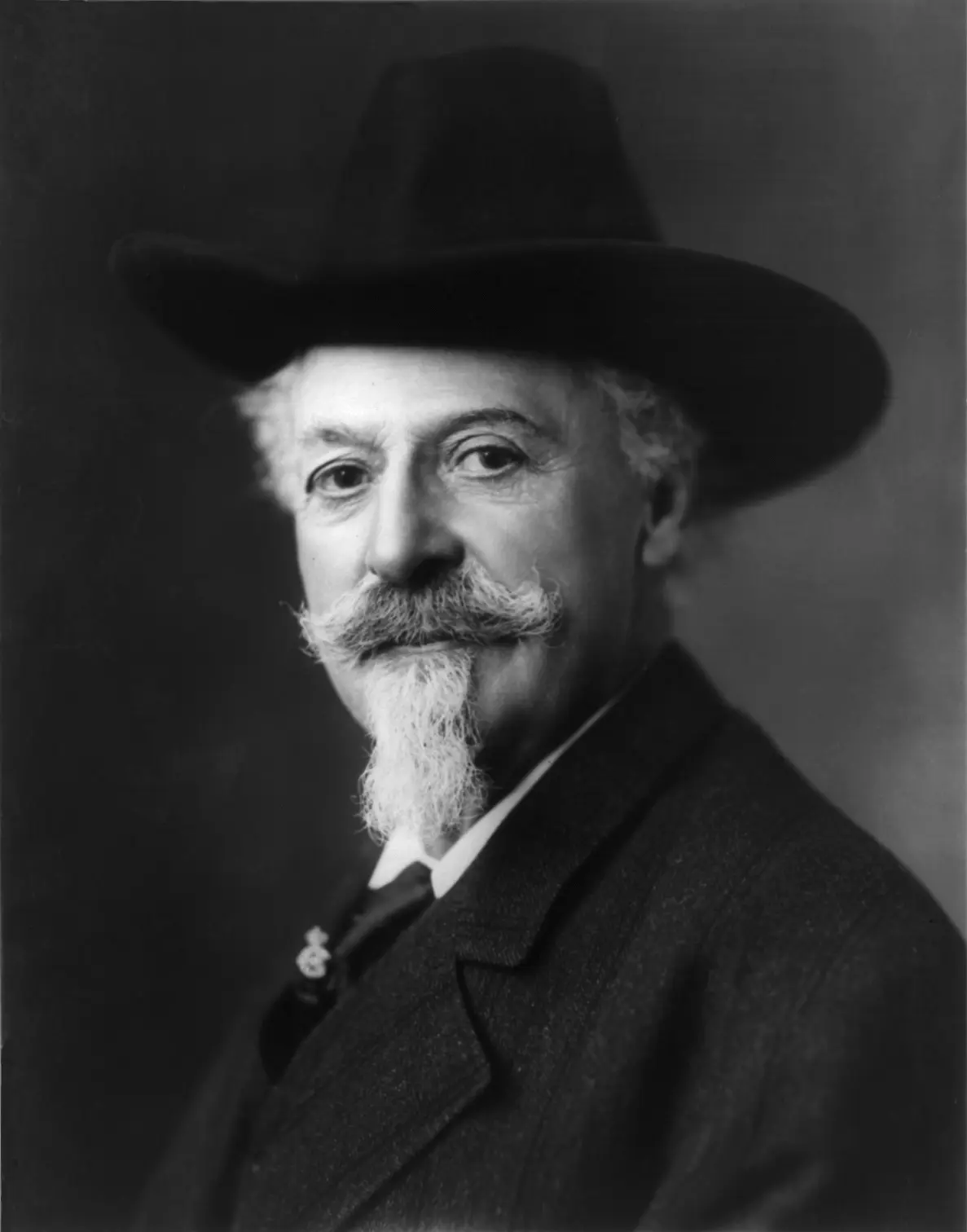

✦ Legend
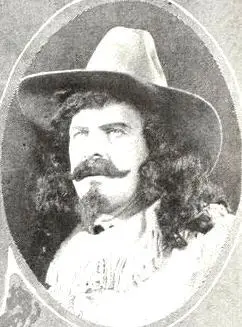
William Frederick Cody (1846–1917), known as Buffalo Bill, was a bison hunter, army scout and soldier who became the greatest showman of the American West. His touring spectacle, Buffalo Bill's Wild West, founded in 1883, played across the United States and Europe for some 30 years and made him one of the first international celebrities. Cody was a genuine frontiersman, but he was also the first great manufacturer of the frontier myth, so separating his real deeds from his publicity is especially hard. By the end of his life he had come to symbolise the frontier itself.
Early life
Cody was born on 26 February 1846 on a farm near Le Claire, Iowa. The family spent some years in his father's home district in what is now Mississauga, Ontario, and in 1853 moved to Kansas Territory. His father, an opponent of slavery, was stabbed while making a speech during the "Bleeding Kansas" troubles and never fully recovered. Cody started work at 11, after his father's death; at 12 he worked for a wagon train heading to Fort Laramie.
Pony Express, war and scouting
Cody always said he rode for the Pony Express at 15. That claim is disputed. Accounts differ: some say only that he "reportedly" rode for it; others note some evidence for it, although his name is not in the company's official records; and some historians argue that he never rode for it but, as a boy, carried messages on horseback for its parent company, Russell, Majors and Waddell, between its Leavenworth office and the telegraph station. During the Civil War he served the Union from 1863, scouting for the 7th Kansas Cavalry.
In 1867–68 he hunted buffalo to feed Kansas Pacific Railroad construction crews, which earned him his nickname. He is said to have killed 4,282 buffalo in 18 months, and to have won the exclusive right to the name in a shooting match against another hunter, Bill Comstock. Both stories come largely from Cody's own telling. From 1868 he served as a civilian scout for the 5th Cavalry, and on 26 April 1872 he was awarded the Medal of Honor for gallantry.
Birth of the legend
In 1869 the dime novelist Ned Buntline began publishing stories about him, which were largely invented. A play based on them inspired Cody to go on stage himself in 1872, and in 1873 he toured with Wild Bill Hickok and Texas Jack Omohundro. Between theatrical seasons he went back to scouting. On 17 July 1876, three weeks after Custer's defeat at the Little Bighorn, he killed and scalped a Cheyenne warrior named Yellow Hair (often mistranslated as "Yellow Hand"). He was reportedly wearing his stage clothes at the time and reportedly cried out, "First scalp for Custer!"
Buffalo Bill's Wild West
Founded in 1883, the Wild West re-created the Pony Express, attacks on wagon trains and stagecoach robberies, and featured stars such as Annie Oakley. It toured Europe from 1887, where Cody was hailed as "Nature's Nobleman". He invested his fortune in the West, and in 1895 he helped found the town of Cody, Wyoming.
Medal of Honor
The medal was rescinded after the Army's 1916–17 review of Medal of Honor awards, which struck off civilian scouts, and restored to the Medal of Honor Roll in 1989. Accounts differ on the exact date of the rescinding, given as either 1916 or 1917.
Death
Cody died in Denver on 10 January 1917, his fortune much reduced. Tributes came from King George V and President Woodrow Wilson. He was buried on Lookout Mountain in Golden, Colorado, though the town of Cody had wanted him. Rumours that his body was secretly moved have never been proved.
Legend versus history
- Pony Express rider? Possibly, but unproved; see above.
- Hero of the dime novels. Buntline's stories were largely invented. Cody also claimed many early jobs, from trapper to stagecoach driver, that historians have struggled to document, and he may have made some up for publicity.
- The scout who played himself. His army scouting was real, and it earned him the Medal of Honor. The Yellow Hair fight showed that Buffalo Bill the character was no mere actor.
On screen
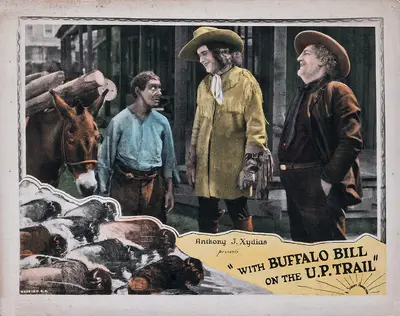
Cody has been portrayed in many films, including Buffalo Bill (1944), Pony Express (1953), Robert Altman's Buffalo Bill and the Indians, or Sitting Bull's History Lesson (1976), The Legend of the Lone Ranger (1981) and Wild Bill (1995).
Key facts
- Born: 26 February 1846, near Le Claire, Iowa, US
- Died: 10 January 1917, Denver, Colorado
- Buried: Lookout Mountain, Golden, Colorado
- Occupations: bison hunter, army scout, soldier, showman
- Founded: Buffalo Bill's Wild West (1883); Cody, Wyoming (1895)
- Medal of Honor: awarded 1872, rescinded after the 1916–17 review, restored 1989
- Born 26 February 1846, Le Claire, Iowa; died 10 January 1917, Denver, Colorado (Wikipedia, Britannica)
- Founded Buffalo Bill's Wild West in 1883 (Wikipedia)
- Medal of Honor awarded 1872, revoked 1916, restored 1989 (Britannica)
See also
Gallery 7
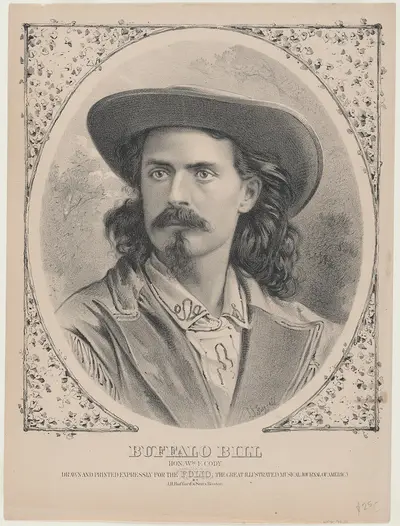

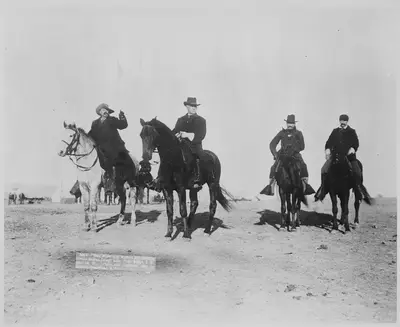

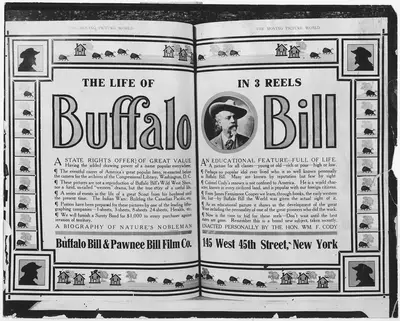






Appears in 2


Sources
- Buffalo Bill - Wikipedia en.wikipedia.org
- Wikidata: Q202285 wikidata.org
- William F Cody - Britannica britannica.com
- Wikimedia Commons: Cody-Buffalo-Bill-LOC.jpg commons.wikimedia.org
- Buffalo Bill - Buffalo Bill Center of the West centerofthewest.org