

True Grit Rating: Giant
Loading the ticket…
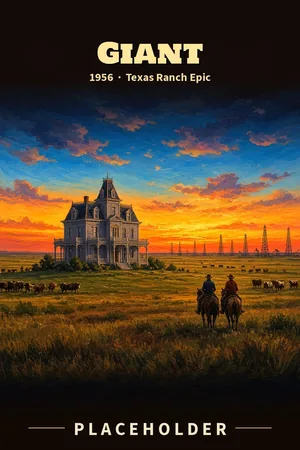
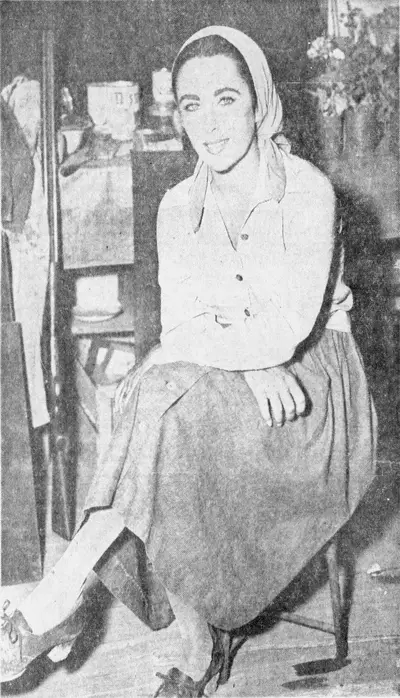
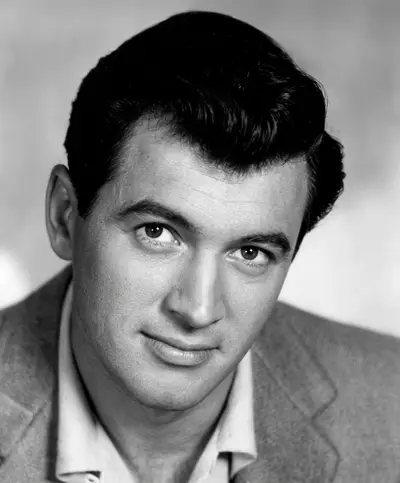
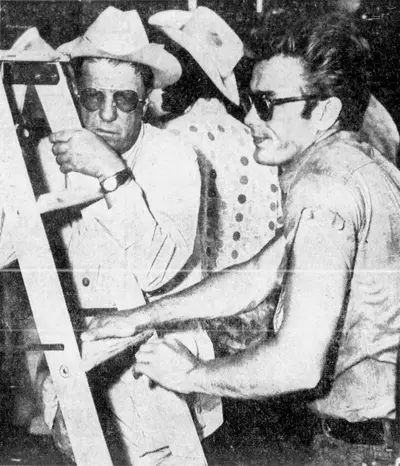
Giant is a 1956 American epic drama directed by George Stevens from Edna Ferber's 1952 novel. It follows a wealthy Texas ranching family across a quarter of a century, from the open cattle country of the 1920s to the age of oil money after the Second World War. Elizabeth Taylor and Rock Hudson play the rancher Bick Benedict and his spirited eastern bride Leslie, and James Dean, in his last film, plays the ranch hand Jett Rink, who strikes oil and becomes a millionaire. It is less a traditional Western than a modern ranching saga, but with its vast landscapes, cattle empire and clash between old and new it belongs to the same family. George Stevens won the Academy Award for Best Director.
Plot
In the 1920s Jordan "Bick" Benedict, heir to the half-million-acre Reata ranch in Texas, travels to Maryland to buy a stallion and comes home with a wife, Leslie Lynnton. Leslie struggles to fit into the hard, male world of the ranch and clashes with Bick's domineering sister Luz. She is also shocked by the poverty of the Mexican-American workers on the ranch and by the way they are treated, and she insists on getting a doctor for a sick baby in their village.
When Luz is killed in a riding accident, she leaves a small piece of land to the surly ranch hand Jett Rink, who refuses to sell it back to Bick. Years later Jett strikes oil there and becomes enormously rich, while Bick clings to cattle ranching. The Benedicts' children grow up and choose their own paths: their son Jordy becomes a doctor and marries a Mexican-American woman, Juana, and their daughter Judy marries a young rancher of her own choosing. Bick at last allows oil drilling on Reata. At a grand banquet given by Jett, now a drunken oil baron, Juana is refused service, and the rivalry between Bick and Jett finally comes to a head. On the drive home Bick stands up for Juana and his grandson against a bigoted roadside café owner and takes a beating for it. Leslie tells him that this, more than all his wealth, has made him her hero.
Themes
The film is about change: the passing of the cattle kingdom, the rise of oil, and a proud man who learns, slowly and painfully, that the measure of a family is not land or money but how it treats others. Bick begins as a stubborn and prejudiced patriarch and ends by defending his own grandson, choosing to do what is right even when it costs him. Leslie, gracious but firm, is the conscience of the story. Jett Rink, who has everything money can buy, ends up lonely and bitter.
Production
Bick and Reata are generally thought to be modelled on the Kleberg family and the King Ranch of South Texas, and Jett Rink partly on the flamboyant Houston oilman Glenn McCarthy. Stevens spent most of 1954 working on the script with Fred Guiol and Ivan Moffat. Much of the film was shot around Marfa in West Texas in 1955, where the Benedicts' mansion was built as a façade standing alone on the open plain, with the opening scenes filmed in Virginia. Dean was killed in a car crash in September 1955, shortly after finishing his scenes, and his friend Nick Adams dubbed some of his lines. Stevens then spent about a year editing the picture. Dimitri Tiomkin wrote the score, and Chill Wills appears as Bick's genial Uncle Bawley.
Reception
Giant was a huge success when it opened in October 1956 and one of Warner Bros.' biggest hits of the decade. It received ten Academy Award nominations, including Best Picture, and Stevens won Best Director. Both Dean and Hudson were nominated for Best Actor; it was Dean's second nomination, both after his death. In 2005 the film was chosen for preservation in the US National Film Registry.
Key facts
- Released: 1956
- Director: George Stevens
- Based on: the novel by Edna Ferber (1952)
- Stars: Elizabeth Taylor, Rock Hudson, James Dean
- Setting: Texas and Maryland, 1920s to late 1940s
- Running time: 196 minutes
- IMDb rating: 7.6 (data)
- Directed by George Stevens
Cast
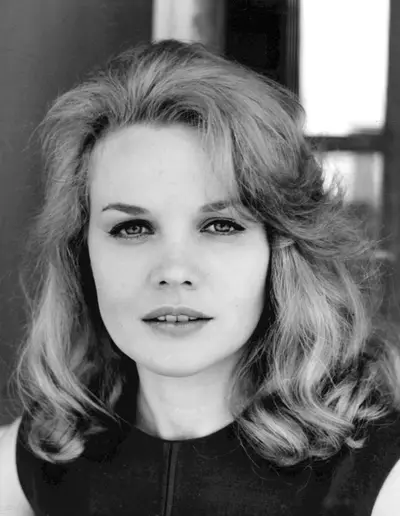
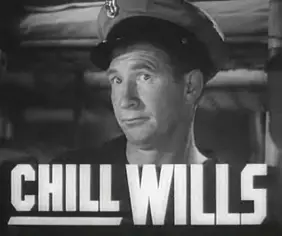
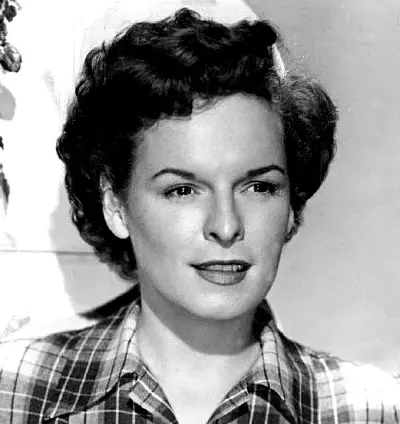
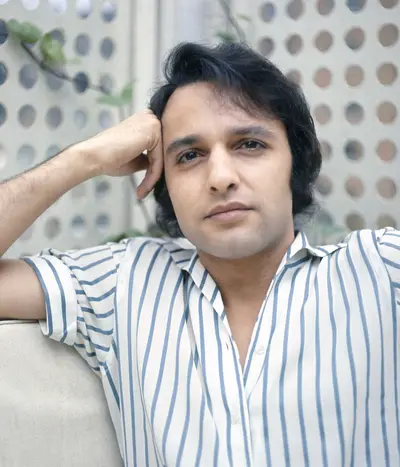
See also
If you liked this
Picked from this wiki's own links: same film series, same director, same lead actor.
Frontier folk
This film is listed on: Ranchers, cattlemen and cowboys (all Frontier folk)
Gallery 2


True Grit RatingWhat's this?Woke: None foundSVLIMDb ★7.6Provisional
True Grit score: 84/100, Silver Provisional
How the score is worked out:
- Start100
- Provisional, capped at Silver: 100 → 84 (2 checks not known, provisional)
- Presumed (Hays Code, 1934–1967): sex & nudity, violence, language presumed no, counted as checked0
- True Grit score84 · Silver
Classic Western checks
0 of 5 yes · Classic Western · 1 not known
- Called “revisionist”Not knownUnknown.
- Settlers or cavalry as villainsNoNo: the villains are individuals, a gang, a boss, a posse or a cattle baron, not settlers or soldiers as a group.[1]
- Faith shown negativelyNoNo: Hays-era titles presume no faith attack unless a source flags one.[2]
- History rewrittenNoFiction with invented characters; it portrays no real historical events or people, so nothing documented is rewritten. [2][3]
more
Fiction with invented characters; it portrays no real historical events or people, so nothing documented is rewritten. Based on Edna Ferber’s novel. - A people shown as villainsNoNo: the plot source pins the villainy on named individuals, a gang or a specific band, not on a people as a whole.[1]
Woke content (modern messaging)
None found0 of 8 items found so far
Show all 8 (3 not found · 5 not known)
Unless noted: Unknown.
- Characters recast for representationNot foundBased on Edna Ferber's novel; its lead Jordan "Bick" Benedict Jr. is played by Rock Hudson, with no change of sex or ethnicity, so no …[2]
- Gender roles reversed or critiquedNot known
- Present-day political languageNot known
- Allegory for current politicsNot foundReleased in 1956, before the 21st-century debates this item covers, so it cannot be an allegory of them.[2]
- Western civilisation framed as inherently guiltyNot known
- Environmental activismNot foundNo: no source raises an environmental message (5 Nov 2026).[2]
- Source material changed for messagingNot known
- LGBT or gender-identity themesNot known
Content guide
- SSex & nudityPresumed no
- VViolencePresumed no
- LLanguagePresumed no
Presumed no (Hays Code)
NoneMildModerateStrongNot known
Audience
★ 7.6/10 from viewers on IMDb (45k votes)No deduction (5.0 and up).
Sources
- Dennis Schwartz Reviews: Giant
- Wikipedia: Giant (checked 17 October 2026)
- Grokipedia: Giant (checked 17 October 2026)
Information courtesy of IMDb (https://www.imdb.com). IMDb rating as of 13 October 2026.
Checked 17 October 2026 · Reviewed by Frontier Editor
Provisional: not enough sources yet, so this rating may change.
Member reviews
What members think. Member reviews never change the True Grit score. The True Grit score is worked out by the editors from sources.
Sources
- Giant (1956 film) - Wikipedia en.wikipedia.org
- Wikidata: Q669592 wikidata.org
- Wikimedia Commons: Giant (1956) poster.jpg commons.wikimedia.org
- Giant film by Stevens - Britannica britannica.com
- IMDb Non-Commercial Datasets developer.imdb.com
- Rotten Tomatoes (score via Wikidata) rottentomatoes.com
- Metacritic (score via Wikidata) metacritic.com
- Wikimedia Commons: Elizabeth Taylor on set of Giant (1955).jpg commons.wikimedia.org
- Wikimedia Commons: Fran Bennett in Giant (1956) publicity still.jpg commons.wikimedia.org
- Wikimedia Commons: George Stevens with Oscar for Giant (cropped).jpg commons.wikimedia.org
- Wikimedia Commons: George Stevens with Oscar for Giant.jpg commons.wikimedia.org
- Wikimedia Commons: Giant (1956) publicity photo - Elizabeth Taylor, Sal Mineo, Carroll Baker.png commons.wikimedia.org
- Wikimedia Commons: Giant Poster.gif commons.wikimedia.org
- Wikimedia Commons: James Dean %26 George Stevens on set of Giant (1955).jpg commons.wikimedia.org


