
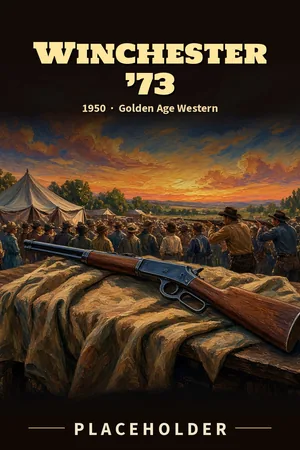

True Grit Rating: Winchester '73
Loading the ticket…
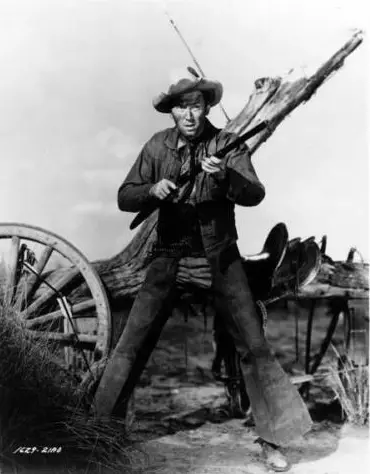
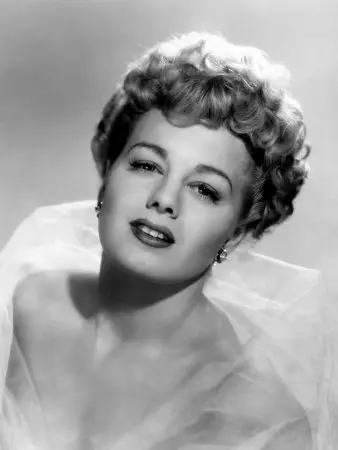
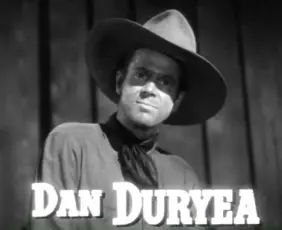
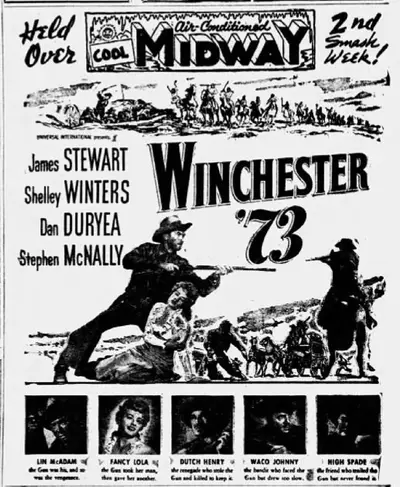
Winchester '73 is a 1950 American Western film noir directed by Anthony Mann, starring James Stewart, Shelley Winters, Dan Duryea and Stephen McNally. Borden Chase and Robert L. Richards wrote it. The story is set in 1876 and follows a prized Winchester 1873 repeating rifle as it passes from one doomed owner to the next, while a cowboy hunts a murderous fugitive. It was the first of eight films Mann and Stewart made together. It was also the first film, in the sound era, to pay an actor a share of its receipts, a practice known as "points". Rock Hudson and Tony Curtis appear in small parts early in their careers. The film was added to the National Film Registry in 2015.
Plot
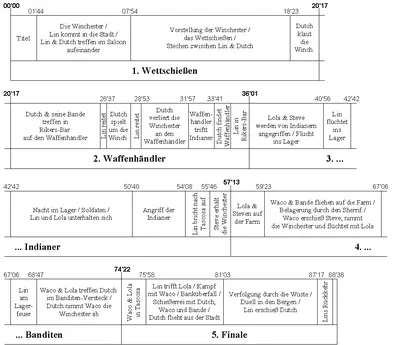
Lin McAdam and his friend "High-Spade" Frankie Wilson ride into Dodge City on the trail of Dutch Henry Brown. Marshal Wyatt Earp makes all visitors hand in their guns, so the two men cannot fight. Instead, both enter the town's Centennial shooting contest for a "One in One Thousand" Winchester rifle. Lin wins, but Dutch ambushes him and steals the rifle.
The Winchester then changes hands again and again. Dutch loses it to the trader Joe Lamont in a card game. Lamont is killed by Young Bull, a Native American leader played by Hudson. After a battle at a cavalry camp, the rifle passes to Steve Miller, fiancé of the saloon pianist Lola Manners. Then the outlaw Waco Johnny Dean kills Steve and takes it, and Dutch takes it back from Waco. In Tascosa, a robbery by Dutch's gang goes wrong. Lin kills Waco and chases Dutch into the rocks. High-Spade tells Lola that Dutch is Lin's brother, who shot their father in the back. The brothers shoot it out, and Lin returns with the rifle.
Production
Fritz Lang was first set to direct, but Universal would not let him produce the film through his own company. Stewart chose Mann, whose earlier work he admired. Mann brought in Borden Chase to rewrite the script from scratch. In the new version the rifle became a bone of contention passing between owners, not the hero's only reason for living. "I didn't like the property," Mann said later, and he agreed to direct only if he could rewrite it completely.
Stewart wanted to make Harvey for Universal-International, but the studio could not afford his $200,000 fee. Studio head William Goetz instead offered him a share of the profits for both Harvey and Winchester '73. Stewart's agent, Lew Wasserman, secured 50 per cent of the profits, which came to $600,000 thanks to the film's unexpected success. The deal also gave Stewart control over the choice of director and co-stars.
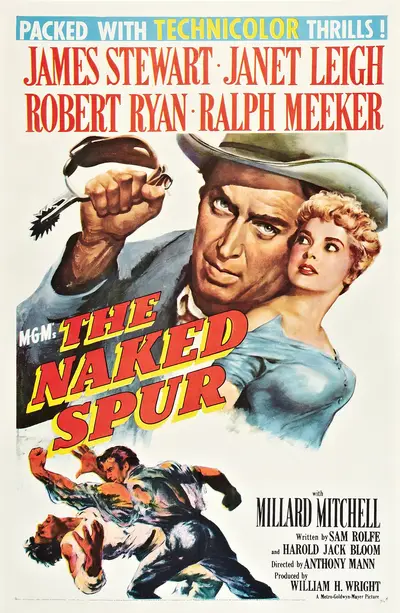
Stewart practised with the rifle until his knuckles were raw. Herb Parsons, an expert marksman from the Winchester company, did the trick shooting and helped train him. Will Geer, who played Earp, was not the only one who thought he was miscast. Millard Mitchell, who played High-Spade, also appeared that year in The Gunfighter. He later returned in another Stewart–Mann Western, The Naked Spur (1953). The partnership gave Stewart a new screen persona that was more violent and disillusioned than before but still likeable.
The film was shot at Mescal and Old Tucson in Arizona, and on the Universal backlot in California.
Reception and legacy
The film was nominated for the Writers Guild of America Award for Best Written American Western. The Library of Congress selected it for the National Film Registry in 2015, calling it "culturally, historically, or aesthetically significant". The "points" deal made it a landmark in Hollywood business as well as in the career of Stewart, who would go on to make seven more films with Mann.
Key facts
- Released: 1950 (Universal-International)
- Director: Anthony Mann
- Screenplay: Borden Chase, Robert L. Richards
- Setting: 1876, Dodge City to Tascosa
- Filmed at: Mescal and Old Tucson, Arizona; Universal backlot
- National Film Registry: 2015
- Directed by Anthony Mann
- Released 1950
- First of the Westerns made by Anthony Mann and James Stewart
- Written by Borden Chase and Robert L. Richards
Cast
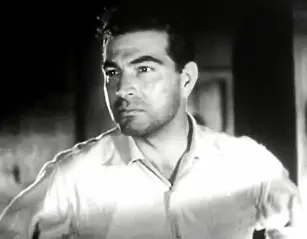
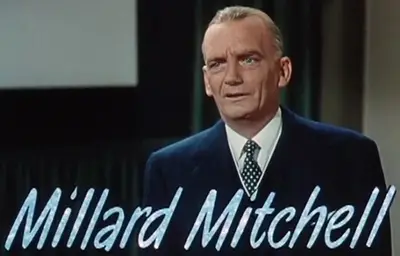
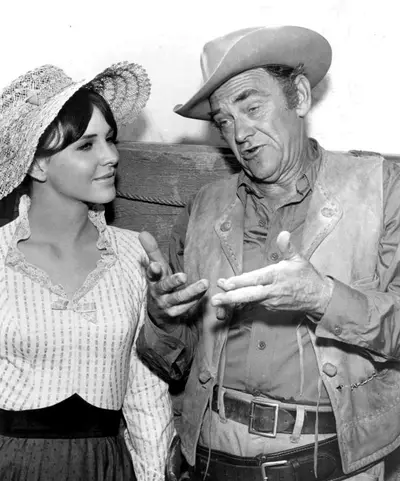
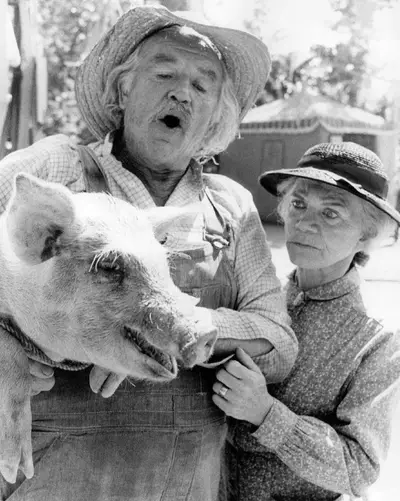
See also
If you liked this
Picked from this wiki's own links: same film series, same director, same lead actor.

Frontier folk
This film is listed on: Outlaws, gangs and robbers (all Frontier folk)
Gallery 5





True Grit RatingWhat's this?Woke: None foundSVLIMDb ★7.6Partly checked
True Grit score: 99/100, Gold Partly checked
How the score is worked out:
- Start100
- Diamond needs all five checks; not met (raw score under 109): 100 → 99
- Presumed (Hays Code, 1934–1967): sex & nudity, violence, language presumed no, counted as checked0
- True Grit score99 · Gold
Classic Western checks
0 of 5 yes · Classic Western
- Called “revisionist”NoA Western history magazine calls it a classic Western; no source calls it revisionist.[1]
- Settlers or cavalry as villainsNoThe villains are the outlaw Dutch Henry Brown, who robbed a bank and a stagecoach and killed his own father, and the gunman Waco Johnny Dean; a raiding party … [2]
more
The villains are the outlaw Dutch Henry Brown, who robbed a bank and a stagecoach and killed his own father, and the gunman Waco Johnny Dean; a raiding party led by Young Bull also pursues Steve and Lola. - Faith shown negativelyNoThe plot shows no clergy or faith portrayed negatively.[2]
- History rewrittenNoFiction: the rifle's journey is invented and Wyatt Earp appears only briefly; no source alleges that it misstates documented events.[3][4][1]
- A people shown as villainsNoNo: the plot source pins the villainy on named individuals or a specific band, not on a people as a whole.[5]
Woke content (modern messaging)
None found0 of 8 items found so far
Show all 8 (2 not found · 6 not known)
Unless noted: Unknown.
- Characters recast for representationNot known
- Gender roles reversed or critiquedNot known
- Present-day political languageNot known
- Allegory for current politicsNot foundReleased in 1950, before the 21st-century debates this item covers, so it cannot be an allegory of them.[2]
- Western civilisation framed as inherently guiltyNot known
- Environmental activismNot foundNo: no source raises an environmental message (5 Nov 2026).[2]
- Source material changed for messagingNot known
- LGBT or gender-identity themesNot known
Content guide
- SSex & nudityPresumed no
- VViolencePresumed no
- LLanguagePresumed no
Presumed no (Hays Code)
NoneMildModerateStrongNot known
Audience
★ 7.6/10 from viewers on IMDb (24k votes)No deduction (5.0 and up).
Sources
- True West Magazine: Winchester '73, Take Two (checked 17 October 2026)
- Wikipedia: films/winchester-73-1950 (plot)
- TCM: Winchester '73 (2006) (accessed 26 October 2026)
- Variety (1950) (checked 17 October 2026)
- catalog.afi.com/Catalog/MovieDetailsPrintView/26569
Information courtesy of IMDb (https://www.imdb.com). IMDb rating as of 13 October 2026.
Checked 17 October 2026 · Reviewed by Frontier Editor
Partly checked: 1 check not known. Not known items are left out of the score.
Member reviews
What members think. Member reviews never change the True Grit score. The True Grit score is worked out by the editors from sources.
Sources
- Winchester '73 - Wikipedia en.wikipedia.org
- Wikidata: Q1425480 wikidata.org
- Wikimedia Commons: Winchester 73 (1950 film poster).jpg commons.wikimedia.org
- Wikimedia Commons: Winchester73 trailer Stewart.png commons.wikimedia.org
- Winchester 73 - Britannica britannica.com
- IMDb Non-Commercial Datasets developer.imdb.com
- Rotten Tomatoes (score via Wikidata) rottentomatoes.com
- Wikimedia Commons: 1950 - Midway Theater - 19 Jul MC - Allentown PA.jpg commons.wikimedia.org
- Wikimedia Commons: James Stewart Winchester %2773 Still.jpg commons.wikimedia.org
- Wikimedia Commons: Schnittfrequenzgrafik (Winchester 73).png commons.wikimedia.org
- Wikimedia Commons: Sequenzgrafik (Winchester 73).png commons.wikimedia.org
- Wikimedia Commons: Zeitleiste (Winchester 73).png commons.wikimedia.org

