
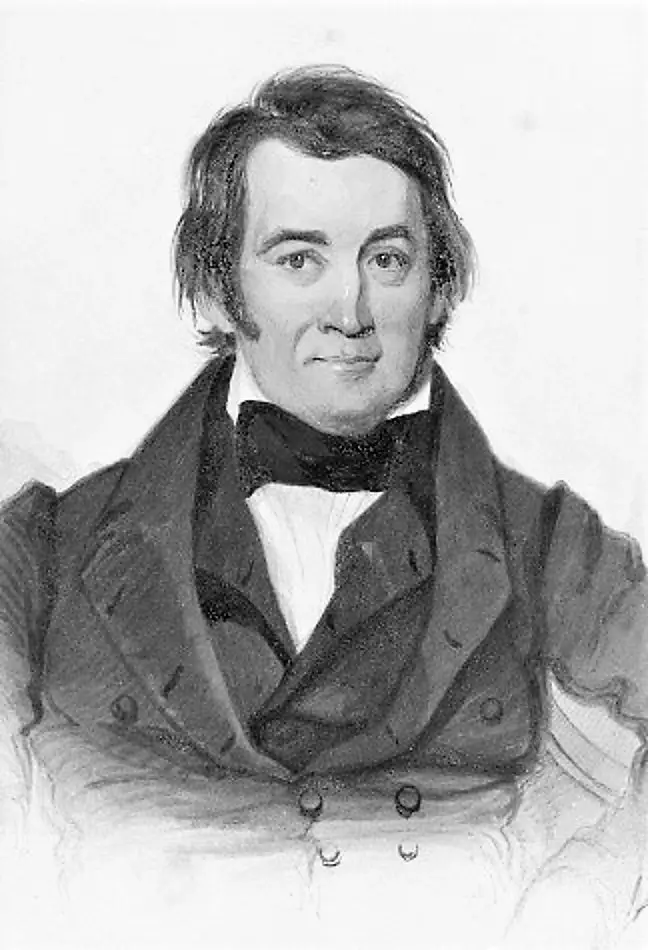

✦ Legend
David "Davy" Crockett (1786–1836) was a Tennessee frontiersman, militia officer and three-term US congressman who died at the Alamo during the Texas Revolution. He was a celebrity before he went to Texas, partly through his own humorous storytelling and partly through a flood of plays, books and almanacs that made "Davy" into a superhuman backwoodsman. Historians draw a clear line between the legendary Davy of the tall tales and the historical David Crockett, the man who actually sat in Congress.
Early life
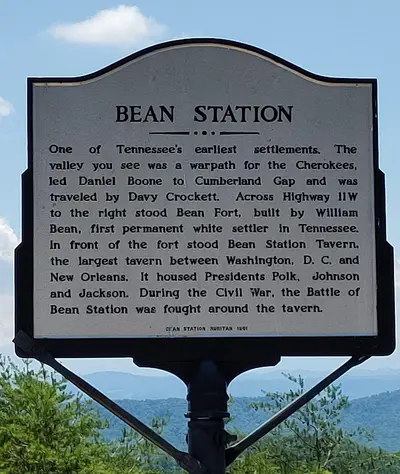
Crockett was born on 17 August 1786 in Greene County, Tennessee, near Limestone. At 12 he was hired out to help drive cattle to Virginia, and he reportedly escaped his employer by walking through knee-deep snow at night. He skipped school, ran away from his father's punishment and spent some two and a half years working as a wagoner and labourer before coming home. He married Polly Finley in 1806 and moved west across Tennessee with his growing family.
Soldier and politician
In September 1813 Crockett enlisted as a militia scout for the Creek War. The war had widened that August, when Red Stick Creek warriors stormed Fort Mims in Alabama and killed some 250 of the people sheltering there, including women and children. Serving under Andrew Jackson, in General John Coffee's brigade, Crockett took part in the attack on the Red Stick town of Tallushatchee on 3 November 1813. About 200 Creek warriors were killed, along with some women and children, and the survivors, mostly women and children, were taken prisoner. In his memoir Crockett described the end of the fight without glory: "We now shot them like dogs." He served again in 1814–15. After Polly's death in 1815 he married a widow, Elizabeth Patton, and moved to Lawrence County, where he became a justice of the peace, town commissioner and militia colonel.
He was elected to the Tennessee legislature in 1821, lost his first bid for Congress in 1825 and won a seat in the US House of Representatives in 1827. Re-elected in 1829, he broke with President Jackson over land policy and the Indian Removal Act, and lost in 1831. He won the seat back in 1833 and then lost again in 1835, by 252 votes. He told friends at a farewell party in Memphis: "you may all go to hell and I will go to Texas."
The legend in his lifetime
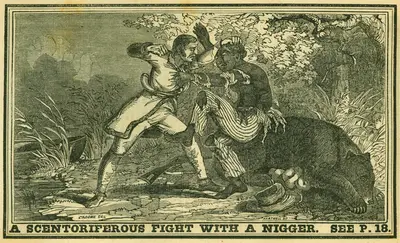
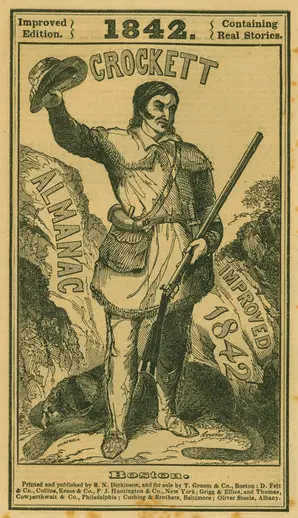
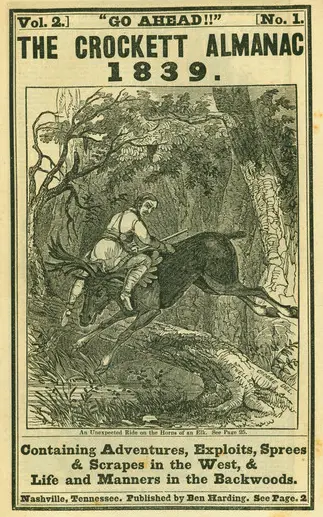
By the early 1830s Crockett was a national figure. He was the model for Nimrod Wildfire, the hero of James Kirke Paulding's 1831 play The Lion of the West. Unauthorised books about him appeared, and from 1835 to 1856 a series of "Crockett almanacs" spread outrageous tall tales. His 1834 autobiography, A Narrative of the Life of David Crockett, written with Thomas Chilton, was meant to correct the record and was the only book he actually wrote. Whig politicians briefly promoted him as an anti-Jackson presidential candidate.
Texas and the Alamo
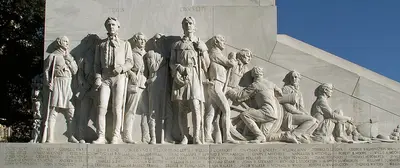
Crockett set out for Texas on 1 November 1835, intending to explore it, not to fight. In January 1836 he took the oath of allegiance to the provisional government, insisting that the word "republican" be added. He reached San Antonio de Béxar in early February and joined William B. Travis in the Alamo. Travis wrote that during the first bombardment Crockett was everywhere, "animating the men to do their duty". The Alamo fell on 6 March 1836.
Legend versus history
- How did he die? This is one of the most argued questions in Texas history. His manner of death is disputed. Susanna Dickinson, a survivor, said he died outside, one of the earliest to fall, and Travis's slave Joe said he saw Crockett lying dead among slain Mexican soldiers. The narrative of the Mexican officer José Enrique de la Peña says Crockett was among a handful of men captured and then executed on Santa Anna's orders. Some writers have questioned whether that document is genuine. It is almost impossible to know, though he could have been among those who tried to surrender.
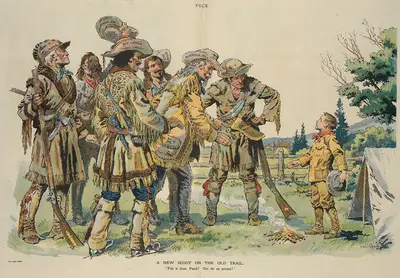
- "Davy". The coonskin cap, the tall tales and the "King of the Wild Frontier" come mainly from the almanacs and, much later, from Walt Disney's 1954–55 television series starring Fess Parker. Crockett did own a coonskin cap, and he reportedly wore one when he set out for Texas.
- Last stand with an empty rifle. Stories of him clubbing attackers with his rifle until he was cut down appeared soon after the battle. There is no reliable evidence for them, and one tale even had him surviving as a slave in a Mexican salt mine.
On screen
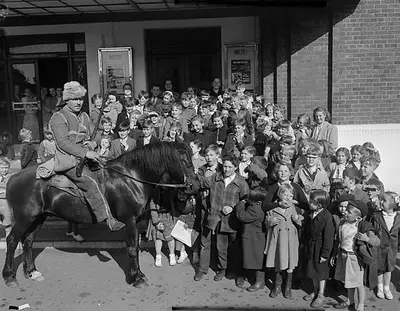
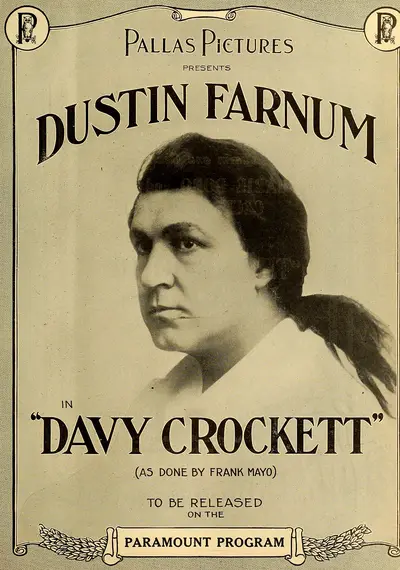
Crockett has been played by many actors, including Fess Parker for Disney and John Wayne in The Alamo (1960). Other films about him include Man of Conquest (1939), The Man from the Alamo (1953), The Last Command (1955) and The Alamo (2004).
Key facts
- Born: 17 August 1786, Greene County (near Limestone), Tennessee, US
- Died: 6 March 1836, the Alamo, San Antonio de Béxar, Texas
- Occupations: hunter, militia officer, politician
- Congress: US House of Representatives, 1827–1831 and 1833–1835
- Book: A Narrative of the Life of David Crockett (1834)
- Born 17 August 1786, Tennessee; died 6 March 1836, the Alamo (Wikipedia, Wikidata)
- Elected to the US Congress in 1827 (Wikipedia)
See also
Gallery 8








In the films 1

Sources
- Davy Crockett - Wikipedia en.wikipedia.org
- Wikidata: Q311070 wikidata.org
- Wikimedia Commons: Portrait of David Crockett, 1831.jpg commons.wikimedia.org
- Crockett, David - Handbook of Texas Online tshaonline.org
- David Crockett, A Narrative of the Life of David Crockett, of the State of Tennessee (Philadelphia: E. L. Carey and A. Hart, 1834), chs. V–VI – Project Gutenberg gutenberg.org
- Fort Mims Battle and Massacre – Encyclopedia of Alabama encyclopediaofalabama.org
- Battle of Tallushatchee – Encyclopedia of Alabama encyclopediaofalabama.org
- Tennessee in the War of 1812 – Tennessee State Library and Archives (quotes Gen. John Coffee's report on Tallushatchee) sharetngov.tnsosfiles.com
- 'Crockett and the Creek War: ‘We Now Shot Them Like Dogs’' – HistoryNet historynet.com
- Ramón Martínez Caro, Verdadera idea de la primera campaña de Tejas y sucesos ocurridos después de la acción de San Jacinto (México: Impr. de Santiago Pérez, 1837), pp. 10–11 – digitised by Universidad Autónoma de Nuevo León cdigital.cabu.uanl.mx
- George M. Dolson, letter of 19 July 1836, Galveston (Democratic Free Press, Detroit, 7 Sept 1836), reprinted in T. L. Connelly (ed.), 'Did David Crockett Surrender at the Alamo? A Contemporary Letter', Journal of Southern History 26:3 (Aug 1960), 368–76 doi.org
- José Enrique de la Peña collection (field diary and memoir, 1835–1840), Dolph Briscoe Center for American History, University of Texas at Austin – authenticity debated digitalcollections.briscoecenter.org