
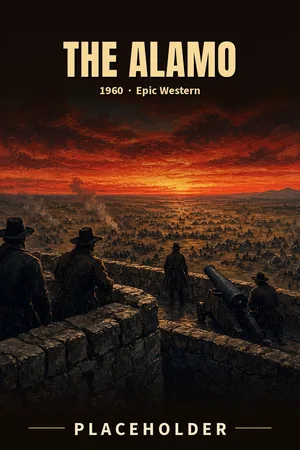

True Grit Rating: The Alamo
Loading the ticket…
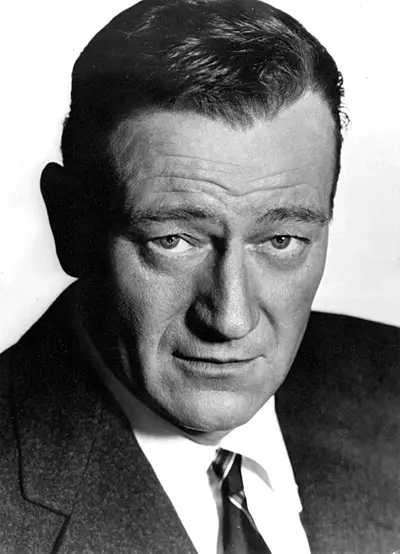
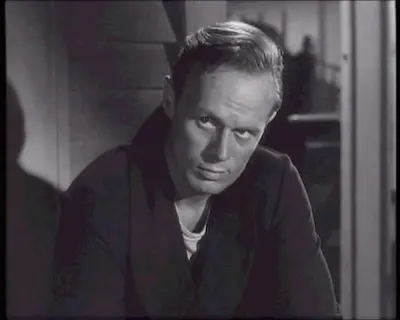
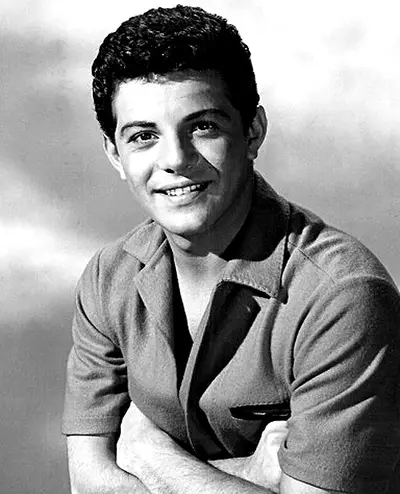
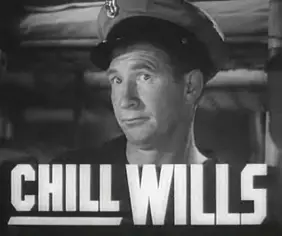
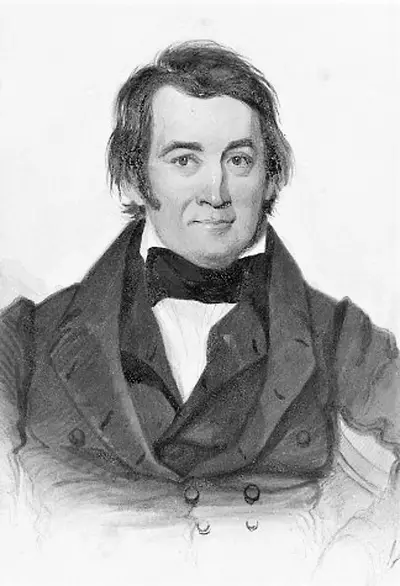
The Alamo is a 1960 American epic Western war film about the siege and battle of the Alamo in 1836, produced and directed by John Wayne, who also stars as Davy Crockett. Richard Widmark plays Jim Bowie and Laurence Harvey plays William Barrett Travis, with Richard Boone as Sam Houston and Frankie Avalon, Patrick Wayne, Linda Cristal and Chill Wills in support. Shot in 70 mm Todd-AO by William H. Clothier and released by United Artists, it was Wayne's great personal project: a tribute to the men who chose to die for liberty rather than surrender, and a celebration of courage, comradeship and sacrifice.
Plot
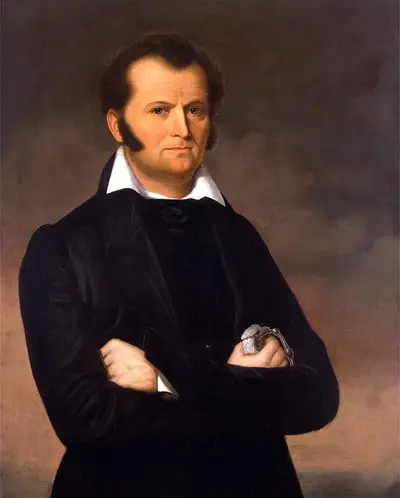
In 1836 General Sam Houston needs time to raise an army to face the larger, better-armed Mexican forces of General Antonio López de Santa Anna. He orders Lieutenant Colonel William Travis to hold the Alamo, a former mission at San Antonio. Jim Bowie arrives with volunteers, and Davy Crockett rides in with a band of Tennesseans. The proud, stiff Travis and the hard-drinking Bowie clash constantly over command, and Crockett, liked by both, becomes the peacemaker.
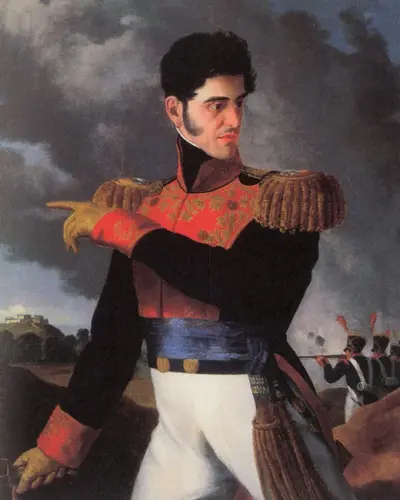
Santa Anna's army surrounds the fort and demands surrender. Travis answers with a cannon shot. The defenders raid the Mexican lines by night to destroy a great siege gun, and they beat back the first assault, though Bowie is wounded. Crockett sends young Smitty (Avalon) away with a plea for help, partly to save the boy's life. When word comes that no relief is coming, Travis gives every man the choice to leave. Bowie and Crockett prepare to go, but a heartfelt tribute from Travis persuades them to stay and fight to the end. The women and children are sent away, except for Sue Dickinson and her small daughter.
On the thirteenth day Santa Anna's whole army attacks from every side. Travis is shot on the wall. Crockett, run through by a lance, blows up the powder magazine as he dies, and Bowie fights from his sickbed to the end. Santa Anna grants safe passage to Mrs Dickinson and her child, and Smitty, returning too late, takes off his hat in respect and leads them away.
Production
Wayne first planned a film about the Alamo in the 1940s, but fell out with Herbert Yates of Republic Pictures over the budget and left the studio. He and Robert Fellows formed their own company, Batjac, and in 1956 Wayne signed with United Artists. He had meant only to direct and to take the small part of Sam Houston, but backers insisted that he play a leading role, so he took Crockett. Wealthy Texans who put up much of the money insisted that the film be made in Texas. Wayne put about $1.5 million of his own into it, mortgaging his houses and borrowing against his cars.
A three-quarter-scale replica of the mission, later known as Alamo Village, was built on James T. Shahan's ranch near Brackettville, Texas, from more than a million hand-made adobe bricks. The historians Randy Roberts and James Olson called it "the most authentic set in the history of the movies", and it was used for many later Westerns. Filming ran from 9 September to 15 December 1959. John Ford visited the set uninvited, and Wayne kept his old mentor busy shooting second-unit footage, almost none of which was used.
Dimitri Tiomkin's score is often called his finest work. It includes the song "The Green Leaves of Summer", with lyrics by Paul Francis Webster, and "The Ballad of the Alamo", recorded by Marty Robbins.
Release and reception
The world premiere was held at the Woodlawn Theatre in San Antonio on 24 October 1960. The film drew large audiences, but its great cost kept it from turning a profit at first, and Wayne lost his personal investment; it recovered its costs for United Artists later. Critics were divided, from the New York Herald Tribune, which gave it four stars and called it "a magnificent job", to Time, which found it "flat as Texas".
It received seven Academy Award nominations, including Best Picture, and won for Best Sound. Its chances were widely thought to have been hurt by an over-the-top advertising campaign for Chill Wills's supporting performance, which Wayne publicly disowned.
Historical accuracy
The film does little to explain the causes of the Texas Revolution, and historians have pointed out many departures from the record. For example, it has a courier report the massacre of Colonel Fannin's men at Goliad before the Alamo falls, though that massacre happened more than two weeks afterwards. Two historical advisers, J. Frank Dobie and Lon Tinkle, asked for their names to be removed.
Disputed or inconsistent points
- Running time: accounts differ. The 70 mm roadshow premiere ran 202 minutes including overture, intermission and exit music; about 192 minutes is also given; the general release was cut to 167 minutes.
- Ford's role: Ford is sometimes described as an uncredited co-director, but almost none of his footage was used.
Key facts
- Released: 24 October 1960 (San Antonio premiere)
- Director and producer: John Wayne
- Screenplay: James Edward Grant
- Cinematography: William H. Clothier (70 mm Todd-AO)
- Music: Dimitri Tiomkin
- Studios: Batjac Productions; released by United Artists
- Filmed at: Brackettville, Texas
- Running time: 202 minutes (roadshow); 167 minutes (general release)
- Academy Awards: 1 win (Best Sound) from 7 nominations
- Directed by John Wayne
- Released 1960
Cast


See also
If you liked this
Picked from this wiki's own links: same film series, same director, same lead actor.
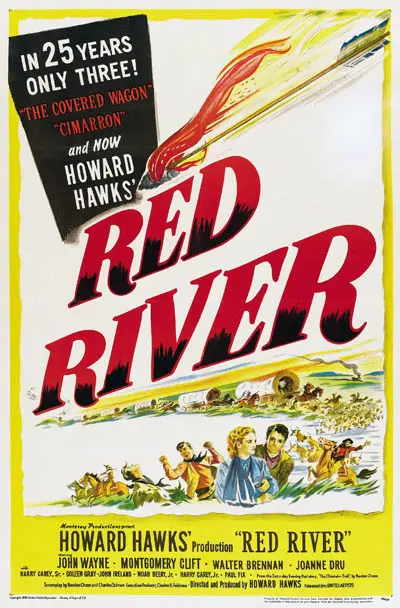 Red River1948Also starring John Wayne
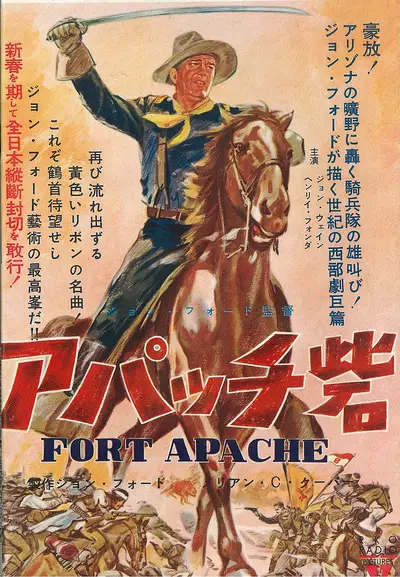 Fort Apache1948Also starring John Wayne
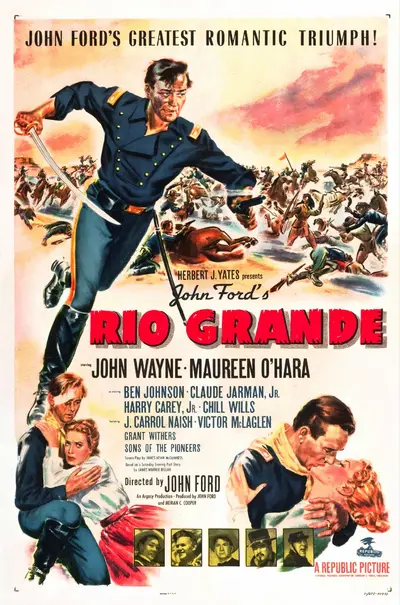 Rio Grande1950Also starring John Wayne


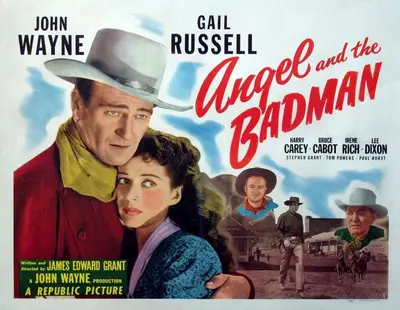 Angel and the Badman1947Also starring John Wayne
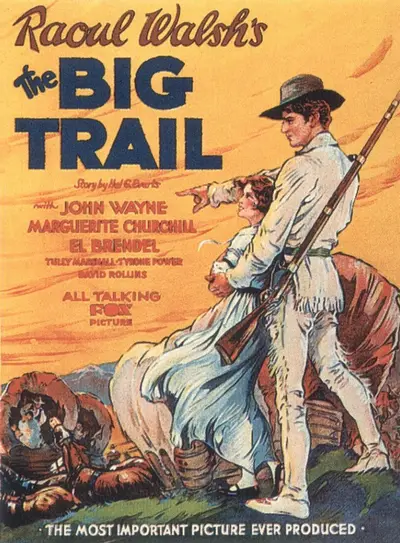 The Big Trail1930Also starring John Wayne
Frontier folk
This film is listed on: Mexican soldiers, revolutionaries and rurales (all Frontier folk)
Gallery 3



True Grit RatingWhat's this?Woke: None foundSVLIMDb ★6.8Partly checked
True Grit score: 84/100, Silver Partly checked
How the score is worked out:
- Start100
- History rewritten: yes−15
- True story, revisionist or history check not answered, capped at Silver: 85 → 84 (2 checks not known)
- Presumed (Hays Code, 1934–1967): sex & nudity, violence, language presumed no, counted as checked0
- True Grit score84 · Silver
Classic Western checks
1 of 5 yes · Mostly classic · 1 not known
- Called “revisionist”Not knownUnknown.
- Settlers or cavalry as villainsNoIn the film, the Texan defenders of the Alamo are besieged by Santa Anna's Mexican army.[1]
- Faith shown negativelyNoNo: reviews show no clergy or faith portrayed negatively.[2]
- History rewrittenYesThe Texas State Historical Association and others say the script departs widely from the record (Houston's orders, the timing of the battle, Goliad, Crockett's … [3][4][5][6]
more
The Texas State Historical Association and others say the script departs widely from the record (Houston's orders, the timing of the battle, Goliad, Crockett's death); its two historical advisers had their names removed from the credits. The departures are myth-making in the defenders' favour; the film does not vilify the settlers. - A people shown as villainsNoNo: the plot source pins the villainy on named individuals or a specific band, not on a people as a whole.[7]
Woke content (modern messaging)
None found0 of 8 items found so far
Show all 8 (2 not found · 6 not known)
Unless noted: Unknown.
- Characters recast for representationNot known
- Gender roles reversed or critiquedNot known
- Present-day political languageNot known
- Allegory for current politicsNot foundReleased in 1960, before the 21st-century debates this item covers, so it cannot be an allegory of them.[1]
- Western civilisation framed as inherently guiltyNot known
- Environmental activismNot foundNo: no source raises an environmental message (5 Nov 2026).[1]
- Source material changed for messagingNot known
- LGBT or gender-identity themesNot known
Content guide
- SSex & nudityPresumed no
- VViolencePresumed no
- LLanguagePresumed no
Presumed no (Hays Code)
NoneMildModerateStrongNot known
Audience
★ 6.8/10 from viewers on IMDb (20k votes)No deduction (5.0 and up).
Sources
- Wikipedia: films/the-alamo-1960 (plot)
- Jeff Arnold's West: The Alamo
- Texas State Library and Archives, William B. Travis's letter of 24 Feb 1836 (checked 17 October 2026)
- Texas State Historical Association, Handbook of Texas, “The Alamo (1960)” (checked 17 October 2026)
- The New Yorker, Brendan Gill, “False Fronts” (5 Nov 1960) (checked 17 October 2026)
- Smithsonian Magazine, “Remembering the Alamo” (2004), quoting historian James E. Crisp (checked 17 October 2026)
- catalog.afi.com/Catalog/MovieDetailsPrintView/53074
Information courtesy of IMDb (https://www.imdb.com). IMDb rating as of 13 October 2026.
Checked 17 October 2026 · Reviewed by Frontier Editor
Partly checked: 2 checks not known. Not known items are left out of the score, and a true-story title can't go above Silver (84) until “Called revisionist” and “History rewritten” are answered.
Member reviews
What members think. Member reviews never change the True Grit score. The True Grit score is worked out by the editors from sources.
Sources
- The Alamo (1960 film) - Wikipedia en.wikipedia.org
- Wikidata: Q1621909 wikidata.org
- Wikimedia Commons: The Alamo 1960 poster.jpg commons.wikimedia.org
- The Alamo film 1960 - Britannica britannica.com
- IMDb Non-Commercial Datasets developer.imdb.com
- The alamo q29sbgvjdglvbjpwwc0ynjcxmji - bbfc.co.uk bbfc.co.uk
- Rotten Tomatoes (score via Wikidata) rottentomatoes.com
- Wikimedia Commons: Portrait of David Crockett, 1831.jpg commons.wikimedia.org
- Wikimedia Commons: Jimbowie.jpg commons.wikimedia.org
- Wikimedia Commons: Oleo Antonio Lopez de Santa Anna.PNG commons.wikimedia.org
